Geysir Andernach
The world's tallest cold-water geyser, driven by carbon dioxide rather than heat, erupting about every two hours.
Updated 4 September 2026
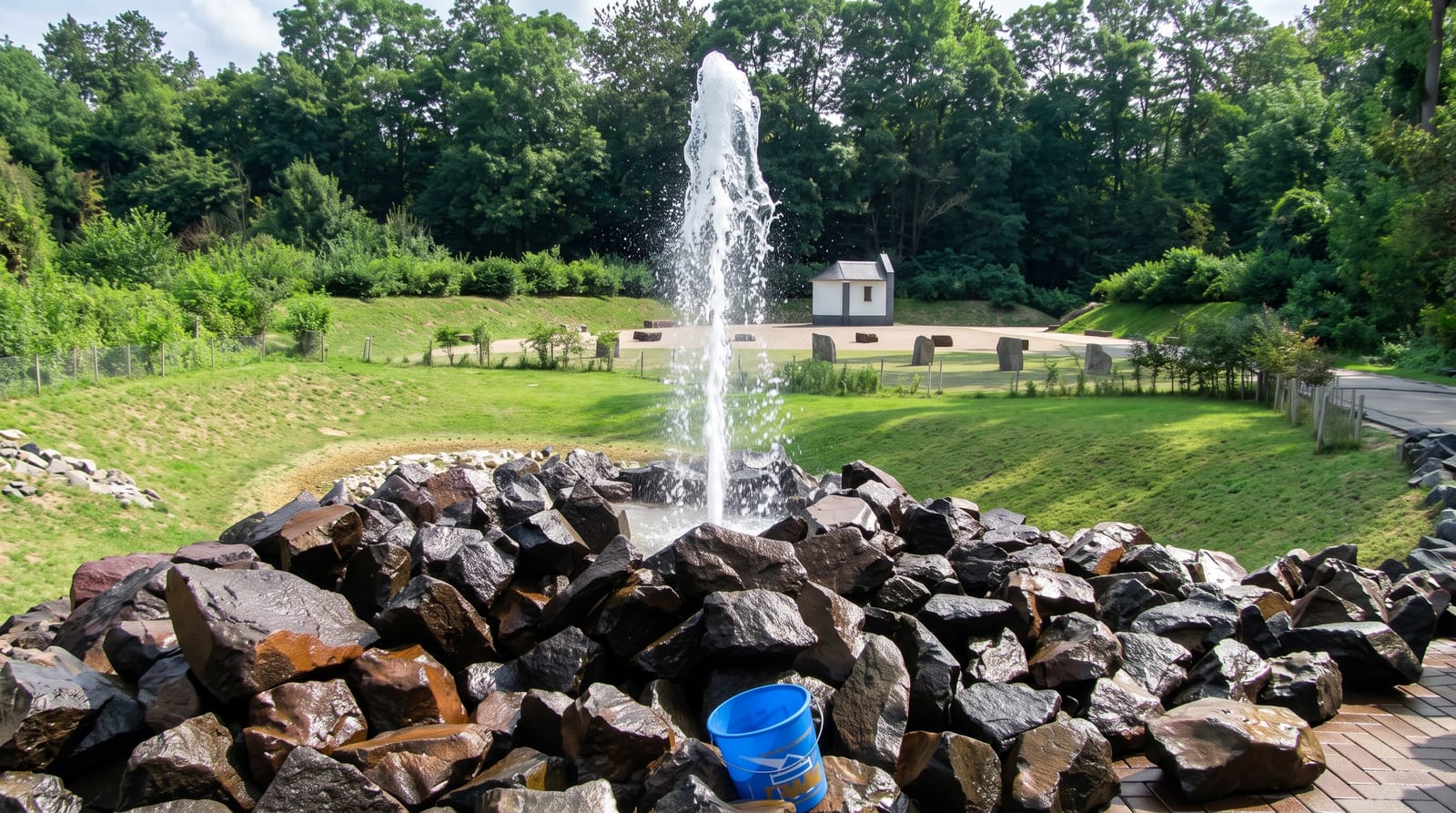
AI illustration
A borehole drilled in the early twentieth century on a peninsula in the Rhine tapped groundwater saturated with volcanic carbon dioxide. The gas comes out of solution as pressure drops in the pipe, the column lightens, and the whole thing erupts, throwing water up to around sixty metres; because it is driven by gas rather than heat, the water is cold, and it is the tallest cold-water geyser known. Eruptions occur roughly every ninety minutes to two hours and last about eight minutes. The site is reached only by boat, timed so visitors arrive for an eruption, with a museum on the mechanism at the landing.
The landscape
- The cold eruption - a column up to about sixty metres driven by gas.
- The timed boat - access by boat scheduled around eruption times.
- The museum - displays on the geyser's mechanism and Eifel volcanism.
- The peninsula - a Rhine island reserve with the borehole at its centre.
When to go
April to October; the site closes for winter, roughly November to March. Boats run to a schedule tied to eruption times and must be booked in season.
Good to know
It closes for several winter months and access is only by ticketed boat. The whole visit takes around three hours because of the schedule. High Rhine water can cancel sailings.
Nearby
Maria Laach lies west; Koblenz is upstream.
What to pack for Geysir Andernach
Chosen from what this place is for. Tap a kit for the full checklist.
- Broken-in walking shoes or boots - Grip and ankle support matter more than looks; never hike in brand-new boots. Find on Amazon
- Swimwear - Needed at most public thermal pools; some traditional baths are nude and single-sex. Find on Amazon
- Layers + a waterproof shell - Mountain weather turns fast; a packable rain jacket saves the day. Find on Amazon
- Quick-dry towel + flip-flops - For wet changing areas and hot poolside stone. Find on Amazon
Some links on this page are Amazon affiliate links - if you buy through them we may earn a small commission at no extra cost to you.
All packing kitsPlan your trip
Where to start if Geysir Andernach is going on the list.
Booking links on this page are affiliate links - if you book through them we may earn a small commission at no extra cost to you. It never changes what we write about a place.
Opening times, ticket prices and seasonal closures change - check the official source before you go: official site.