German Clock Museum
The full story of the cuckoo clock, including the fact that its bird call was designed by a competition.
Updated 12 October 2026
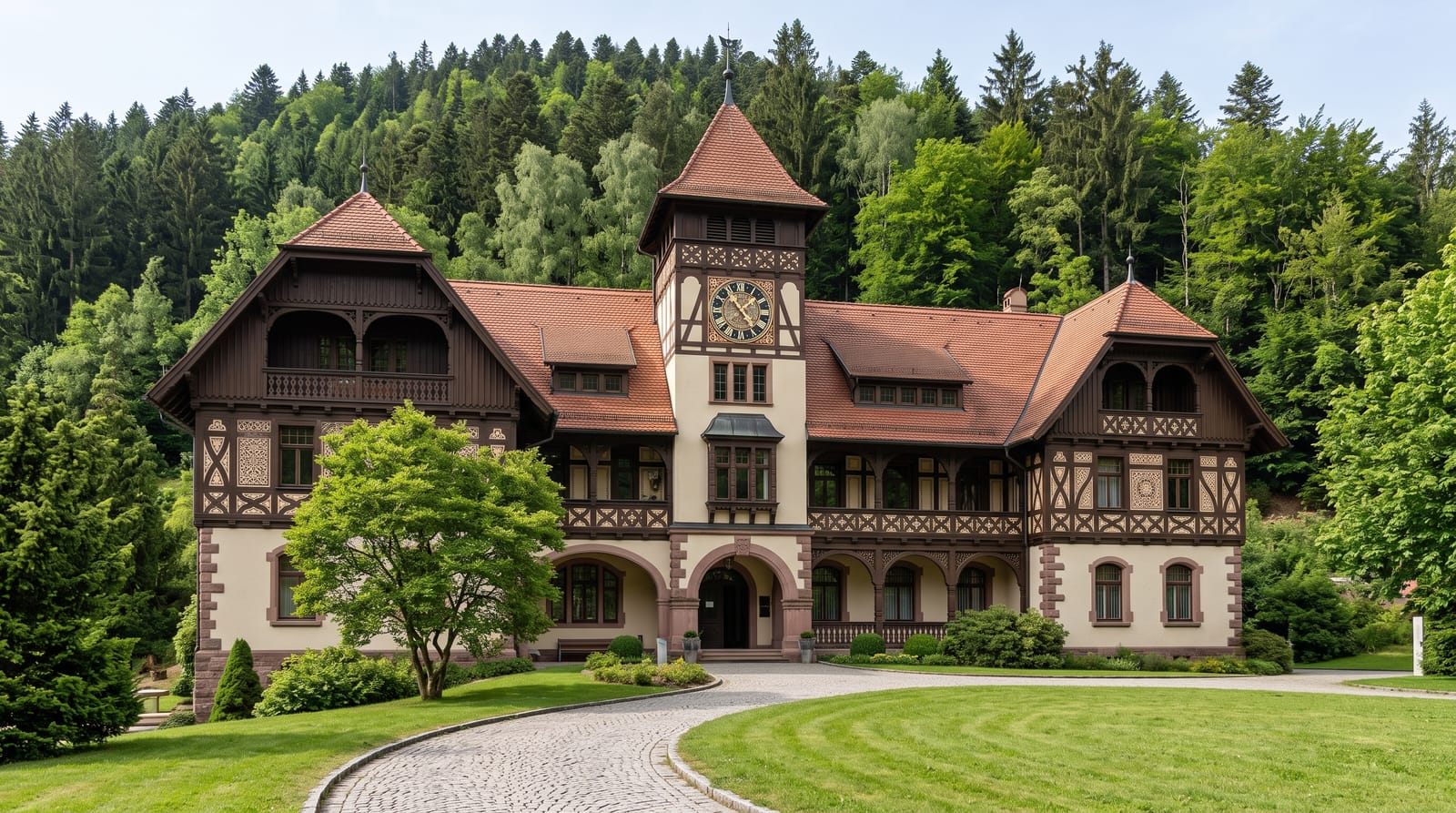
AI illustration
Clockmaking developed in the Black Forest from the seventeenth century as winter work for farming households, using wooden gears and local skills, and grew into an export industry selling across Europe. The museum in Furtwangen holds around eight thousand objects and traces the trade from wooden movements through the cuckoo clock to industrial production and quartz. The familiar carved-house cuckoo clock is a nineteenth-century design: a competition held in 1850 by the clockmaking school in Furtwangen sought new casings, and the railway-house pattern that won became the standard form now taken as traditional.
Highlights
- The wooden movements - early Black Forest clocks with wooden gears.
- The 1850 competition - the origin of the familiar cuckoo clock casing.
- The industrial phase - mass production and the export trade.
- The mechanical music - orchestrions and automatic instruments in the collection.
When to go
Year-round; the museum closes on some winter days. It is quiet compared with the tourist clock shops elsewhere in the region and better on the subject.
Before you go
Furtwangen is a working town with little else for visitors. The museum is technical in places. Displays are labelled in German with English summaries.
Nearby
Triberg lies north; Villingen is east.
Key facts
Source: Wikidata, item Q896528, read on 18 October 2026.
What to pack for German Clock Museum
Chosen from what this place is for. Tap a kit for the full checklist.
- Comfortable walking shoes - Sightseeing means kilometres of pavement and cobbles daily. Find on Amazon
- A slim anti-theft daypack - Zips that close properly; keep it in front in crowds and on transit. Find on Amazon
- A refillable water bottle - Many cities have public fountains; save money and plastic. Find on Amazon
- A light layer + compact umbrella - For museum air-con and a sudden shower. Find on Amazon
Some links on this page are Amazon affiliate links - if you buy through them we may earn a small commission at no extra cost to you.
All packing kitsPlan your trip
Where to start if German Clock Museum is going on the list.
Booking links on this page are affiliate links - if you book through them we may earn a small commission at no extra cost to you. It never changes what we write about a place.
Opening times, ticket prices and seasonal closures change - check the official source before you go: official site.