Brandenburg Gate
The symbol of Berlin and of German reunification - a neoclassical triumphal gate crowned by a chariot, once cut off by the Wall, now a place of celebration.
Updated 16 October 2026
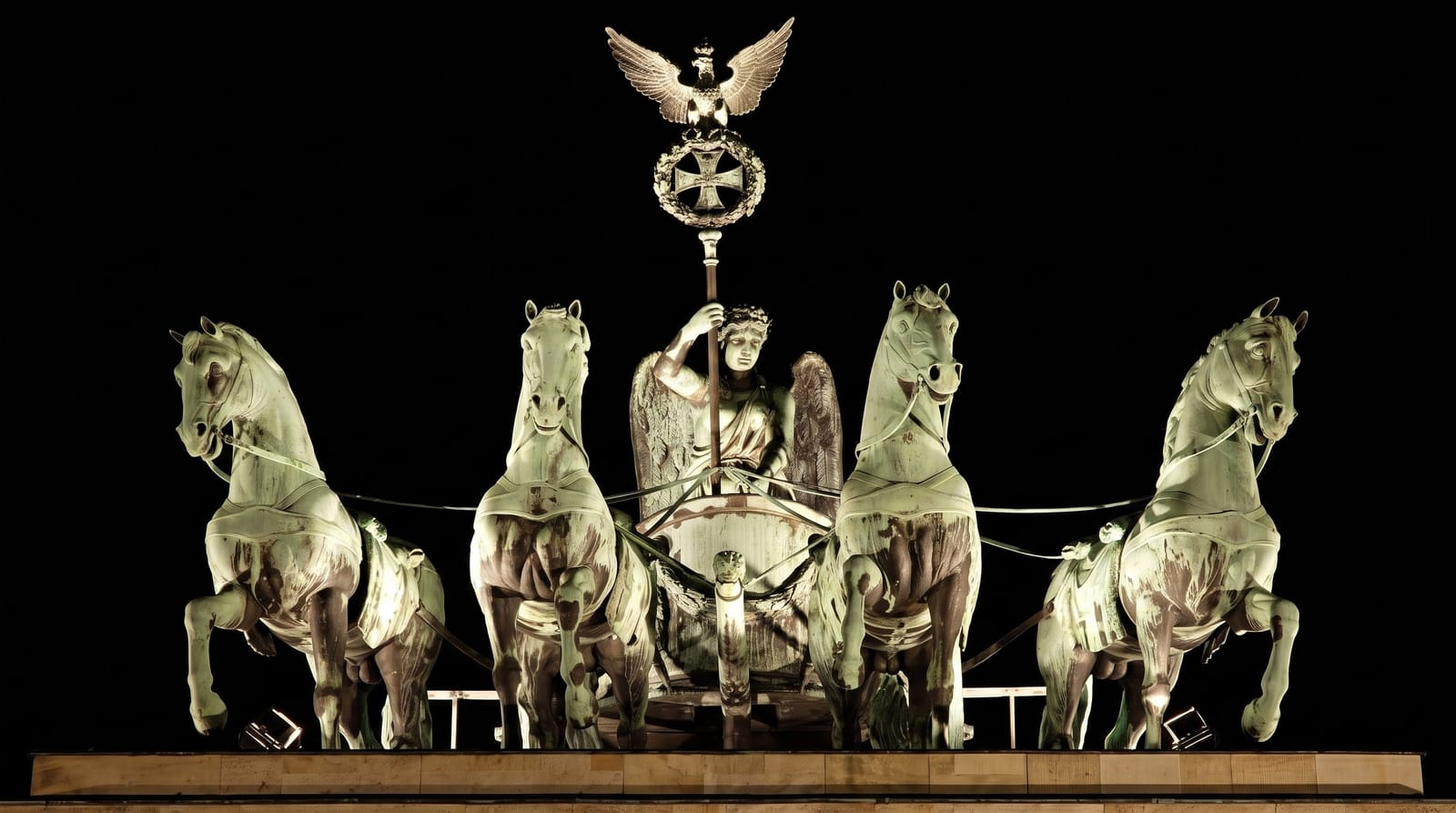
AI illustration
The Brandenburg Gate is the symbol of Berlin, a stately neoclassical triumphal gate crowned by the chariot of victory, raised in the eighteenth century. For decades it stood stranded in no-man's-land beside the Berlin Wall, a symbol of a divided city and continent, and when the Wall fell it became the great emblem of German reunification, and remains a gathering place for celebration.
Background
The present gate went up between 1788 and 1791, commissioned by King Frederick William II of Prussia and designed by the royal architect Carl Gotthard Langhans; Johann Gottfried Schadow sculpted the quadriga. The design follows the Propylaea, the entrance to the Acropolis of Athens. Twelve fluted Doric columns, six per side, frame five passageways, and at first ordinary citizens could use only the outer two on each side. The structure is 26 metres high and 62.5 metres wide, and each long face carries 16 metopes with scenes from Greek mythology. An earlier gate by Philipp Gerlach, built with the Berlin Customs Wall in 1734, stood where the road to Brandenburg an der Havel left the city.
Source: Wikipedia, "Brandenburg Gate"
Highlights
- The gate and quadriga - the columned gate crowned by the chariot of victory.
- Pariser Platz - the grand square before it.
- The reunification story - the site where the divided city came together.
- Unter den Linden - the grand boulevard leading east from the gate.
When to go
Year-round; a landmark to see any time, floodlit and atmospheric after dark. New Year and major events bring huge crowds and celebrations to the square before it.
Before you go
It is a single monument, quickly seen, though its history gives it weight. The square is often busy with tourists, costumed characters and events. It is best combined with the nearby Reichstag and Holocaust Memorial into one walk.
Nearby
The Reichstag, the Holocaust Memorial and Unter den Linden are all within a short walk.
Key facts
Source: Wikidata, item Q82425, read on 18 October 2026.
What to pack for Brandenburg Gate
Chosen from what this place is for. Tap a kit for the full checklist.
- Comfortable walking shoes - Sightseeing means kilometres of pavement and cobbles daily. Find on Amazon
- A slim anti-theft daypack - Zips that close properly; keep it in front in crowds and on transit. Find on Amazon
- A refillable water bottle - Many cities have public fountains; save money and plastic. Find on Amazon
- A light layer + compact umbrella - For museum air-con and a sudden shower. Find on Amazon
Some links on this page are Amazon affiliate links - if you buy through them we may earn a small commission at no extra cost to you.
All packing kitsPlan your trip
Where to start if Brandenburg Gate is going on the list.
Booking links on this page are affiliate links - if you book through them we may earn a small commission at no extra cost to you. It never changes what we write about a place.
Opening times, ticket prices and seasonal closures change - check the official source before you go: official site.