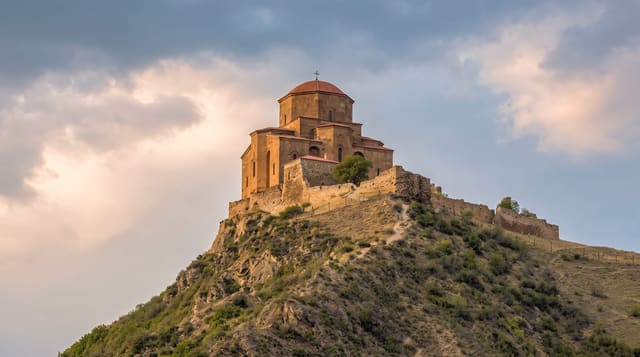
Ananuri Fortress
A walled castle above a reservoir on the Military Highway, with two carved stone churches.
Updated 31 August 2026
Ananuri was the seat of the Aragvi dukes and guarded the road north through the mountains, and what stands is a walled compound of the sixteenth and seventeenth centuries on a bluff above the Aragvi, with towers, a keep and two churches inside the walls. The larger, the Church of the Assumption, was built in 1689 and its southern facade carries a deeply carved grapevine cross flanked by dragons and angels, one of the best pieces of late Georgian relief sculpture. Inside are remains of frescoes damaged by fire. The Zhinvali reservoir filled the valley below in the 1980s, so the fortress now stands above turquoise water, which is how everyone photographs it.
What you'll find
- The carved grapevine cross - the relief on the Assumption church facade.
- Walls, towers and keep - the seventeenth-century compound.
- Fire-damaged frescoes - what survives inside the larger church.
- The reservoir below - turquoise water filling the old valley.
When to go
April to October; the reservoir is fullest and bluest in early summer and drops later in the year. Two hours. It is a fixed stop on every tour bus route north, so mornings are quieter.
Before you go
Tour buses arrive in numbers and the compound is small. The reservoir level drops through the summer, exposing mud banks. Stalls at the entrance are aggressive. Interpretation is limited.
Nearby
Zhinvali reservoir is below; Gudauri lies north along the highway.
What to pack for Ananuri Fortress
Chosen from what this place is for. Tap a kit for the full checklist.
- Reef-safe sunscreen - High SPF that will not bleach the coral you are swimming over. Find on Amazon
- Comfortable walking shoes - Sightseeing means kilometres of pavement and cobbles daily. Find on Amazon
- Quick-dry towel - A microfibre towel packs small and dries in minutes. Find on Amazon
- A slim anti-theft daypack - Zips that close properly; keep it in front in crowds and on transit. Find on Amazon
Some links on this page are Amazon affiliate links - if you buy through them we may earn a small commission at no extra cost to you.
All packing kitsPlan your trip
Where to start if Ananuri Fortress is going on the list.
Booking links on this page are affiliate links - if you book through them we may earn a small commission at no extra cost to you. It never changes what we write about a place.
Opening times, ticket prices and seasonal closures change - check the official source before you go: official site.