Rurutu
A raised coral island in the Australs, ringed by limestone caves and visited by humpback whales.
Updated 19 October 2026
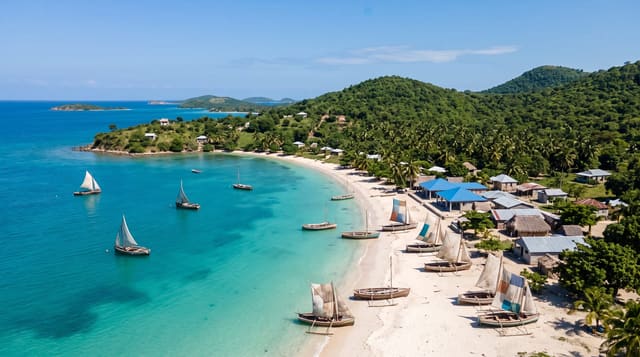
Rurutu was raised by tectonic uplift, so what was once a fringing reef now stands as limestone cliffs and terraces around a volcanic core, riddled with caves full of stalactites, several of which are open and one of which was used for burials. Humpback whales come to the island's waters between July and October to calve, close enough inshore that they are watched from the cliffs as well as from boats. The island keeps a strong weaving tradition.
History
Rurutu formed some 12 million years ago over the Macdonald hotspot and wore down over the next 10 million years almost to an atoll, until just over a million years ago it passed over the Arago hotspot and was lifted about 150 metres, raising the old coral into the cave-riddled cliffs called makatea; its early people were unusual in French Polynesia for living in caves. Between the 10th and 13th centuries navigators from the west, the 'Āti Aairi, said in oral tradition to come from Tonga, landed at Peva, followed by further arrivals from Raivavae and Tubuai from the mid-13th to the early 16th century and tribal wars that lasted until the mid-18th century. James Cook sighted the island on August 13, 1769 but could not land, missionaries of the London Missionary Society settled in 1821, and a Kingdom of Rurutu existed from 1852 to 1889, when French protection began, followed by annexation in 1900 (Wikipedia, Rurutu).
Highlights
- The humpback whales - calving close inshore between July and October.
- The limestone caves - stalactite chambers in the raised reef, some used for burial.
- The raised terraces - the old reef standing above the sea after uplift.
- The weaving - the pandanus work the island is known for.
When to go
July to October is the whale season and the reason most people come. Flights are limited and should be booked ahead. The island is cooler than Tahiti.
Practical notes
Whale watching is regulated and swimming with them is restricted; operators vary in how well they observe the rules. Flights are infrequent. Facilities are limited to small pensions.
Nearby
Tubuai is south, and Rimatara is west.
Key facts
Source: Wikidata, item Q224943, read on 18 October 2026.
What to pack for Rurutu
Chosen from what this place is for. Tap a kit for the full checklist.
- Reef-safe sunscreen - High SPF that will not bleach the coral you are swimming over. Find on Amazon
- Head torch + spare batteries - Hands-free light is essential; caves are truly dark. Find on Amazon
- Binoculars - The single best wildlife tool - even a compact pair transforms a sighting. Find on Amazon
- Quick-dry towel - A microfibre towel packs small and dries in minutes. Find on Amazon
Some links on this page are Amazon affiliate links - if you buy through them we may earn a small commission at no extra cost to you.
All packing kitsPlan your trip
Where to start if Rurutu is going on the list.
Booking links on this page are affiliate links - if you book through them we may earn a small commission at no extra cost to you. It never changes what we write about a place.
Opening times, ticket prices and seasonal closures change - check the official source before you go: official site.