Vannes
A walled town at the head of the Gulf of Morbihan, with washhouses built into the ramparts and gardens below.
Updated 19 October 2026
AI illustration
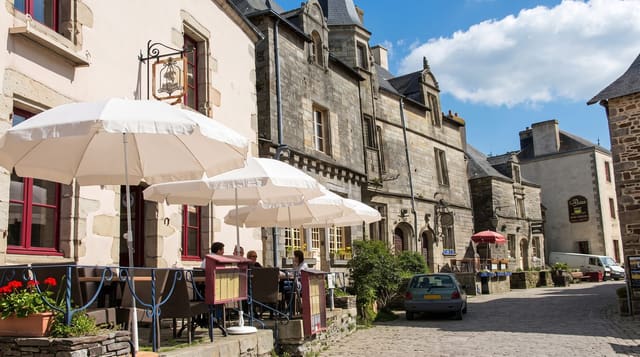
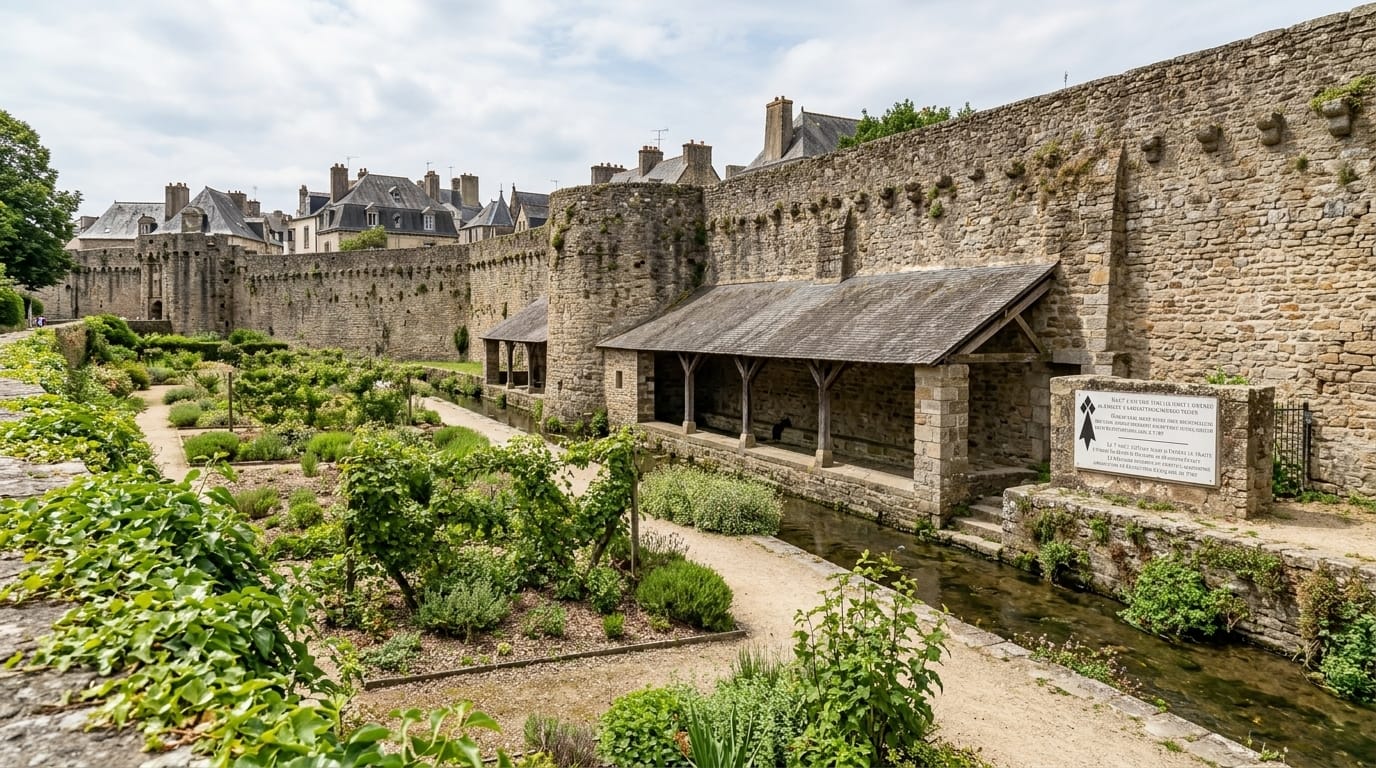
Vannes kept most of its medieval walls, and the stretch along the Marle stream is the one people photograph: the ramparts rise behind formal gardens laid out in the moat, with a long slate-roofed washhouse built against the wall where the town did its laundry until the twentieth century. Inside, the old town is half-timbered, including the house carrying the carved figures of Vannes and his wife, a pair of stone busts that have watched the street since the sixteenth century. The cathedral holds the tomb of Vincent Ferrer. The port runs right into the town centre from the gulf, so boats moor a few streets from the cathedral.
History
Vannes takes its name from the Veneti, a seafaring Celtic people whose trade with the Thames estuary grew sharply from about 150 BC; Julius Caesar's fleet defeated them in 56 BC off Locmariaquer, and the Romans founded the town of Darioritum, with the first ramparts at the end of the 1st century BC. From the 5th to the 7th century Britons crossing from Britain settled here, and under the Breton name Gwened the town became the centre of a principality called Bro-Wened or Bro-Ereg; its diocese dates from the 5th century, a church council met here in 461, and around 635 the realm was joined with Domnonia. In 1342 Vannes was besieged four times in the Breton War of Succession, and in the 14th and 15th centuries it was the capital of the Duchy of Brittany, where Duke John IV heavily fortified the walls and Dukes John V and Francis I were born in the Château de l'Hermine. Duke Francis II made the Parlement of Brittany at Vannes a sovereign court in 1485; it moved to Nantes and Rennes after 1553 and returned from 1675 to 1690, bringing an influx of wealthy residents, while the Court of Auditors of Brittany sat here from the 13th century until 1491 (Wikipedia, Vannes).
Highlights
- The rampart gardens - formal planting in the old moat below the walls.
- The washhouses - long roofed lavoirs built against the ramparts.
- Vannes and his wife - carved busts on a timber-framed house corner.
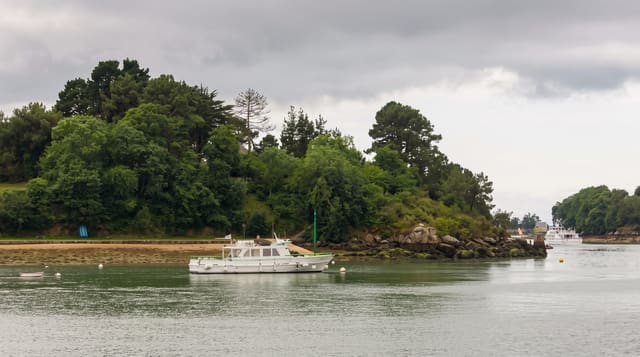
- The town port - a channel bringing boats into the centre from the gulf.
When to go
April to October; the gulf boat services run from the port in season. The Fetes d'Arvor in August brings Breton music and costume. Winter is quiet and wet.
Before you go
The old town is small and crowded in summer. The port channel empties at low tide. Parking inside the walls is essentially impossible.
Nearby
The Gulf of Morbihan lies south; Josselin is north.
Key facts
Source: Wikidata, item Q6593, read on 18 October 2026.
What to pack for Vannes
Chosen from what this place is for. Tap a kit for the full checklist.
- Comfortable walking shoes - Sightseeing means kilometres of pavement and cobbles daily. Find on Amazon
- Modest clothing - Shoulders and knees covered - the single most common requirement. Find on Amazon
- A slim anti-theft daypack - Zips that close properly; keep it in front in crowds and on transit. Find on Amazon
- A scarf or shawl - To cover the head or shoulders on entry; women especially at mosques. Find on Amazon
Some links on this page are Amazon affiliate links - if you buy through them we may earn a small commission at no extra cost to you.
All packing kitsPlan your trip
Where to start if Vannes is going on the list.
Booking links on this page are affiliate links - if you book through them we may earn a small commission at no extra cost to you. It never changes what we write about a place.
Opening times, ticket prices and seasonal closures change - check the official source before you go: official site.