Saint-Emilion
A wine village over a church carved whole out of the rock beneath it, with a bell tower on the square above.
Updated 19 October 2026

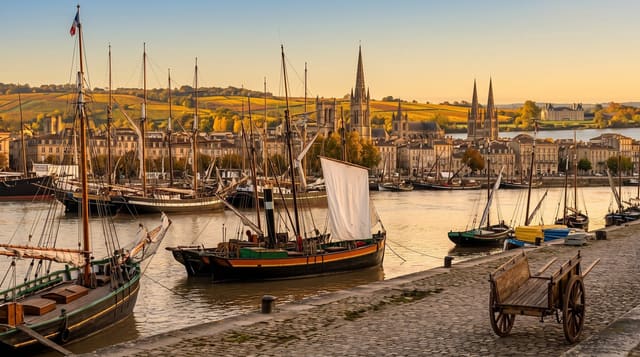
AI illustration
The village grew around a hermit called Emilion who lived in a cave here in the eighth century, and monks afterwards cut an entire church out of the limestone below the town rather than building one: the monolithic church is hollowed from solid rock, about thirty-eight metres long and eleven high, entered from a plain door with its bell tower standing on the square directly above the nave. The rock around holds catacombs and the hermit's cell. Above ground, Saint-Emilion is a village of steep cobbled lanes among vineyards that were the first wine landscape inscribed by UNESCO, in 1999. Macarons have been baked here since the seventeenth century.
History
People have lived here for at least 35,000 years, and a Gaulish oppidum stood on the hill before Augustus annexed the region in 27 BC; the Romans planted vines as early as the 2nd century AD, and in the 4th century the poet Ausonius praised the local wine. The town, once called Ascumbas, takes its name from the Breton monk Émilion of Combes, who by legend had been a baker for the Count of Vannes and, after a miracle in which the bread he carried to the poor turned to wood, left to live as a hermit in a rock shelter here until his death in 767; the monks who followed him began making wine commercially. On the pilgrim road to Santiago, the town gained many churches and monasteries, received full rights in 1199 under the Plantagenets, when King John founded the Jurade, its wine brotherhood, revived in 1948, and its macarons have been made continuously since 1620 from a recipe kept by Ursuline nuns (Wikipedia, Saint-Émilion).
The main sights
- The monolithic church - a church cut whole from solid limestone.
- The bell tower - a tower standing on the square above the buried nave.
- The catacombs and hermitage - rock-cut galleries and Emilion's cell.
- The vineyards - the first wine landscape given UNESCO listing.
When to go
April to June and September to October; harvest is late September. The underground church is visited only on guided tours booked through the tourist office, and they sell out.
Before you go
The monolithic church can only be entered on a guided tour, and independent access is impossible. The lanes are steep and cobbled. Summer crowds and coach traffic are heavy.
Nearby
Bordeaux lies west; the Dordogne valley is east.
Key facts
Source: Wikidata, item Q192548, read on 18 October 2026.
What to pack for Saint-Emilion
Chosen from what this place is for. Tap a kit for the full checklist.
- Head torch + spare batteries - Hands-free light is essential; caves are truly dark. Find on Amazon
- Comfortable walking shoes - Sightseeing means kilometres of pavement and cobbles daily. Find on Amazon
- Modest clothing - Shoulders and knees covered - the single most common requirement. Find on Amazon
- Grippy closed shoes - Cave floors are wet, muddy and slick with formations. Find on Amazon
Some links on this page are Amazon affiliate links - if you buy through them we may earn a small commission at no extra cost to you.
All packing kitsPlan your trip
Where to start if Saint-Emilion is going on the list.
Booking links on this page are affiliate links - if you book through them we may earn a small commission at no extra cost to you. It never changes what we write about a place.
Opening times, ticket prices and seasonal closures change - check the official source before you go: official site.