Bordeaux Old Town
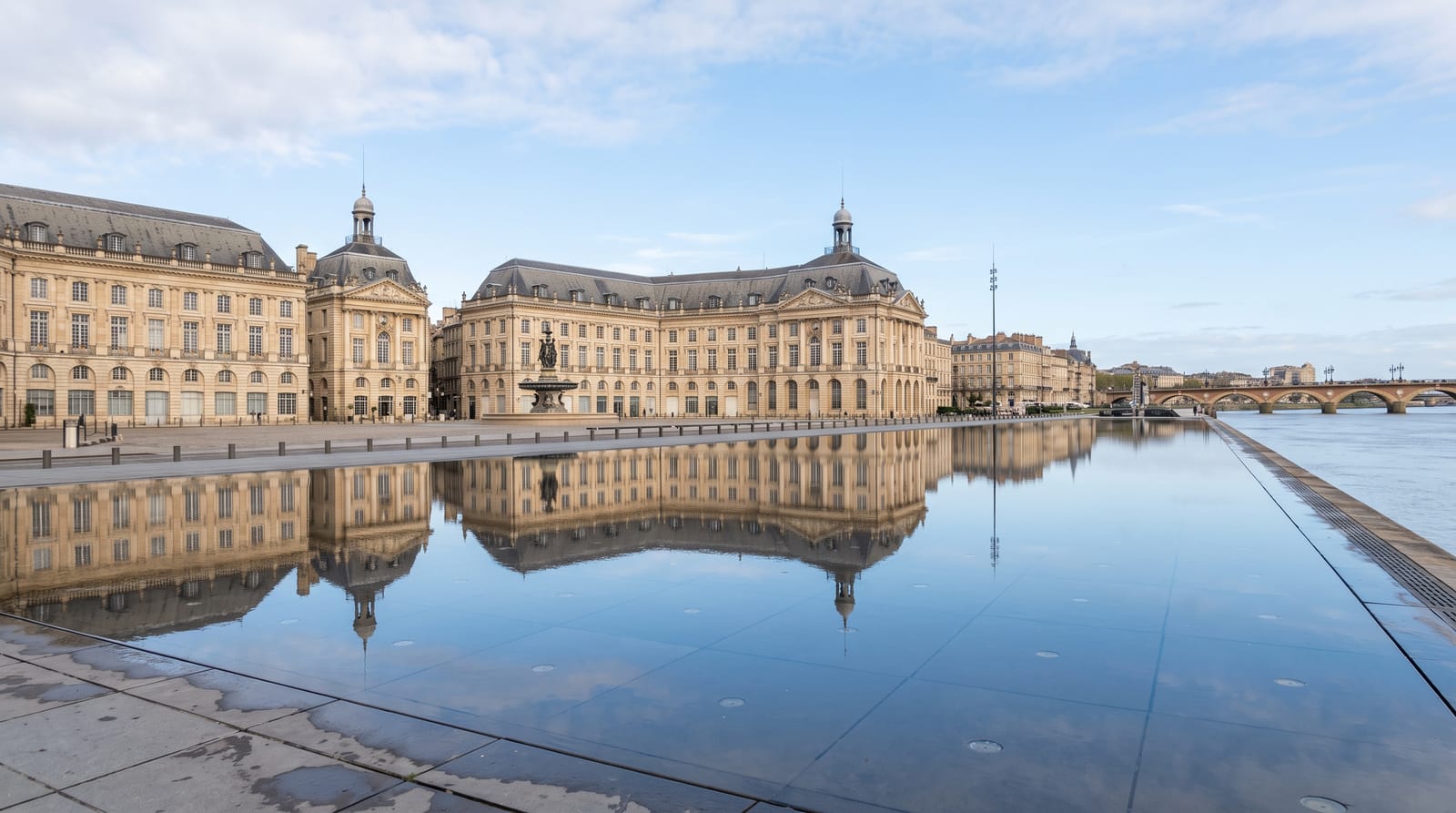
A crescent of eighteenth-century stone along the Garonne, facing the Miroir d'Eau, the largest reflecting pool in the world when it opened in 2006.
Updated 14 October 2026
AI illustration
Bordeaux is called the Port of the Moon for the crescent bend of the Garonne it sits on, and the eighteenth-century intendants rebuilt the waterfront as a continuous facade of pale limestone, which is why the UNESCO listing of 2007 covers about eighteen hundred hectares, one of the largest urban inscriptions in the world. Facing the Place de la Bourse, the Miroir d'Eau, laid in 2006, is a granite slab flooded to two centimetres that reflects the facade, then drains and produces mist; when it opened, the city says, it was the largest reflecting pool in the world. The Grand Theatre of 1780 and the Saint-Andre cathedral complete the centre.
Highlights
- The Miroir d'Eau - a shallow granite pool reflecting the Place de la Bourse.
- The stone crescent - a continuous eighteenth-century river facade.
- The Grand Theatre - a colonnaded 1780 opera house.
- The Chartrons quarter - the old wine merchants' district north of the centre.
When to go
April to June and September to October; the Miroir d'Eau runs roughly spring to autumn and is drained in winter and for maintenance. The wine festival falls in June on alternate years.
Practical notes
The Miroir d'Eau is off for part of the year and during repairs, which disappoints many visitors. The centre is large and the sights are spread. Summer heat on the stone is heavy.
Nearby
The Cite du Vin lies north along the river; Saint-Emilion is east.
What to pack for Bordeaux Old Town
Chosen from what this place is for. Tap a kit for the full checklist.
- Comfortable walking shoes - Sightseeing means kilometres of pavement and cobbles daily. Find on Amazon
- Modest clothing - Shoulders and knees covered - the single most common requirement. Find on Amazon
- A slim anti-theft daypack - Zips that close properly; keep it in front in crowds and on transit. Find on Amazon
- A scarf or shawl - To cover the head or shoulders on entry; women especially at mosques. Find on Amazon
Some links on this page are Amazon affiliate links - if you buy through them we may earn a small commission at no extra cost to you.
All packing kitsPlan your trip
Where to start if Bordeaux Old Town is going on the list.
Booking links on this page are affiliate links - if you book through them we may earn a small commission at no extra cost to you. It never changes what we write about a place.
Opening times, ticket prices and seasonal closures change - check the official source before you go: official site.