Rock of Solutre
A limestone prow over the Maconnais vines, under which lie the bones of tens of thousands of horses.
Updated 4 September 2026
AI illustration
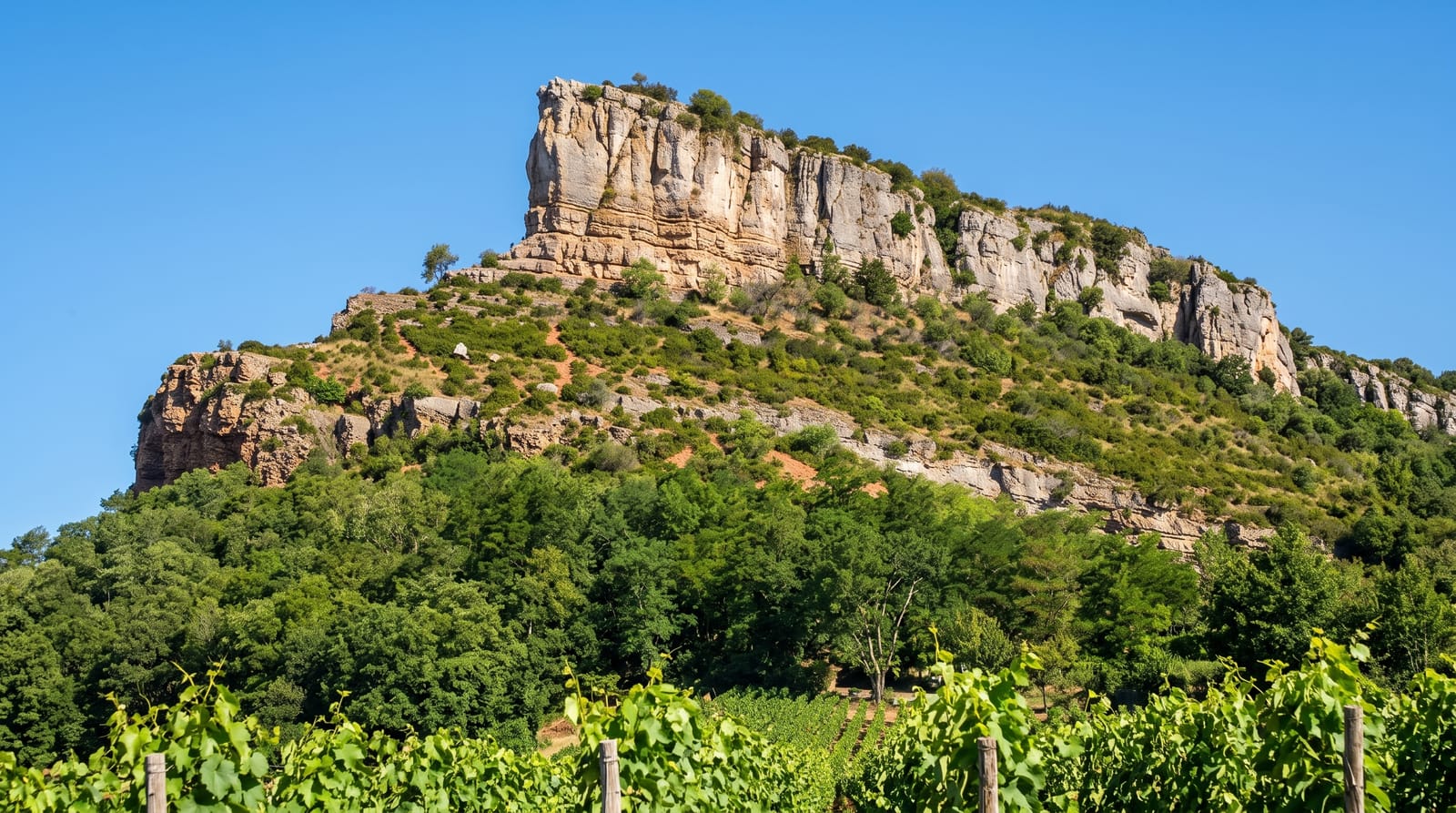
The Roche de Solutre is a wedge of Jurassic limestone standing about four hundred and ninety metres over vineyards, and the walk to the top takes half an hour with the Saone valley and, on clear days, Mont Blanc in view. At its foot is one of the richest prehistoric sites in Europe: a deposit containing the remains of tens of thousands of horses hunted over thousands of years, which gave its name to the Solutrean culture and its finely worked laurel-leaf flint blades. The old story that hunters drove herds off the cliff has been discarded; the animals were killed at the base, where they were funnelled and ambushed.
The landscape
- The limestone prow - a wedge of rock over the Maconnais vineyards.
- The horse deposit - the prehistoric bone bed at the foot of the rock.
- The museum - Solutrean tools and the site's excavation history.
- The summit view - the Saone valley and the Alps on clear days.
When to go
April to October; the climb is exposed with no shade and hard in midsummer heat. Clear winter days give the best long views. The museum opens most of the year.
Things to know
The path is stony and steep in places. There is no shade or water on the rock. The cliff-driving story appears in old books and on some signs but is not supported by evidence.
Nearby
Macon lies east; Cluny is northwest.
Key facts
Source: Wikidata, item Q3437539, read on 18 October 2026.
What to pack for Rock of Solutre
Chosen from what this place is for. Tap a kit for the full checklist.
- Broken-in walking shoes or boots - Grip and ankle support matter more than looks; never hike in brand-new boots. Find on Amazon
- Layers + a waterproof shell - Mountain weather turns fast; a packable rain jacket saves the day. Find on Amazon
- Daypack with rain cover - 20-30 litres holds water, snacks, layers and a first-aid kit. Find on Amazon
- Offline maps + a power bank - Download the trail before you lose signal; carry backup charge. Find on Amazon
Some links on this page are Amazon affiliate links - if you buy through them we may earn a small commission at no extra cost to you.
All packing kitsPlan your trip
Where to start if Rock of Solutre is going on the list.
Booking links on this page are affiliate links - if you book through them we may earn a small commission at no extra cost to you. It never changes what we write about a place.
Opening times, ticket prices and seasonal closures change - check the official source before you go: official site.

