Covered Passages of Paris
Glass-roofed shopping streets built before department stores, of which around twenty survive from about a hundred and fifty.
Updated 4 September 2026
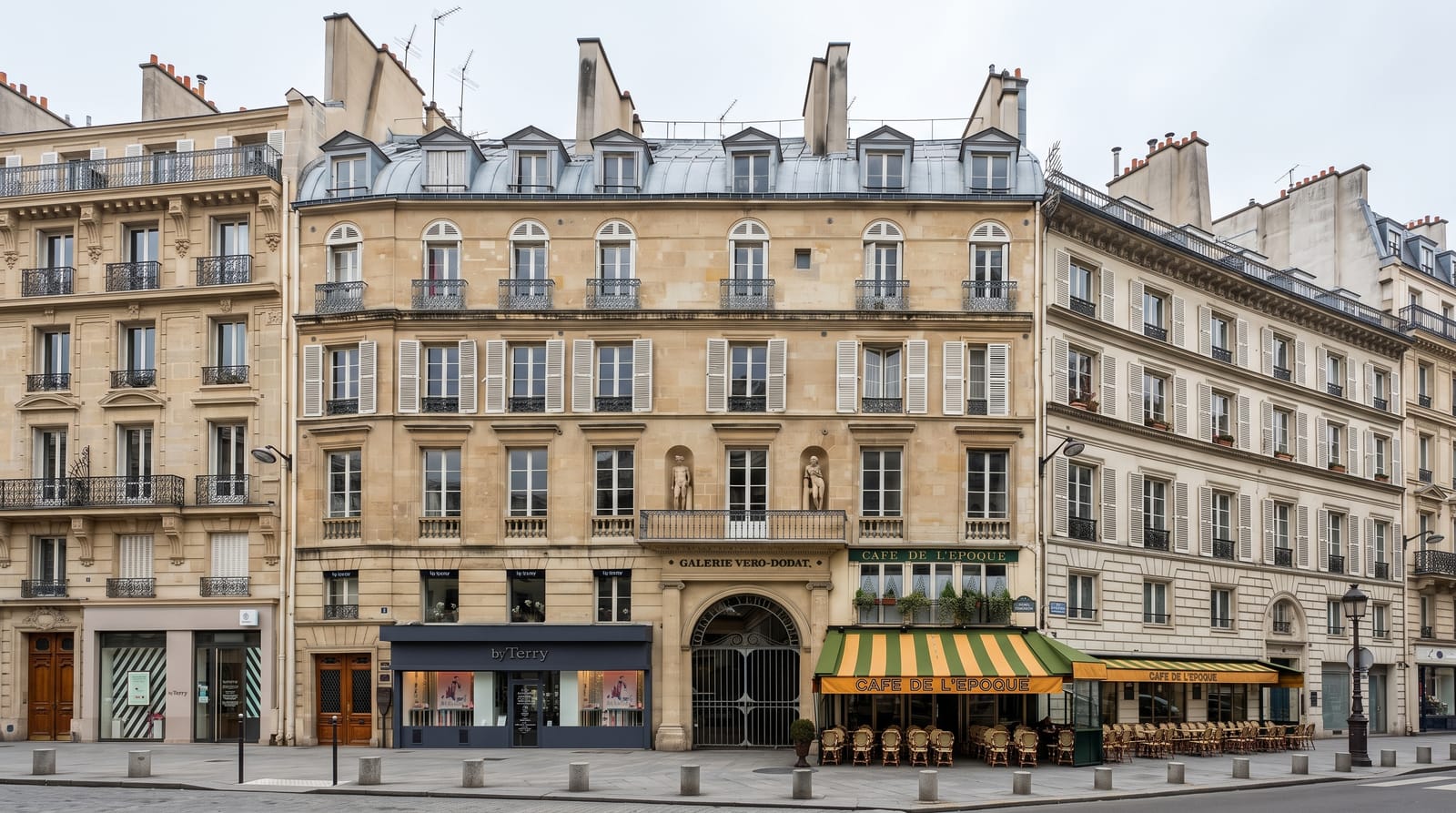
AI illustration
Before pavements were reliable and before department stores existed, Paris built covered passages: private shopping streets cut through blocks, glazed overhead with iron and glass, tiled or mosaic underfoot, lit by gas and safe from mud and traffic. Around a hundred and fifty were built, mostly between 1800 and 1850, and roughly twenty survive. Galerie Vivienne of 1823 is the grandest, with mosaic floors and a rotunda; Passage des Panoramas, of 1799, is the oldest and now full of stamp dealers and small restaurants; Passage Jouffroy holds the Musee Grevin and a hotel; Galerie Vero-Dodat has black and white marble and a violin maker.
Highlights
- Galerie Vivienne - mosaic floors, a rotunda and the grandest glazing.
- Passage des Panoramas - the oldest, with stamp dealers and bistros.
- Passage Jouffroy - the wax museum entrance and a covered hotel.
- Galerie Vero-Dodat - marble paving and old shopfronts.
When to go
Year-round; the passages exist precisely for bad weather, so rain is the ideal time. Most close at night and some on Sundays. Several can be walked as one route in an afternoon.
Before you go
Some passages are shabby, half-empty or closed for restoration. Opening hours vary and several shut on Sundays. The route between them involves ordinary busy streets.
Nearby
Palais-Royal lies southwest; the Grands Boulevards run north.
What to pack for Covered Passages of Paris
Chosen from what this place is for. Tap a kit for the full checklist.
- Comfortable walking shoes - Sightseeing means kilometres of pavement and cobbles daily. Find on Amazon
- A slim anti-theft daypack - Zips that close properly; keep it in front in crowds and on transit. Find on Amazon
- A refillable water bottle - Many cities have public fountains; save money and plastic. Find on Amazon
- A light layer + compact umbrella - For museum air-con and a sudden shower. Find on Amazon
Some links on this page are Amazon affiliate links - if you buy through them we may earn a small commission at no extra cost to you.
All packing kitsPlan your trip
Where to start if Covered Passages of Paris is going on the list.
Booking links on this page are affiliate links - if you book through them we may earn a small commission at no extra cost to you. It never changes what we write about a place.
Opening times, ticket prices and seasonal closures change - check the official source before you go: official site.