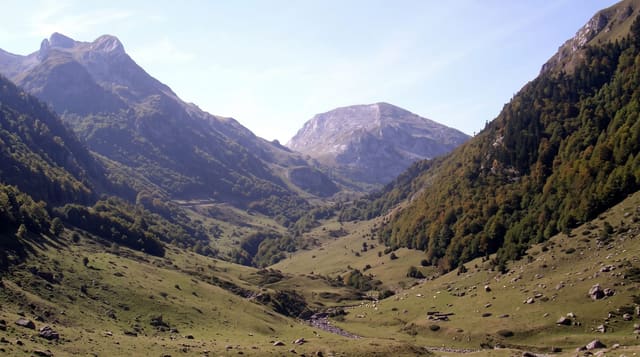
Cirque de Gavarnie
The Pyrenees' natural colosseum - a glacial amphitheatre of 1,500-metre tiered walls with mainland France's tallest waterfall pouring down its centre.
Updated 18 October 2026
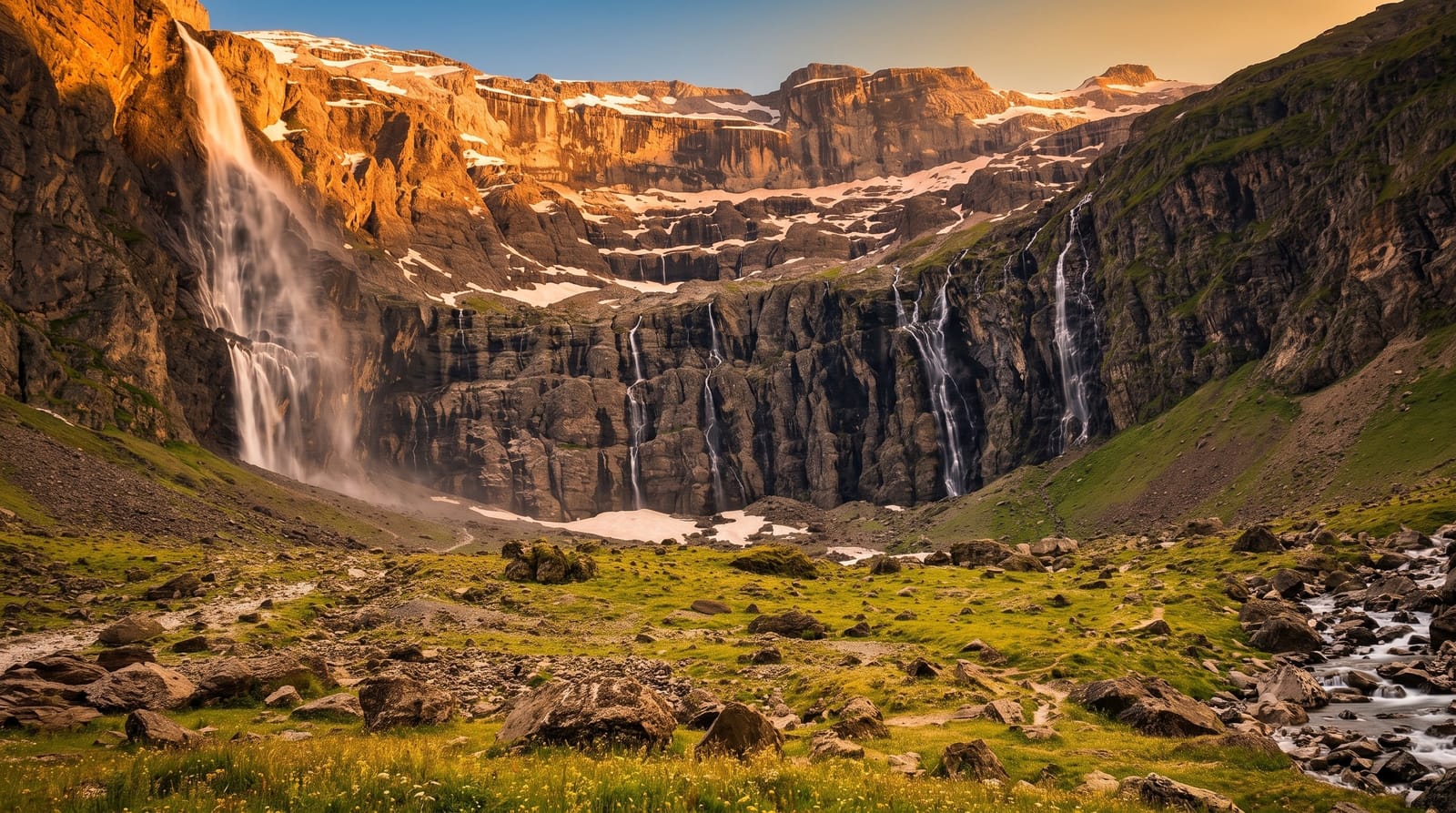
AI illustration
UNESCO World Heritage
Gavarnie is where the Pyrenees stage their grand finale: a glacial cirque of stacked rock walls rising some 1,500 metres in tiered galleries, crowned by three-thousand-metre summits along the Spanish frontier ridge and split down the middle by the Grande Cascade, which drops 422 metres in two or three steps, the tallest waterfall in mainland France. Victor Hugo called the place a 'colosseum of nature', and the description has never been improved on - the walls really do curve like seating tiers around the valley floor. The classic approach is a gentle hour's walk from Gavarnie village along the torrent, meadows giving way to moraine as the amphitheatre fills the sky; stronger legs continue toward the waterfall's base or up to the hotel-refuge balcony views. The cirque anchors the Pyrenees - Mont Perdu World Heritage landscape shared with Spain's Ordesa canyon since 1997, a listing that honours the mountain pastoral life still run through these valleys.
History
The cirque was carved by glaciers, which hollowed out its horseshoe of walls up to 1,500 metres high. Its great notch on the frontier ridge, La Brèche de Roland at 2,800 metres, is by legend the cut made by the sword of Roland, Charlemagne's nephew. The waterfall is fed by snowmelt and a small glacier on the Spanish side, whose water runs underground and reappears at the rim; it drops 422 metres in two or three steps, the longest of them 281 metres, the highest waterfall in mainland France. In 1997 the cirque was listed as part of the Pyrénées - Mont Perdu World Heritage Site (Wikipedia, Cirque de Gavarnie; Wikipedia, Gavarnie Falls).
What's there
- The tiered walls - snow-banded rock galleries 1,500 metres high.
- La Grande Cascade - the 422-metre falls threading the headwall.
- The village approach - the classic riverside walk into the amphitheatre.
- The Breche de Roland - the giant notch in the frontier ridge above.
When to go
June and July give the waterfall its snowmelt fury and the meadows their flowers; September brings stable weather and thinner paths. Late season shrinks the cascade; winter turns the cirque into serious mountaineering country.
What to expect
The main trail is easy but immensely popular - August middays move in procession, and the village car parks charge and fill early. The waterfall's base adds rougher walking beyond the casual path. Mountain weather flips fast here; carry layers even on a blue morning.
Nearby
The Breche de Roland, Cirque de Troumouse and Lourdes down the valley.
Key facts
Source: Wikidata, item Q1093112, read on 18 October 2026.
What to pack for Cirque de Gavarnie
Chosen from what this place is for. Tap a kit for the full checklist.
- Broken-in walking shoes or boots - Grip and ankle support matter more than looks; never hike in brand-new boots. Find on Amazon
- Head torch + spare batteries - Hands-free light is essential; caves are truly dark. Find on Amazon
- Warm base layers - Merino or synthetic against the skin - never cotton, which chills when damp. Find on Amazon
- Layers for big temperature swings - Warm sun by day, near-freezing at night, even near the equator. Find on Amazon
Some links on this page are Amazon affiliate links - if you buy through them we may earn a small commission at no extra cost to you.
All packing kitsPlan your trip
Where to start if Cirque de Gavarnie is going on the list.
Booking links on this page are affiliate links - if you book through them we may earn a small commission at no extra cost to you. It never changes what we write about a place.
Opening times, ticket prices and seasonal closures change - check the official source before you go: official site.