Chateau du Fleckenstein
A castle carved into a red sandstone reef on the German border, with rooms cut directly out of the rock.
Updated 21 October 2026
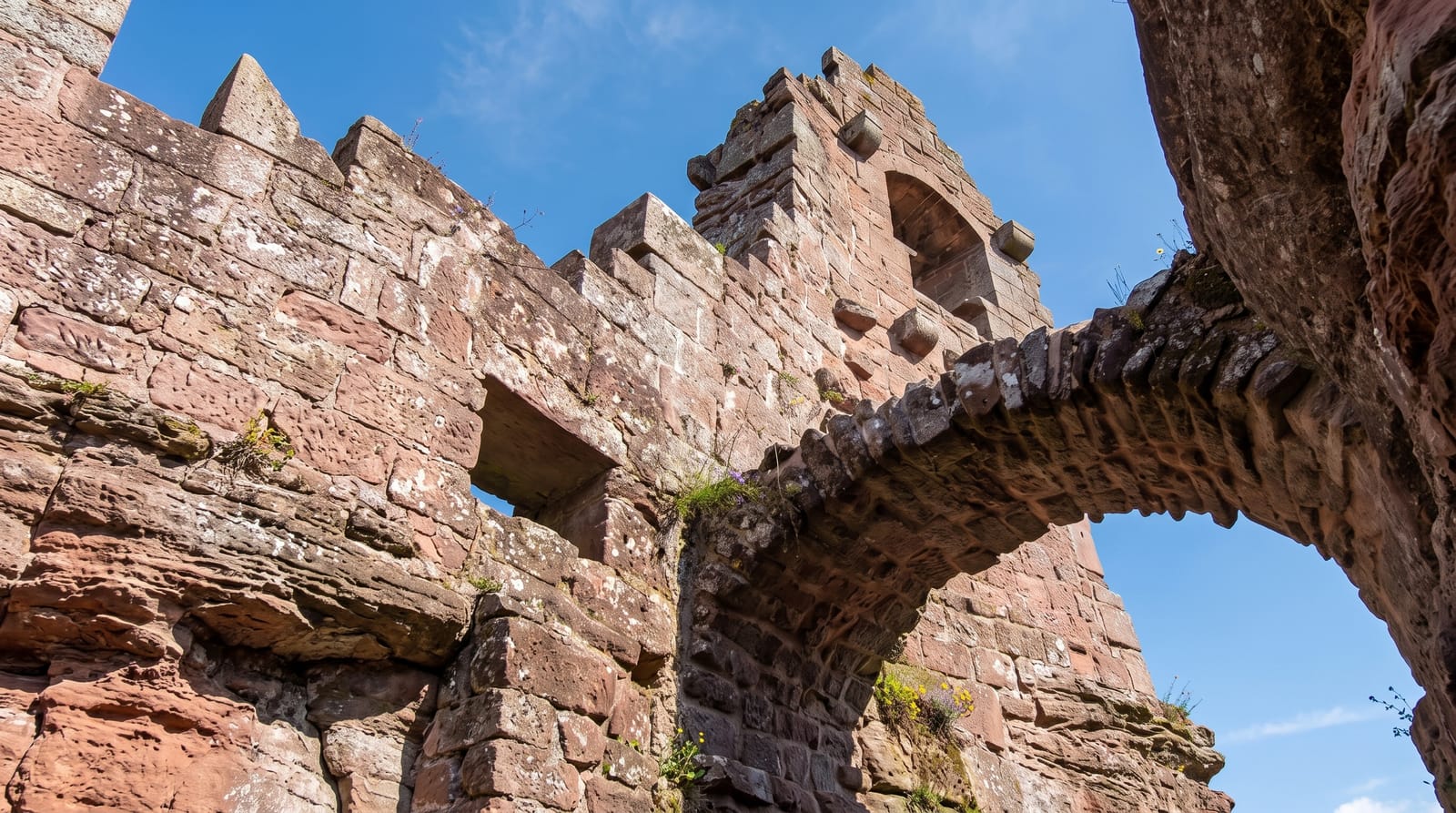
AI illustration
Fleckenstein is built on and into a narrow reef of red sandstone rising out of forest in the northern Vosges, right on the German border. Rather than being built on the rock, much of it is cut from it: stairs, cisterns, a well shaft and chambers are hewn directly into the sandstone, and the ruin runs along the crest in a thin line about fifty metres long, shaped like a boat. It was a fief of the Holy Roman Empire from the twelfth century and was destroyed by French troops under General Mélac in 1689. Visits use a puzzle-based route aimed at children, and several other ruined castles stand within walking distance in the same forest.
History
A castle stood on the site by 1165, named after the Fleckenstein family, who held it until 1720; it then passed to the Vitzthum d'Egersberg family, in 1807 to J.-L. Apffel and in 1812 to General Harty, baron of Pierrebourg, and in 1919 to the French state. The Romanesque castle survives in steps cut along the rock, troglodyte rooms and a cistern, the lower part of the well tower dates from the 13th or 14th century, the doors carry the dates 1407 and 1429, and the stair tower bears the arms of Friedrich von Fleckenstein, who died in 1559. Modernised between 1541 and 1570 and shared between two branches of the family, the castle was taken twice by French troops at the end of the 17th century, by Vauban in 1674 without resistance, and was completely destroyed in 1689 by General Mélac; it was restored after 1870, around 1908 and again since 1958 (Wikipedia, Château de Fleckenstein).
Highlights
- The rock-cut rooms - chambers and stairs hewn into the sandstone.
- The reef site - a thin ruin running along a narrow rock crest.
- The forest setting - the northern Vosges woodland and border ridge.
- The neighbouring ruins - other castles on walking routes nearby.
When to go
April to October; the site closes over winter. The forest walks connecting several castles are good in autumn. Weekends bring families for the puzzle route.
Things to know
It is a ruin with steep steps and exposed edges, needing decent footwear. The visit format is heavily child-oriented. Explanation is mostly in French and German.
Nearby
Wissembourg lies northeast; the German border is a few hundred metres away.
Key facts
Source: Wikidata, item Q1011752, read on 18 October 2026.
What to pack for Chateau du Fleckenstein
Chosen from what this place is for. Tap a kit for the full checklist.
- Comfortable walking shoes - Sightseeing means kilometres of pavement and cobbles daily. Find on Amazon
- A slim anti-theft daypack - Zips that close properly; keep it in front in crowds and on transit. Find on Amazon
- A refillable water bottle - Many cities have public fountains; save money and plastic. Find on Amazon
- A light layer + compact umbrella - For museum air-con and a sudden shower. Find on Amazon
Some links on this page are Amazon affiliate links - if you buy through them we may earn a small commission at no extra cost to you.
All packing kitsPlan your trip
Where to start if Chateau du Fleckenstein is going on the list.
Booking links on this page are affiliate links - if you book through them we may earn a small commission at no extra cost to you. It never changes what we write about a place.
Opening times, ticket prices and seasonal closures change - check the official source before you go: official site.