Portuguese Bridge
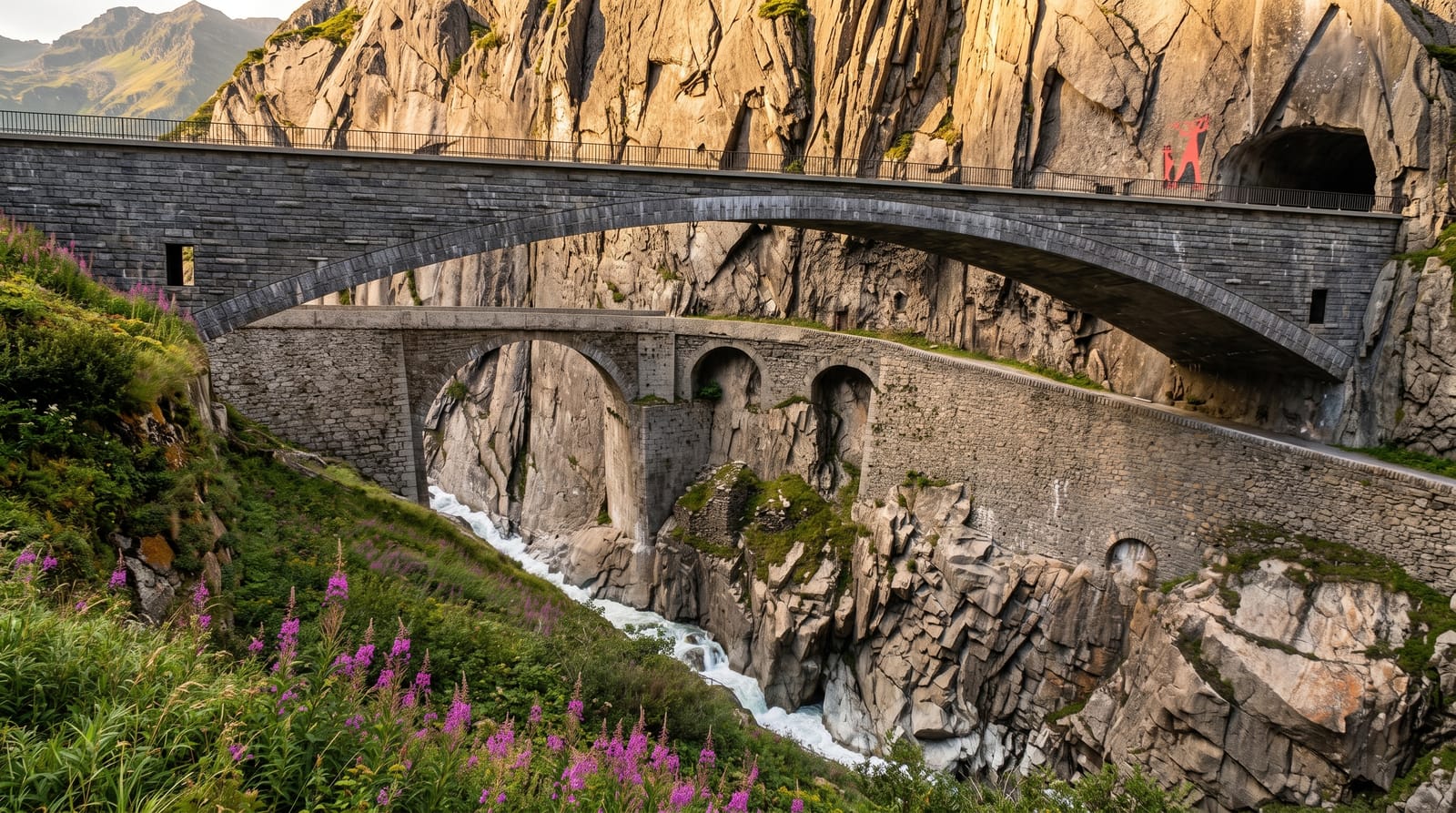
A stone arch over a gorge near Debre Libanos, attributed to the Portuguese but probably built later.
Saved in this browser only - no account, nothing sent anywhere. See your map
The bridge is a single stone arch spanning a narrow gorge on the escarpment near Debre Libanos, and it carries its name from a tradition linking it to the Portuguese mission that reached Ethiopia in the sixteenth century; most assessments date the surviving structure to the nineteenth century instead, probably built under Menelik II, though an earlier crossing may have stood here. Whichever it is, the setting is the reason to walk out: the gorge drops away beside it, a waterfall runs in the rainy season, and the escarpment view over the Jemma valley from the rim is one of the best near Addis Ababa. Gelada troops feed on the grass around the bridge and are used to people. The walk from the road takes twenty minutes over rough ground.
What you actually see
- The stone arch - a single span over the narrow gorge.
- The escarpment view - the Jemma valley from the rim beside it.
- Geladas - troops grazing near the bridge and cliffs.
- The seasonal waterfall - water dropping into the gorge after rain.
When to go
October to March for dry footing and clear views; the waterfall runs in and just after the rains from July to September, when the paths are muddy. Morning light suits the escarpment.
Honest expectations
The Portuguese attribution is folklore rather than established; the bridge is most likely nineteenth century. The path out is rough with unfenced drops. Guides and children attach themselves and payment is expected. There are no facilities beyond the nearby lodge.
Nearby
Debre Libanos is a short drive; Addis Ababa lies south.
What to pack for Portuguese Bridge
Chosen from what this place is for. Tap a kit for the full checklist.
Opening times, ticket prices and seasonal closures change - check the official source before you go: official site.