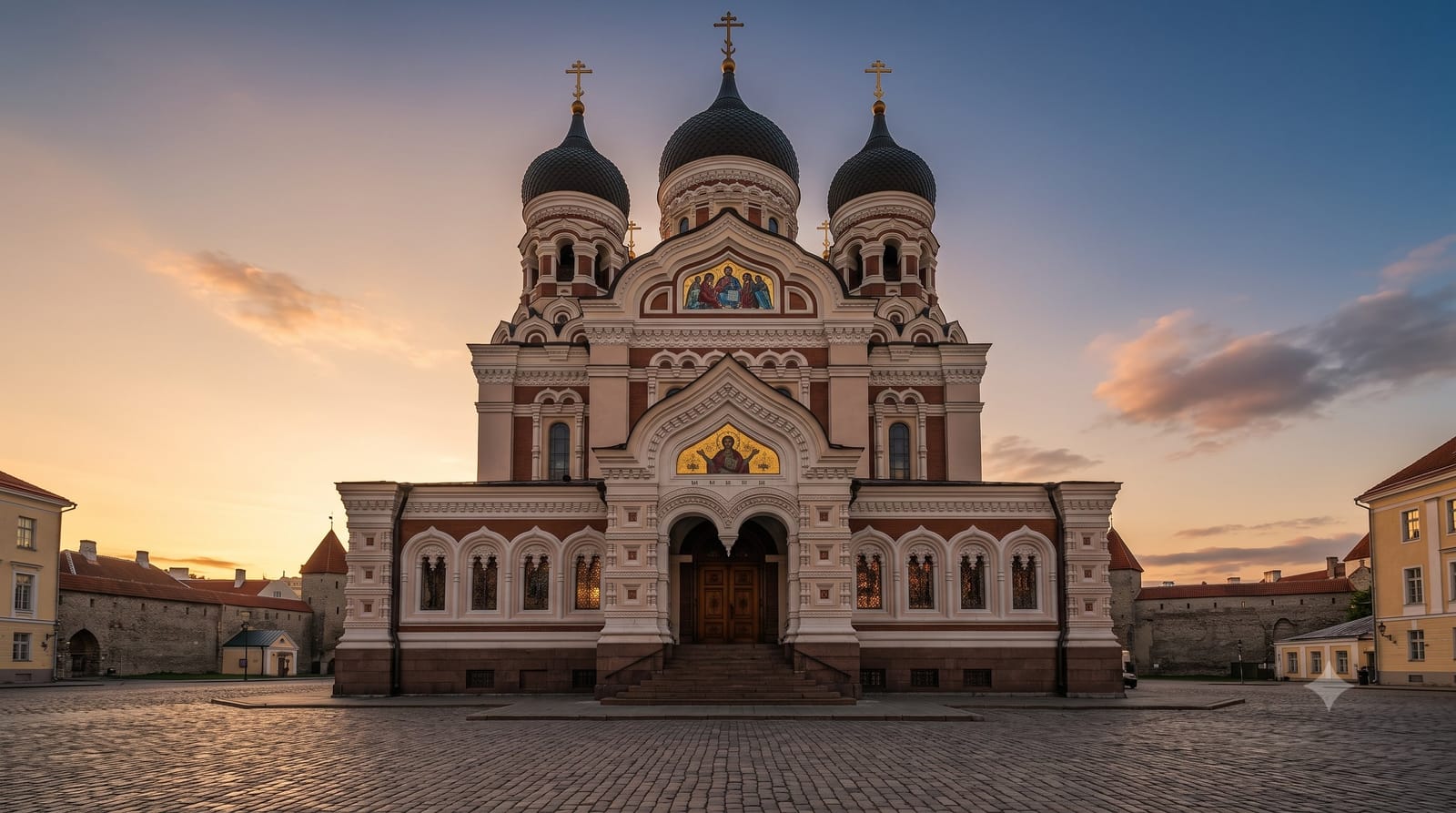
Puhtitsa Convent
A working Orthodox convent at Kuremae in Ida-Virumaa, founded in 1891 around a holy spring and an old oak.
Saved in this browser only - no account, nothing sent anywhere. See your map
Puhtitsa, the holy place, is an Orthodox women's convent at Kuremae founded in 1891 on a hill where local tradition holds that a vision of the Mother of God appeared to a herdsman beside an oak, with an icon found at its roots; the oak and a spring below the hill are venerated and pilgrims come to both. The complex is substantial: the main Dormition cathedral of 1910 in Russian revival style with onion domes, a bell tower, chapels, cells, workshops and a cemetery within walled grounds and gardens. Around eighty nuns live and work here, and it functions as an active monastery rather than a monument. Visitors are welcome in the grounds under the usual dress and behaviour rules.
What you actually see
- The Dormition cathedral - the domed church of 1910 at the centre.
- The holy spring - the water source below the hill visited by pilgrims.
- The venerated oak - the tree tied to the founding tradition.
- The convent grounds - the walled complex, cells and gardens.
When to go
May to September for the grounds and gardens. The Dormition feast in late August is the main pilgrimage and brings large numbers. Services run daily and visiting outside them is easiest.
Honest expectations
This is a working convent: modest dress is required, women are expected to cover their heads and wear skirts, and photography is restricted. Parts of the complex are closed to visitors. Services take precedence over visiting.
Nearby
Johvi lies north; Alutaguse national park is west.
What to pack for Puhtitsa Convent
Chosen from what this place is for. Tap a kit for the full checklist.
Opening times, ticket prices and seasonal closures change - check the official source before you go: official site.