Narva Castle
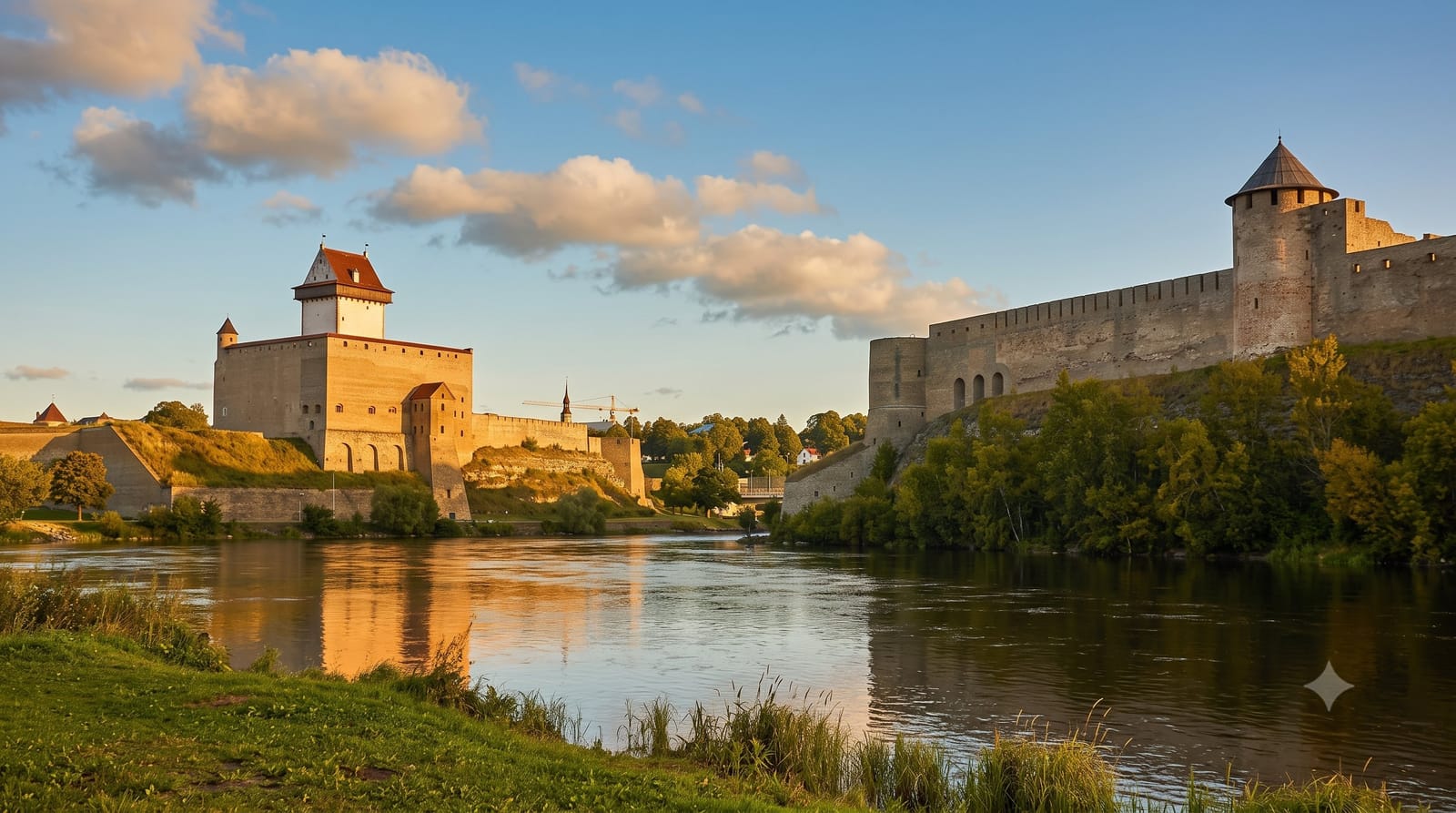
A Danish-founded fortress staring across a river at a Russian one - two castles, two countries, roughly 150 metres of water between them.
Updated 1 September 2026
Illustration
Narva Castle was begun by the Danes in the thirteenth century and finished by the Livonian Order, and its tall keep - Long Hermann - looks directly at Ivangorod fortress on the opposite bank. There is no other place in Europe where two medieval fortresses face each other this closely across an international border, and the view is the single reason most people make the trip east.
What you actually see
- The keep - a white-grey stone tower rising above a walled bailey, with the Narva river below.
- Long Hermann - the climb that puts both castles and the bridge between them in one frame.
- The museum - the town's history, including the destruction of Narva's baroque old town in 1944, after which the castle is one of very few pre-war structures left standing.
- The Northern Yard - fitted out as a working craft area with a smithy and workshops.
When to go
May to September has the yards and craft workshops active and the riverbank walk at its best. Winter is stark, cold and atmospheric, with far fewer visitors. The tower view works in any weather.
Honest expectations
Narva is a long way east and the journey is most of the commitment. The town around the castle is largely Soviet-era rebuilding, and visitors expecting a preserved old town will not find one - the point here is the border, the river and the history of what was lost.
The tower climb is steep. Photography towards the border is normal from the castle, but the crossing point itself is not a place to point a camera casually.
Nearby
Narva-Jõesuu and its long beach are fifteen minutes north. The Baltic Klint coast and Toila-Oru park lie west along the road back to Tallinn.
What to pack for Narva Castle
Chosen from what this place is for. Tap a kit for the full checklist.
Plan your trip
Where to start if Narva Castle is going on the list.
Booking links on this page are affiliate links - if you book through them we may earn a small commission at no extra cost to you. It never changes what we write about a place.
Opening times, ticket prices and seasonal closures change - check the official source before you go: official site.