Esna Temple
A Roman-period hypostyle hall sunk nine metres below the modern town, its ceiling cleaned back to full colour.
Updated 31 August 2026
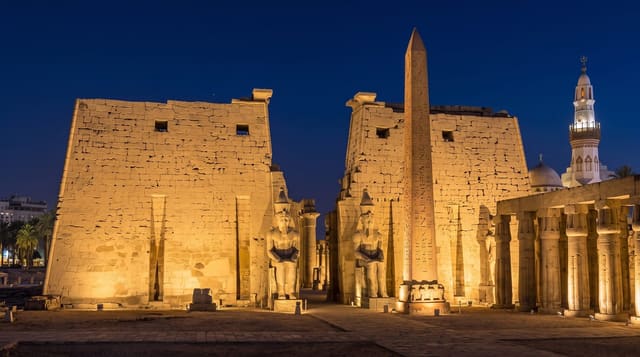
Only the hypostyle hall of the temple of Khnum survives at Esna, and it sits nine metres below the level of the modern town, which grew up over the buried remains, so you descend into it from the surrounding streets. It was built and decorated under the Roman emperors in the first and second centuries AD, with twenty-four columns carrying capitals of many different plant forms, no two rows the same. A conservation project completed in recent years removed centuries of soot, bird droppings and salt from the ceiling and columns, revealing painted astronomical figures, zodiac signs and cartouches of Roman emperors in colours nobody had seen for two thousand years. The result changed the reputation of a temple that had been a brief cruise-boat stop.
What to look for
- A cleaned painted ceiling - astronomical figures recovered from under soot.
- Twenty-four varied capitals - plant forms differing column to column.
- Roman emperors in cartouches - Latin-era rulers written as pharaohs.
- The sunken setting - the hall nine metres below the modern streets.
When to go
October to April. One to two hours. Cruise boats stop here mid-morning and fill the hall; before or after that it is quiet. The hall is shaded and cool by comparison with open sites.
Good to know
Only the hall survives, so the visit is one room. The approach through the town market involves persistent vendors. Photography rules have varied since the conservation work. Cruise stops mean short, crowded windows.
Nearby
El Kab is south on the east bank; Luxor is an hour north.
Key facts
Source: Wikidata, item Q626031, read on 18 October 2026.
What to pack for Esna Temple
Chosen from what this place is for. Tap a kit for the full checklist.
- Comfortable walking shoes - Sightseeing means kilometres of pavement and cobbles daily. Find on Amazon
- Modest clothing - Shoulders and knees covered - the single most common requirement. Find on Amazon
- A slim anti-theft daypack - Zips that close properly; keep it in front in crowds and on transit. Find on Amazon
- A scarf or shawl - To cover the head or shoulders on entry; women especially at mosques. Find on Amazon
Some links on this page are Amazon affiliate links - if you buy through them we may earn a small commission at no extra cost to you.
All packing kitsPlan your trip
Where to start if Esna Temple is going on the list.
Booking links on this page are affiliate links - if you book through them we may earn a small commission at no extra cost to you. It never changes what we write about a place.
Opening times, ticket prices and seasonal closures change - check the official source before you go: official site.