Djara Cave
A limestone cave of dense stalactites in the empty desert between the Nile valley and the oases.
Updated 31 August 2026
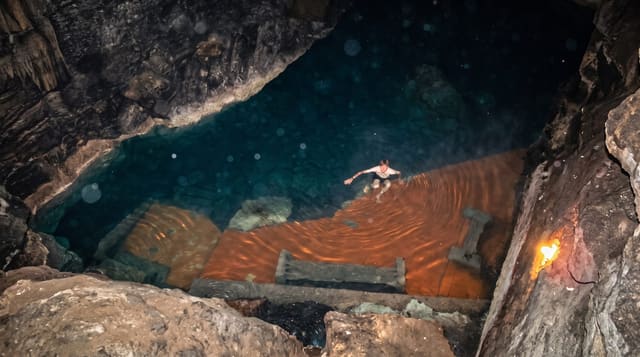
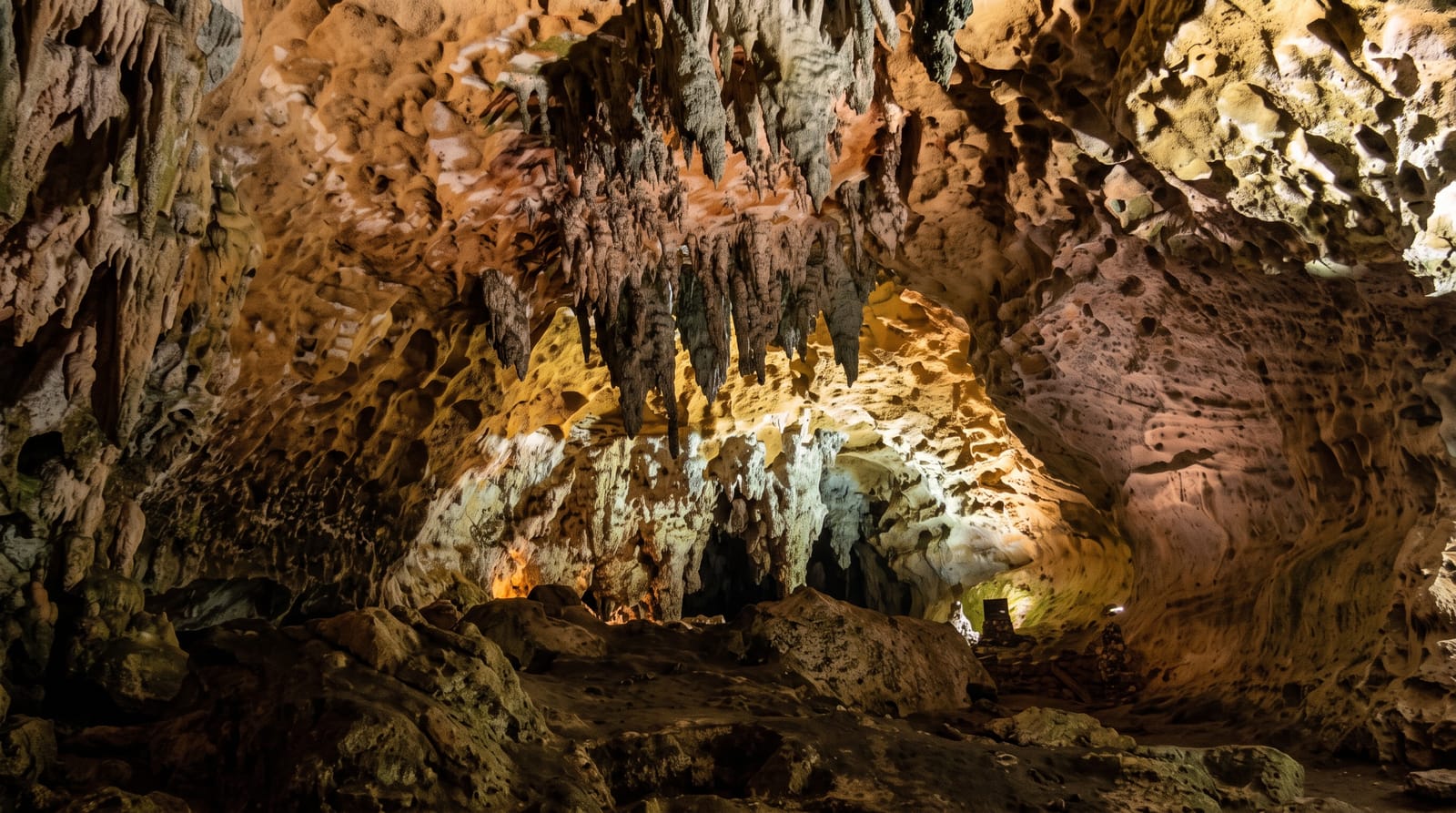
Djara lies in genuinely empty desert on the old caravan route between Asyut and Farafra, a chamber of a few thousand square metres reached down a shaft in the flat limestone plateau, and inside it is packed with stalactites, stalagmites and columns in dense formation, some of them large, preserved because the cave was sealed and forgotten. It was recorded by the German explorer Gerhard Rohlfs in 1873 and then effectively lost again until it was relocated in the 1980s. The surrounding desert carries prehistoric rock art and stone tools from a period when the region was wetter. Reaching it requires a four-wheel-drive expedition with a guide and permits, and it is usually done as part of a longer desert crossing rather than as a day trip.
The landscape
- Dense stalactite formations - a chamber crowded with columns and curtains.
- The entrance shaft - a hole in the flat plateau with no other landmark.
- Prehistoric rock art nearby - carvings from a wetter period.
- Absolute desert emptiness - no settlement in any direction.
When to go
October to April. A full day at minimum, and usually part of a multi-day desert route. Permits and a licensed guide are required and must be arranged in advance.
Before you go
This is a serious desert expedition, not an excursion: navigation, fuel and water all have to be carried, and it requires convoy travel. Permits are frequently refused. The cave has no lighting or walkway. Formations are fragile and have already been damaged by visitors.
Nearby
Farafra lies west across the desert; Asyut and the Nile valley are east.
Key facts
Source: Wikidata, item Q14210840, read on 18 October 2026.
What to pack for Djara Cave
Chosen from what this place is for. Tap a kit for the full checklist.
- Head torch + spare batteries - Hands-free light is essential; caves are truly dark. Find on Amazon
- Loose, light, long clothing - Covering up beats bare skin in the desert - and locals dress this way for a reason. Find on Amazon
- Shelter suited to the place - Tent, tarp or hut booking - match it to the terrain and rules. Find on Amazon
- Grippy closed shoes - Cave floors are wet, muddy and slick with formations. Find on Amazon
Some links on this page are Amazon affiliate links - if you buy through them we may earn a small commission at no extra cost to you.
All packing kitsPlan your trip
Where to start if Djara Cave is going on the list.
Booking links on this page are affiliate links - if you book through them we may earn a small commission at no extra cost to you. It never changes what we write about a place.
Opening times, ticket prices and seasonal closures change - check the official source before you go: official site.