Aswan Botanical Garden
An entire Nile island planted as a tropical garden by Lord Kitchener, reached only by boat.
Updated 21 October 2026
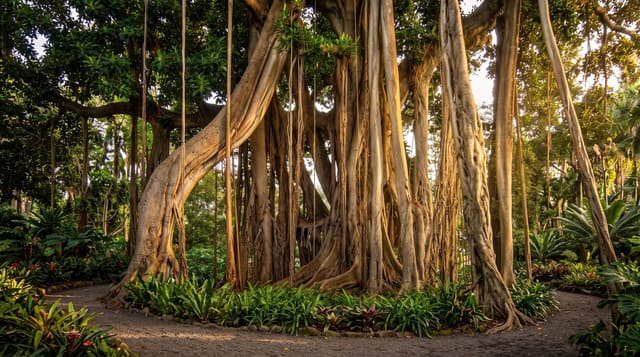
Kitchener was given the island while Consul-General in Egypt from 1911 to 1914 and planted it, importing species from India, Southeast Asia and Africa, and it later passed to the state as a botanical research station and public garden. The whole island is the garden: avenues of royal palms, doum and date palms, ficus, flame trees, bamboo, cacti and a large collection of tropical and subtropical species arranged along paths that run the length of it, with the river on both sides and feluccas passing. Birds are abundant, including hoopoes, bee-eaters and several kingfishers, and the island is a good place to see them. Because there are no cars, no roads and no buildings to speak of, it is the quietest green space in Aswan and the standard late-afternoon destination.
History
The island was known as Kitchener's Island after Lord Kitchener, who owned it: he was given it while serving as Consul-General in Egypt from 29 September 1911 to June 1914, and with the help of the Ministry of Irrigation he quickly turned the small island, 750 metres long, into a garden of exotic trees, many of them from India, with walkways through the planting. It later passed to the Egyptian government and became a research station, the Botanical Research Institute (Wikipedia, El Nabatat Island).
Highlights
- Royal palm avenues - the planting spine of the island.
- Tropical species collections - imports from India, Asia and Africa.
- Birds along the paths - hoopoes, bee-eaters and kingfishers.
- River on both sides - feluccas passing at the ends of the avenues.
When to go
October to April, and late afternoon for light and for the sail back. Two hours on the island. It is busiest when cruise groups come mid-afternoon; before or after that it is calm.
Good to know
Boat fares are negotiated and the first price is high; agree the wait and return before boarding. Labelling of species is patchy and much of it has faded. The garden is less maintained than it was. There is a cafe of modest quality and little else.
Nearby
Elephantine Island is next door; the Aga Khan Mausoleum stands on the west bank.
What to pack for Aswan Botanical Garden
Chosen from what this place is for. Tap a kit for the full checklist.
- Comfortable walking shoes - Sightseeing means kilometres of pavement and cobbles daily. Find on Amazon
- A slim anti-theft daypack - Zips that close properly; keep it in front in crowds and on transit. Find on Amazon
- A refillable water bottle - Many cities have public fountains; save money and plastic. Find on Amazon
- A light layer + compact umbrella - For museum air-con and a sudden shower. Find on Amazon
Some links on this page are Amazon affiliate links - if you buy through them we may earn a small commission at no extra cost to you.
All packing kitsPlan your trip
Where to start if Aswan Botanical Garden is going on the list.
Booking links on this page are affiliate links - if you book through them we may earn a small commission at no extra cost to you. It never changes what we write about a place.
Opening times, ticket prices and seasonal closures change - check the official source before you go: official site.