La Bandera
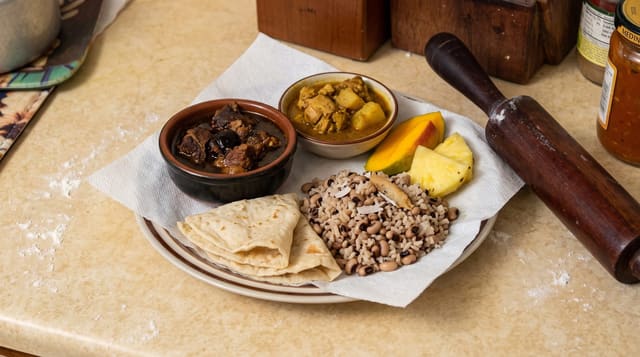
The plate almost every household eats at midday: rice, stewed beans and meat, named for the flag because of its colours.
Updated 14 October 2026

AI illustration
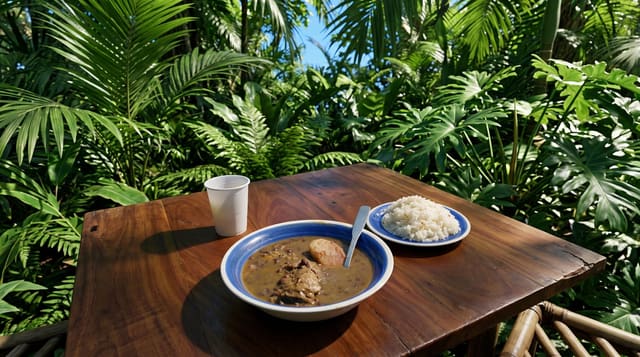
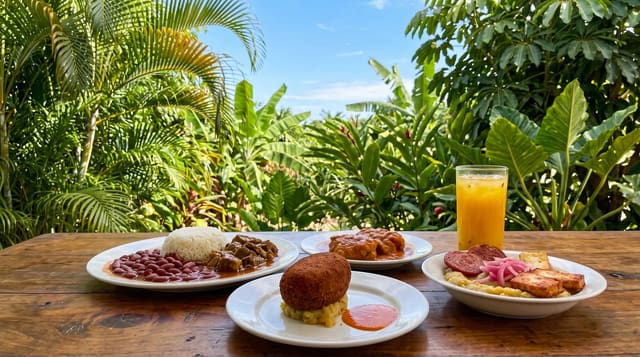
La bandera dominicana, the Dominican flag, is what most of the country eats for lunch: white rice, red beans stewed with squash and herbs and poured over it, and stewed meat beside, usually chicken or beef, with a salad and often fried green plantain. The name comes from the colours. It is a midday meal, eaten as the main event of the day, and it is served in comedores, small no-frills lunch rooms, everywhere from city corners to roadside stops. The beans are the measure of the cook: they should be soupy rather than thick, with a sweetness from auyama squash, and Dominicans will argue about the balance at length.
What to look for
- The habichuelas - soupy stewed beans with squash, poured over the rice.
- Pollo guisado - the braised chicken that most often comes with it.
- Tostones - twice-fried green plantain on the side.
- The comedor - the small lunch room where it is properly eaten.
When to go
Year-round, and specifically at lunch: comedores serve from about noon and are done by mid-afternoon. Eating this in the evening at a tourist restaurant is not the same thing. Sunday lunch at home is the fullest version, often with sancocho instead.
What to expect
It is plain by design and visitors expecting the bold spicing of other Caribbean cuisines are often underwhelmed; Dominican cooking is savoury and herb-based rather than hot. Portions are large. Comedores are basic rooms with plastic chairs, which is the point. Vegetarian versions mean asking for the beans and rice without the meat.
Nearby
Every town has comedores; the ones near markets and bus stations are usually reliable.
What to pack for La Bandera
Chosen from what this place is for. Tap a kit for the full checklist.
- A reusable bag or container - For market produce and cutting down on packaging. Find on Amazon
- Wet wipes + hand sanitiser - Street food and washbasins do not always go together. Find on Amazon
Some links on this page are Amazon affiliate links - if you buy through them we may earn a small commission at no extra cost to you.
All packing kitsPlan your trip
Where to start if La Bandera is going on the list.
Booking links on this page are affiliate links - if you book through them we may earn a small commission at no extra cost to you. It never changes what we write about a place.
Opening times, ticket prices and seasonal closures change - check the official source before you go: official site.