The El Pomier Caves
Fifty-five caves in the hills above San Cristóbal holding the largest concentration of rock art in the Caribbean, and a quarry at the boundary.
Updated 3 September 2026
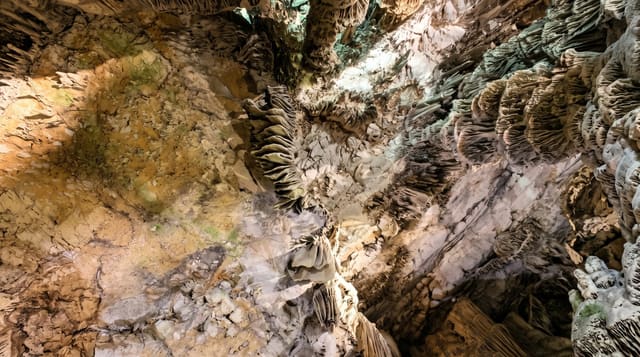
Fifty-five caves have been recorded in this limestone hill system, and between them they hold something in the order of six thousand pictographs and hundreds of petroglyphs, made by Taíno, Igneri and Carib peoples over a very long period, which makes it the largest concentration of rock art anywhere in the Caribbean and one of the most significant in the Americas. Figures, birds, faces and abstract patterns are drawn in charcoal and animal fat on the walls and ceilings. Only a handful of caves are open, with lit walkways and guides. Bats live in most of them. Limestone quarrying operates right up to the reserve boundary and has been the subject of a long campaign.
Highlights
- Cave One - the main show cave, with the densest panels of drawings.
- The pictographs - thousands of charcoal figures, birds and faces.
- The bat colonies - resident in most of the system.
- The scale - fifty-five caves, most closed to visitors.
When to go
November to April is drier and the tracks easier. Access is by guided tour with limited hours, generally closing in the early afternoon, so arrive in the morning. Bring a torch and shoes with grip.
Practical notes
Only a small number of caves are open and the visit is short. Lighting and walkways have suffered from underfunding and the site has closed at times. Quarrying continues at the boundary and the noise and dust are audible and visible, which is part of the story rather than something the guides hide. Guides speak little English.
Nearby
San Cristóbal is fifteen minutes; Santo Domingo is an hour east.
What to pack for The El Pomier Caves
Chosen from what this place is for. Tap a kit for the full checklist.
- Head torch + spare batteries - Hands-free light is essential; caves are truly dark. Find on Amazon
- Grippy closed shoes - Cave floors are wet, muddy and slick with formations. Find on Amazon
- A warm layer - Many caves sit near 10°C year-round, even in a hot country. Find on Amazon
- Gloves - Protect your hands on rough rock and cold metal handrails. Find on Amazon
Some links on this page are Amazon affiliate links - if you buy through them we may earn a small commission at no extra cost to you.
All packing kitsPlan your trip
Where to start if The El Pomier Caves is going on the list.
Booking links on this page are affiliate links - if you book through them we may earn a small commission at no extra cost to you. It never changes what we write about a place.
Opening times, ticket prices and seasonal closures change - check the official source before you go: official site.