The Funen Village
An open-air museum outside Odense of some twenty-five relocated Funen farm buildings, worked as a village.
Updated 21 October 2026
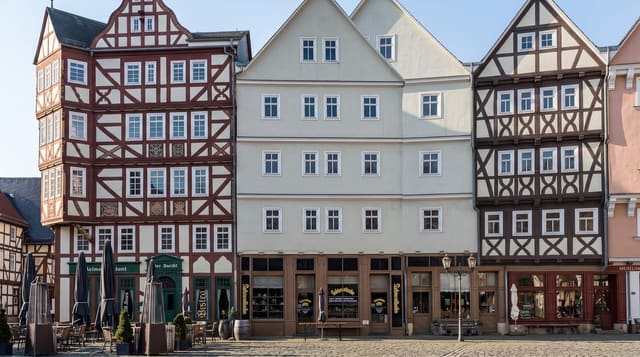
Den Fynske Landsby was created from 1942 by moving buildings from across Funen to a valley south of Odense and arranging them as a village of the eighteenth and nineteenth centuries: farmsteads, a vicarage, a school, a mill, a smithy, a poorhouse and workshops, with gardens, fields and hedges laid out as they would have been. Old Danish livestock breeds are kept, the fields are worked with period methods, and staff in costume carry out the actual tasks of the season, so what happens changes through the year with sowing, harvest and slaughter. It is closely tied to Hans Christian Andersen, who grew up in Odense in exactly this world, and an open-air theatre in the grounds stages his tales in summer.
History
The Funen Village was founded in 1942 as a public works project, its open-air stage opened in 1944, and the museum opened to the public on 1 April 1946, with King Christian X among the guests. It has 25 buildings from Funen villages, most of them from the 18th and 19th centuries, among them a parsonage, a watermill, an inn, a school and a windmill as well as houses; most are half-timbered, since brick buildings became common in the Funen countryside only in the late 1800s, the Tommerup parsonage farmhouse dating from 1692 and the Bladstrup brickworks from 1893. Gardens with old Funen fruit varieties surround them, and the livestock are mostly old Danish breeds, Danish Red cattle, Frederiksborg horses and landrace goats, sheep, pigs and geese (Wikipedia, The Funen Village).
What's there
- Twenty-five relocated Funen buildings - farms, a mill, a school and a vicarage.
- Old Danish livestock breeds - kept and worked as they were.
- Seasonal farm work - the tasks changing through the year.
- The open-air theatre - Andersen tales staged in summer.
When to go
April to October when the village is fully staffed; winter opening is limited to weekends. Half a day. Summer weekends and Danish school holidays are busiest. Harvest time in late summer is the most active.
What to expect
Winter opening is thin and the village is much less interesting without staff and animals. Everything is outdoors, so weather dictates the visit. It is aimed at families and school groups. The walk from the city is pleasant but long.
Nearby
Odense and the Hans Christian Andersen House are north; Egeskov lies south.
Key facts
Source: Wikidata, item Q727113, read on 18 October 2026.
What to pack for The Funen Village
Chosen from what this place is for. Tap a kit for the full checklist.
- Comfortable walking shoes - Sightseeing means kilometres of pavement and cobbles daily. Find on Amazon
- A slim anti-theft daypack - Zips that close properly; keep it in front in crowds and on transit. Find on Amazon
- A refillable water bottle - Many cities have public fountains; save money and plastic. Find on Amazon
- A light layer + compact umbrella - For museum air-con and a sudden shower. Find on Amazon
Some links on this page are Amazon affiliate links - if you buy through them we may earn a small commission at no extra cost to you.
All packing kitsPlan your trip
Where to start if The Funen Village is going on the list.
Booking links on this page are affiliate links - if you book through them we may earn a small commission at no extra cost to you. It never changes what we write about a place.
Opening times, ticket prices and seasonal closures change - check the official source before you go: official site.