Mikulcice
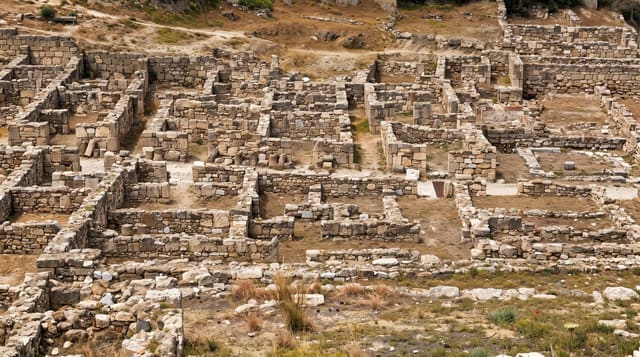
The foundations of twelve ninth-century churches in a floodplain forest, at a centre of the Great Moravian state.
Updated 19 October 2026
Great Moravia was the first substantial Slavic state in this part of Europe, flourishing in the ninth century, receiving Cyril and Methodius and their Slavonic liturgy in 863, and collapsing around 906; its written record is thin and most of what is known comes from excavation. Mikulcice is the largest of the excavated centres: a fortified settlement on islands in the Morava floodplain, covering some fifty hectares, where the foundations of twelve churches have been found - an extraordinary number for one ninth-century site - along with a palace, workshops, and around two and a half thousand graves containing goldwork, weapons and a set of finds that defined the period's material culture. The site is presented with the foundations marked out and a museum pavilion; a footbridge to the Slovak side at Kopcany links it to a surviving ninth-century church there.
History
From the 6th until the 10th century a Slavic fortified settlement stood 3 km southeast of the present village, at the site called Mikulčice-Valy; it was one of the main centres of the Great Moravian Empire and plausibly its capital, and excavations have uncovered the remains of twelve churches, a palace and more than 2,500 graves, including a horse burial. The village itself is first mentioned in 1141, its church of the Assumption in 1353, and a fortress that stood here at the beginning of the 15th century was probably destroyed in the Hussite Wars (Wikipedia, Mikulčice).
What's there
- Twelve church foundations - marked out across the excavated settlement.
- A ninth-century power centre - fifty hectares on islands in the Morava floodplain.
- Two and a half thousand graves - the finds that defined Great Moravian material culture.
- A footbridge to Slovakia - linking to the surviving church at Kopcany.
When to go
April to October. Half a day.
Practical notes
What survives is foundations at ground level, not standing buildings - the interest needs the museum and some reading. Seasonal opening. The floodplain has mosquitoes and floods in spring.
Nearby
Hodonin is north; Straznice and its skansen are up the Morava.
What to pack for Mikulcice
Chosen from what this place is for. Tap a kit for the full checklist.
- Comfortable walking shoes - Sightseeing means kilometres of pavement and cobbles daily. Find on Amazon
- A slim anti-theft daypack - Zips that close properly; keep it in front in crowds and on transit. Find on Amazon
- A refillable water bottle - Many cities have public fountains; save money and plastic. Find on Amazon
- A light layer + compact umbrella - For museum air-con and a sudden shower. Find on Amazon
Some links on this page are Amazon affiliate links - if you buy through them we may earn a small commission at no extra cost to you.
All packing kitsPlan your trip
Where to start if Mikulcice is going on the list.
Booking links on this page are affiliate links - if you book through them we may earn a small commission at no extra cost to you. It never changes what we write about a place.
Opening times, ticket prices and seasonal closures change - check the official source before you go: official site.