Amathus
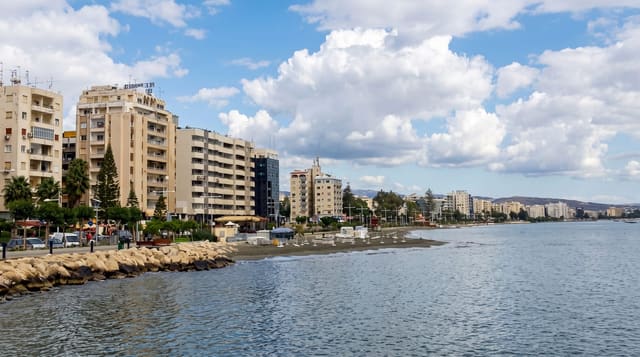
The seaside ruins of one of the island's ancient city-kingdoms, on a hillside east of Limassol.
Updated 19 October 2026
Amathus was one of the ten city-kingdoms of ancient Cyprus, founded around the eleventh century BC and occupied until the Arab raids of the seventh century AD. The site climbs from the shore up an acropolis hill, with the agora and its restored colonnade at the bottom, a basilica, and at the top the sanctuary of Aphrodite where a colossal stone vase was found, now in the Louvre. Part of the harbour lies underwater just offshore and is visible to snorkellers in clear conditions.
History
No trace of people has been found at Amathus before the earliest Iron Age, around 1100 BC. Legend made its founder Cinyras, who named it after his mother Amathous; another story, told by Plutarch, has Theseus leave Ariadne here, where she died in childbirth and was buried in a sacred grove known as the Wood of Aphrodite Ariadne. Its people were said in antiquity to be native to the island, and inscriptions in their non-Greek Eteocypriot language, in the Cypriot syllabary, were still being written down to the 4th century BC. Built on coastal cliffs with a natural harbour, the city flourished early: Euboean Greeks left pottery here from the 10th century BC, a palace and port were built in the 8th century, and the sanctuary of Aphrodite on the cliff top, where the festival of the Adonia was held, became the second most important on the island after Paphos. Strongly sympathetic to Phoenicia, Amathus refused to join the revolt of Onesilos of Salamis against Persia in 500-494 BC and withstood his siege; it came under Ptolemaic rule in the 300s BC (Wikipedia, Amathus).
What's there
- The agora - the market square with restored columns near the shore.
- The acropolis - the sanctuary of Aphrodite at the top of the hill.
- The basilicas - early Christian church remains on the site.
- The sunken harbour - ancient harbour works underwater just offshore.
When to go
March to May and October to November are the best; the site is exposed and severely hot in summer. Early morning is the only comfortable hour in July and August. Winter is pleasant but the grass is high.
Things to know
The climb to the acropolis is steep with no shade. The most famous find, the great stone vase, is in Paris and only its base remains here. Interpretation on site is thin.
Nearby
Limassol is ten kilometres west, and the Akrotiri peninsula is southwest.
Key facts
Source: Wikidata, item Q2343313, read on 18 October 2026.
What to pack for Amathus
Chosen from what this place is for. Tap a kit for the full checklist.
- Your own mask + snorkel - A well-fitting mask is the single biggest comfort upgrade underwater. Find on Amazon
- Comfortable walking shoes - Sightseeing means kilometres of pavement and cobbles daily. Find on Amazon
- Modest clothing - Shoulders and knees covered - the single most common requirement. Find on Amazon
- Rash guard or thin wetsuit - Sun cover on the surface and warmth on longer or deeper dives. Find on Amazon
Some links on this page are Amazon affiliate links - if you buy through them we may earn a small commission at no extra cost to you.
All packing kitsPlan your trip
Where to start if Amathus is going on the list.
Booking links on this page are affiliate links - if you book through them we may earn a small commission at no extra cost to you. It never changes what we write about a place.
Opening times, ticket prices and seasonal closures change - check the official source before you go: official site.