Risnjak National Park
A cool forested national park in Gorski Kotar centred on a limestone summit and the spring where the Kupa river emerges from the rock.
Updated 19 October 2026
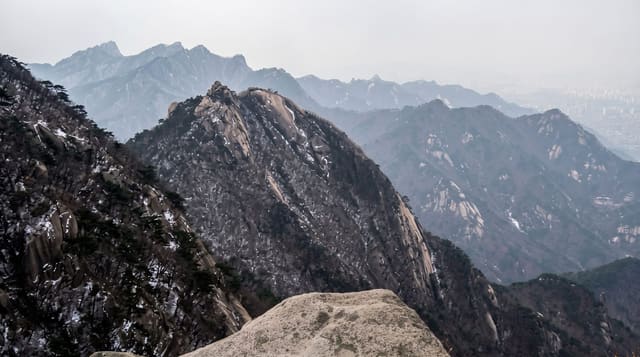
Risnjak protects the wettest, coldest corner of Croatia, a block of fir and beech forest in Gorski Kotar where snow can lie into May. The park is named for the lynx, and bear, wolf and lynx all live here, though the realistic chance of seeing any is close to zero. What you do get is a genuine mountain walk: from Crni Lug a marked path climbs through forest to Veliki Risnjak at just over fifteen hundred metres, with a mountain hut below the summit and a view that runs from the Kvarner islands to the Julian Alps. In a separate part of the park, the Kupa river surfaces from a deep green pool in a wooded valley.
History
The massif's name probably comes from ris, the Croatian word for lynx, though another reading derives it from risje, a local word for a kind of grass. The first recorded scientific visit was made in 1825 by the Budapest botanist Joseph Standler, many botanists followed, and in the 19th century Josip Schlosser wrote much about Risnjak and its flora; the Rijeka alpine club made the first organised climb, and the first mountain hut was built in 1932. In 1949 the botanist Ivo Horvat first proposed protecting the area, and on his advice 36 square kilometres around Risnjak were declared a national park; in 1956 the park was cut to 30.14 square kilometres, and in 1997 the Croatian parliament enlarged it to its present 63.5 square kilometres, adding Snježnik, the source of the Kupa and, for the first time, the villages of Razloge and Krašćevica (Wikipedia, Risnjak National Park).
What you'll find
- Veliki Risnjak - the bare limestone summit above the treeline, a steady climb of several hours from the park entrance.
- The Kupa spring - a deep green pool at the head of a forested valley where the river appears from underground.
- The Leska trail - a short signed loop near Crni Lug explaining the forest, suitable for a casual visit.
- Old growth fir and beech - dense, dark and noticeably cooler than anywhere on the coast.
When to go
June to October is the practical window; snow closes the higher paths from late autumn and lingers on the north side into spring. Summer here is ten degrees cooler than the coast, which is the main reason people drive up. Rain is frequent all year, so waterproofs are not optional even in July.
Things to know
It rains here more than almost anywhere else in the country and the summit is often in cloud. The walk to the top is long and unrewarding in poor visibility. Facilities are basic, opening hours at the entrance are limited outside summer, and the Kupa spring is on the far side of the park with no quick connection. Wildlife sightings are essentially a matter of luck.
Nearby
Delnice is the local base, and the Zeleni vir gorge at Skrad is half an hour east.
Key facts
Source: Wikidata, item Q631183, read on 18 October 2026.
What to pack for Risnjak National Park
Chosen from what this place is for. Tap a kit for the full checklist.
- Broken-in walking shoes or boots - Grip and ankle support matter more than looks; never hike in brand-new boots. Find on Amazon
- Head torch + spare batteries - Hands-free light is essential; caves are truly dark. Find on Amazon
- Binoculars - The single best wildlife tool - even a compact pair transforms a sighting. Find on Amazon
- Warm base layers - Merino or synthetic against the skin - never cotton, which chills when damp. Find on Amazon
Some links on this page are Amazon affiliate links - if you buy through them we may earn a small commission at no extra cost to you.
All packing kitsPlan your trip
Where to start if Risnjak National Park is going on the list.
Booking links on this page are affiliate links - if you book through them we may earn a small commission at no extra cost to you. It never changes what we write about a place.
Opening times, ticket prices and seasonal closures change - check the official source before you go: official site.