Pag Island
A long bare karst island of grey stone, dry stone walls and salt pans, with a rock landscape unlike anywhere else on the Croatian coast.
Updated 19 October 2026
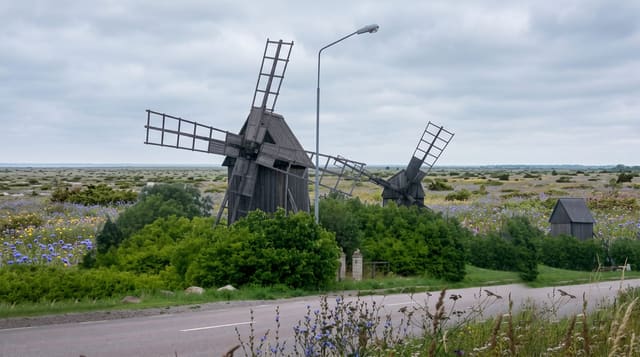
Pag is the stone island. The bura wind blowing off the Velebit mountains carries salt across it and has scoured the eastern side down to bare grey limestone crossed by thousands of kilometres of dry stone wall, a landscape people routinely describe as lunar and which looks genuinely strange from the road. Sheep graze on the salt laden herbs between the stones, which is the basis of the island's cheese, and salt pans have been worked near Pag town since the Middle Ages. The western side is greener and holds most of the settlements. Pag town itself was laid out on a grid in the fifteenth century, unusual for a small Adriatic island.
History
Pag's first settlers were an Illyrian people who arrived in the Bronze Age, and traces of their settlements remain around the island; the Romans took it in the 1st century BC and left many remains. The Croats came in the 7th century, and Pag was for a time part of the Croatian kingdom, but it was always contested: in the 11th and 12th centuries it was divided between Rab and Zadar, and from the 12th to the 14th century Venice and the Croatian-Hungarian kings fought over it with the other Dalmatian islands and towns. From the start of the 15th century Venice held it for four hundred years, until the Republic lost its independence in 1797, after which it passed to Austria (Wikipedia, Pag (island)).
The landscape
- The stone desert - the bare eastern slopes divided by dry stone walls, best seen from the coastal road.
- The salt pans - shallow evaporation basins near Pag town, worked since medieval times.
- Pag town - a planned fifteenth century grid layout with a central square and unfinished church facade.
- The Velebit channel - the narrow strait between the island and the grey mainland mountain wall opposite.
When to go
Late spring and early autumn suit the island best, with warm sea and no crowds. The bura is strongest in winter and can close the bridge and ferry to high sided vehicles. July and August bring heavy traffic to the northern end around Novalja, so plan crossings and drives around it.
Things to know
There is almost no shade anywhere on the island and the bare rock reflects heat brutally in summer. The bura makes exposed coasts cold and choppy at short notice. The northern end around Novalja is dominated by loud summer crowds and is a completely different place from the rest of the island. Beaches are mostly pebble with limited facilities outside the towns.
Nearby
The Velebit range faces the island across the channel, and Zadar is an hour from the southern bridge.
Key facts
Source: Wikidata, item Q209784, read on 18 October 2026.
What to pack for Pag Island
Chosen from what this place is for. Tap a kit for the full checklist.
- Reef-safe sunscreen - High SPF that will not bleach the coral you are swimming over. Find on Amazon
- Loose, light, long clothing - Covering up beats bare skin in the desert - and locals dress this way for a reason. Find on Amazon
- Quick-dry towel - A microfibre towel packs small and dries in minutes. Find on Amazon
- A wide-brim hat + sunglasses - Shade for your face and eyes where there is none overhead. Find on Amazon
Some links on this page are Amazon affiliate links - if you buy through them we may earn a small commission at no extra cost to you.
All packing kitsPlan your trip
Where to start if Pag Island is going on the list.
Booking links on this page are affiliate links - if you book through them we may earn a small commission at no extra cost to you. It never changes what we write about a place.
Opening times, ticket prices and seasonal closures change - check the official source before you go: official site.