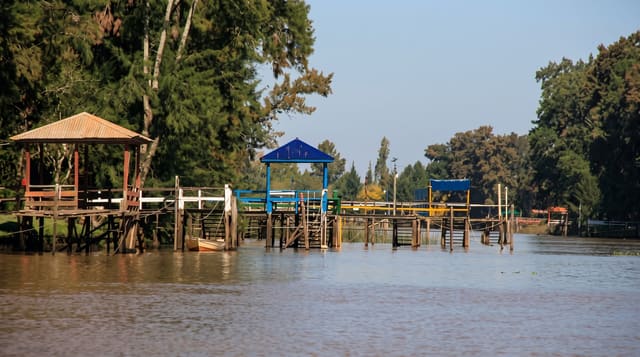
Neretva Delta
The only large delta on the eastern Adriatic, mostly drained for farming and still holding the birds.
Updated 16 October 2026
The Neretva reaches the sea in the only substantial delta on the eastern Adriatic, and most of it has been converted: drainage schemes through the twentieth century turned marsh into some of the most productive farmland in Croatia, growing mandarins, watermelons and vegetables in quantity. What survives of the wetland - lakes, reed beds and channels, several sections protected under the Ramsar convention - is still a major stopover on the Adriatic migration route, with over three hundred bird species recorded. Trips run in the flat-bottomed traditional boats, the trupice, and the local eel and frog dishes are a genuine regional cuisine rather than a tourist invention.
Background
The river crosses Bosnia and Herzegovina and Croatia before reaching the Adriatic, and the wetland continues upstream into Hutovo Blato in Herzegovina. Listed under the Ramsar Convention on 18 January 1993, the delta's alluvial area is put at around 19,000 ha, though it occupies roughly 11,490 ha today. Of that, 1,620 ha are protected: the ornithological reserves of Prud, Orepak and Podgredom, a reserve for birds and fish at the river mouth, and the protected landscape of lake Modro oko. Another 1200 ha of natural land has no protection. The State Institute for Nature Protection formally proposed in 2007 that the delta become a nature park.
Source: Wikipedia, "Neretva Delta"
The landscape
- The only large eastern Adriatic delta - mostly drained for farming.
- Ramsar-protected remnants - lakes, reeds and channels.
- Over three hundred bird species - on the migration route.
- Trips in trupice - the traditional flat-bottomed boats.
When to go
March to May and September to November for birds; summer for the fruit. A full day.
Before you go
Much of what you drive through is intensive agriculture, not wetland. Mosquitoes are severe. Boat trips are commercial and often include a meal. The remaining protected areas are scattered and need a plan.
Nearby
Narona museum is at Vid; Ston and Peljesac are south.
Key facts
Source: Wikidata, item Q677753, read on 18 October 2026.
What to pack for Neretva Delta
Chosen from what this place is for. Tap a kit for the full checklist.
- Broken-in walking shoes or boots - Grip and ankle support matter more than looks; never hike in brand-new boots. Find on Amazon
- Layers + a waterproof shell - Mountain weather turns fast; a packable rain jacket saves the day. Find on Amazon
- Daypack with rain cover - 20-30 litres holds water, snacks, layers and a first-aid kit. Find on Amazon
- Offline maps + a power bank - Download the trail before you lose signal; carry backup charge. Find on Amazon
Some links on this page are Amazon affiliate links - if you buy through them we may earn a small commission at no extra cost to you.
All packing kitsPlan your trip
Where to start if Neretva Delta is going on the list.
Booking links on this page are affiliate links - if you book through them we may earn a small commission at no extra cost to you. It never changes what we write about a place.
Opening times, ticket prices and seasonal closures change - check the official source before you go: official site.