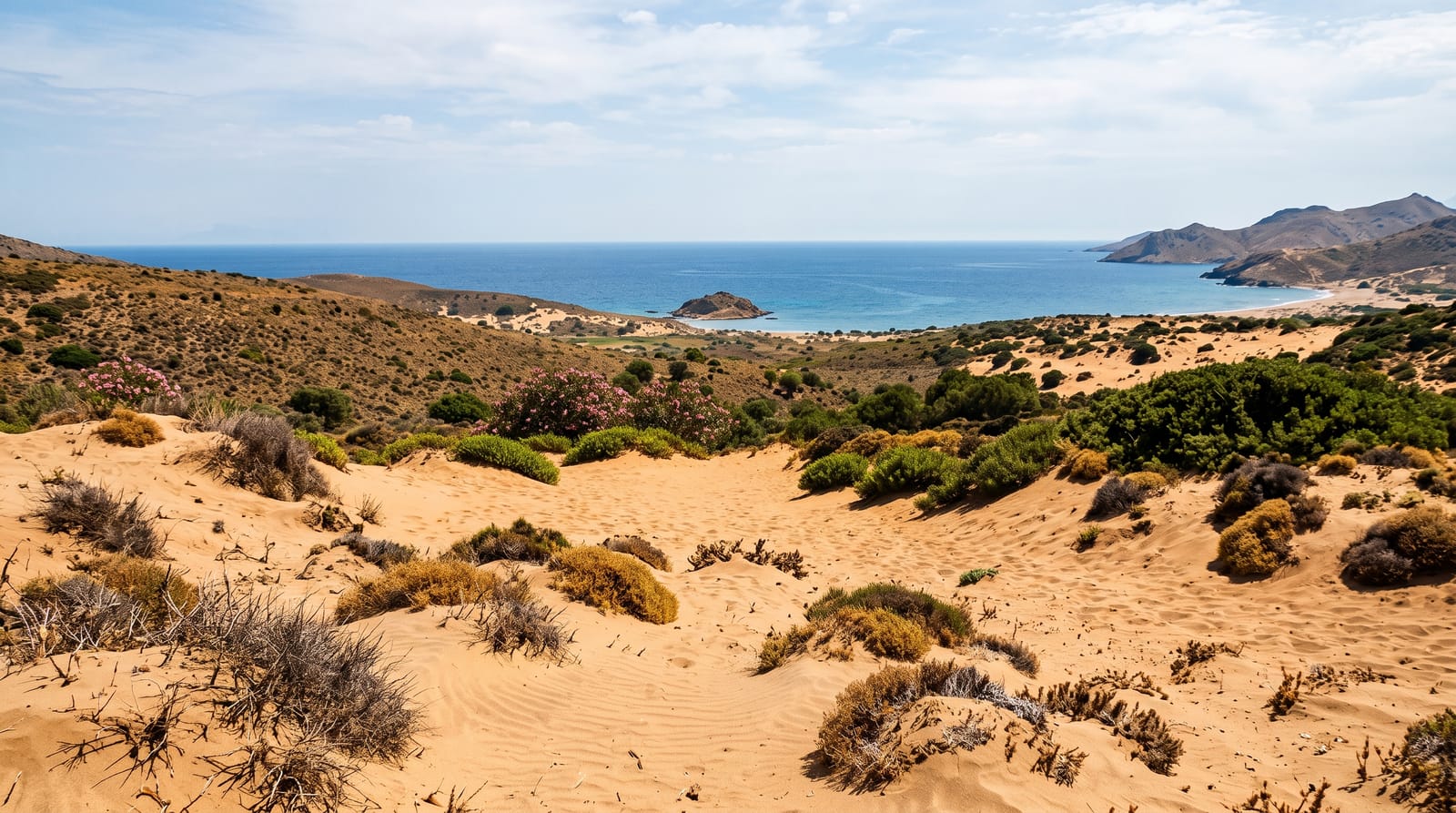
Durdevac Sands
A patch of blown sand in the Drava plain, once called the Croatian Sahara and now deliberately kept bare.
Updated 30 August 2026
The Durdevacki Pijesci are sands left by the Drava and reworked by wind, which by the nineteenth century had become a moving dune field big enough to bury fields and threaten the town - locals called it the Croatian Sahara. From the 1880s it was deliberately planted with pine and acacia to stabilise it, and the planting worked so completely that the open sand nearly disappeared. It was then protected in 1963 for the opposite reason: the specialised sand plants and insects that live there only survive on bare ground, so management now involves keeping a patch clear of the trees that were planted to stop it.
The landscape
- Blown sand in a river plain - unusual this far inland in Croatia.
- Planted to stop it moving - pine and acacia from the 1880s.
- Protected in 1963 - to keep some of it bare again.
- Specialised sand species - plants and insects that need open ground.
When to go
April to October. Two hours.
What to expect
The open sand is a small area now, not a desert - the name oversells it considerably. Interpretation on site is limited. It is on the edge of a small town with few services. Ticks are present in the surrounding scrub.
Nearby
Durdevac and its fortress are next door; Hlebine is west.
Key facts
Source: Wikidata, item Q12646043, read on 18 October 2026.
What to pack for Durdevac Sands
Chosen from what this place is for. Tap a kit for the full checklist.
- Broken-in walking shoes or boots - Grip and ankle support matter more than looks; never hike in brand-new boots. Find on Amazon
- Loose, light, long clothing - Covering up beats bare skin in the desert - and locals dress this way for a reason. Find on Amazon
- Layers + a waterproof shell - Mountain weather turns fast; a packable rain jacket saves the day. Find on Amazon
- A wide-brim hat + sunglasses - Shade for your face and eyes where there is none overhead. Find on Amazon
Some links on this page are Amazon affiliate links - if you buy through them we may earn a small commission at no extra cost to you.
All packing kitsPlan your trip
Where to start if Durdevac Sands is going on the list.
Booking links on this page are affiliate links - if you book through them we may earn a small commission at no extra cost to you. It never changes what we write about a place.
Opening times, ticket prices and seasonal closures change - check the official source before you go: official site.