Great Sandhills
Nineteen hundred square kilometres of dunes and grassland, some still bare and moving, on working ranch land.
Updated 4 September 2026
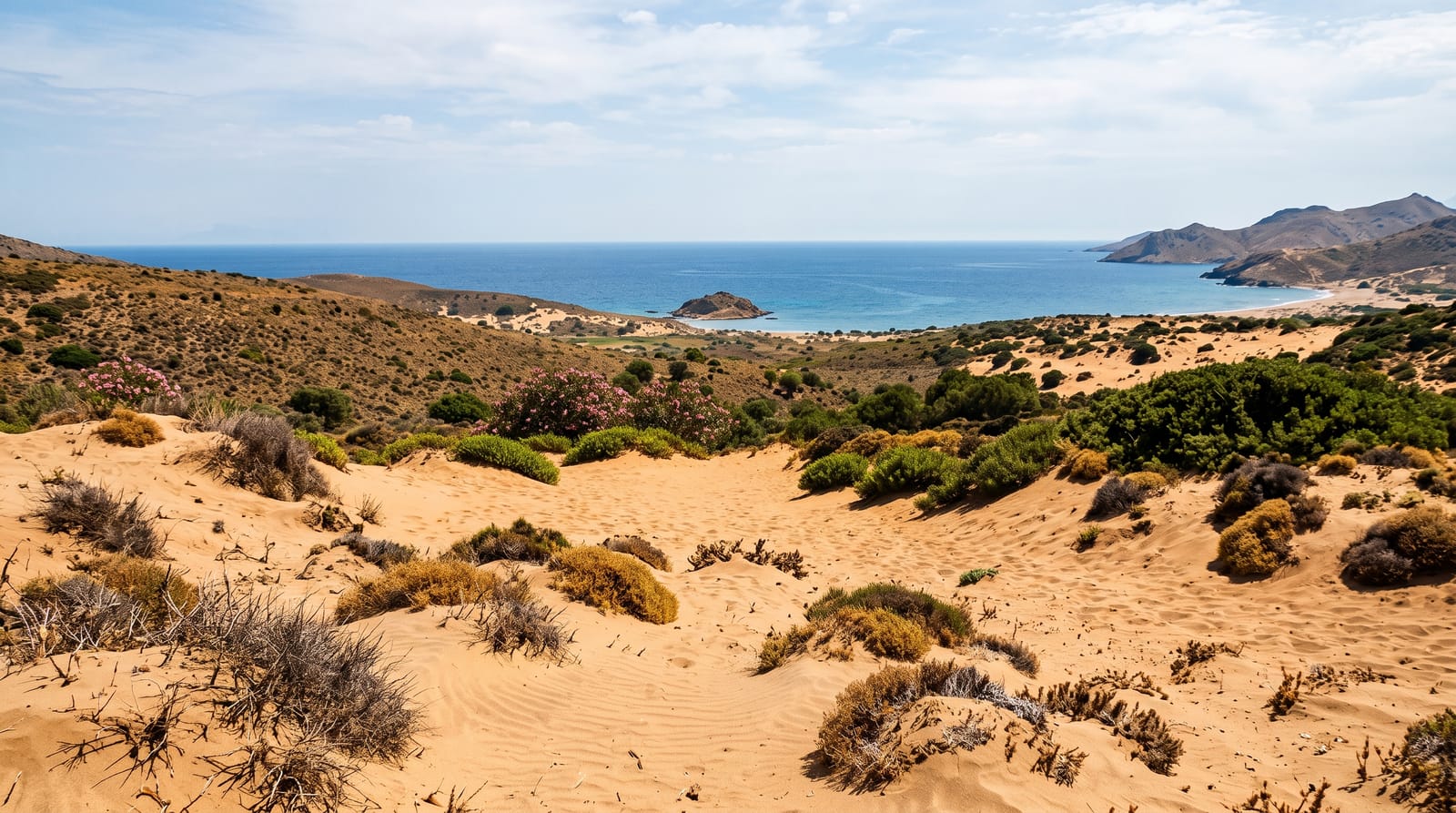
AI illustration
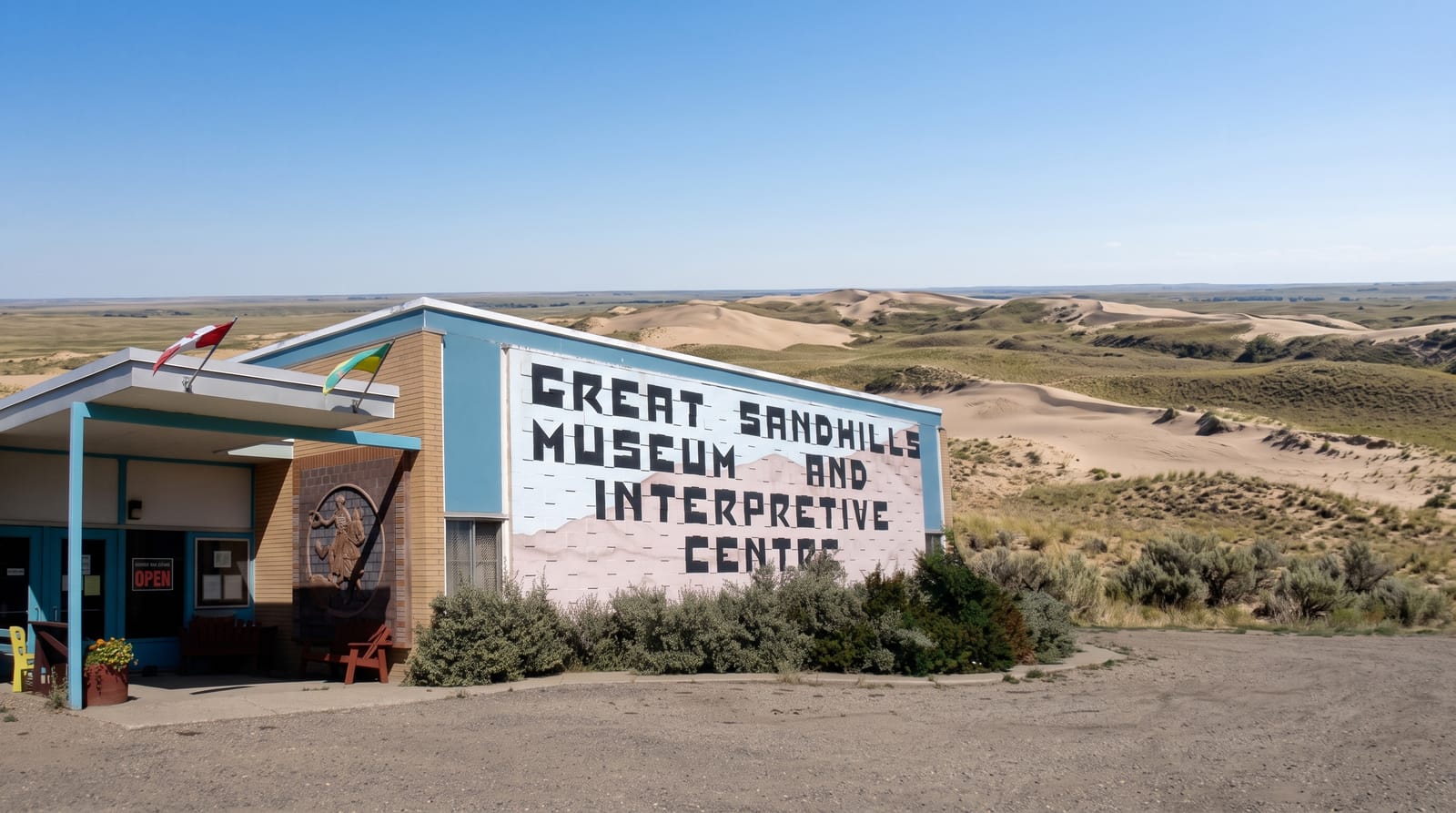
The Great Sandhills cover about nineteen hundred square kilometres of southwestern Saskatchewan, sand left by glacial meltwater and reworked by wind, most of it now held down by grass and shrub but with substantial areas of bare active dune still shifting. The largest reach around thirty metres. This is not a park: it is grazing land, and the dunes sit among working ranches, with access by permission and unmarked gravel roads. Mule deer, pronghorn and a large population of Ord's kangaroo rat live here, the last a nocturnal species at its northern limit. An interpretive centre at Sceptre explains the geology and the ranching.
What you'll find
- The active dunes - bare sand up to about thirty metres, still moving.
- The grassland mosaic - stabilised dunes under prairie grass and shrub.
- The wildlife - mule deer, pronghorn and nocturnal kangaroo rats.
- The ranch setting - dunes inside working grazing land, not a park.
When to go
May to September; low sun morning and evening shows the dune forms best. Summer heat is severe with no shade. Roads become impassable clay after rain.
Before you go
This is private and leased grazing land, and access depends on respecting gates and stock. Roads are unmarked gravel and getting lost is easy. There are no facilities, water or signage at the dunes.
Nearby
Sceptre has the interpretive centre; Swift Current lies southeast.
Key facts
Source: Wikidata, item Q22425965, read on 18 October 2026.
What to pack for Great Sandhills
Chosen from what this place is for. Tap a kit for the full checklist.
- Broken-in walking shoes or boots - Grip and ankle support matter more than looks; never hike in brand-new boots. Find on Amazon
- Binoculars - The single best wildlife tool - even a compact pair transforms a sighting. Find on Amazon
- Loose, light, long clothing - Covering up beats bare skin in the desert - and locals dress this way for a reason. Find on Amazon
- Layers + a waterproof shell - Mountain weather turns fast; a packable rain jacket saves the day. Find on Amazon
Some links on this page are Amazon affiliate links - if you buy through them we may earn a small commission at no extra cost to you.
All packing kitsPlan your trip
Where to start if Great Sandhills is going on the list.
Booking links on this page are affiliate links - if you book through them we may earn a small commission at no extra cost to you. It never changes what we write about a place.
Opening times, ticket prices and seasonal closures change - check the official source before you go: official site.