Marino Ballena
A national park on the south Pacific coast whose sandbar forms the shape of a whale's tail at low tide, with humpbacks offshore.
Updated 1 September 2026
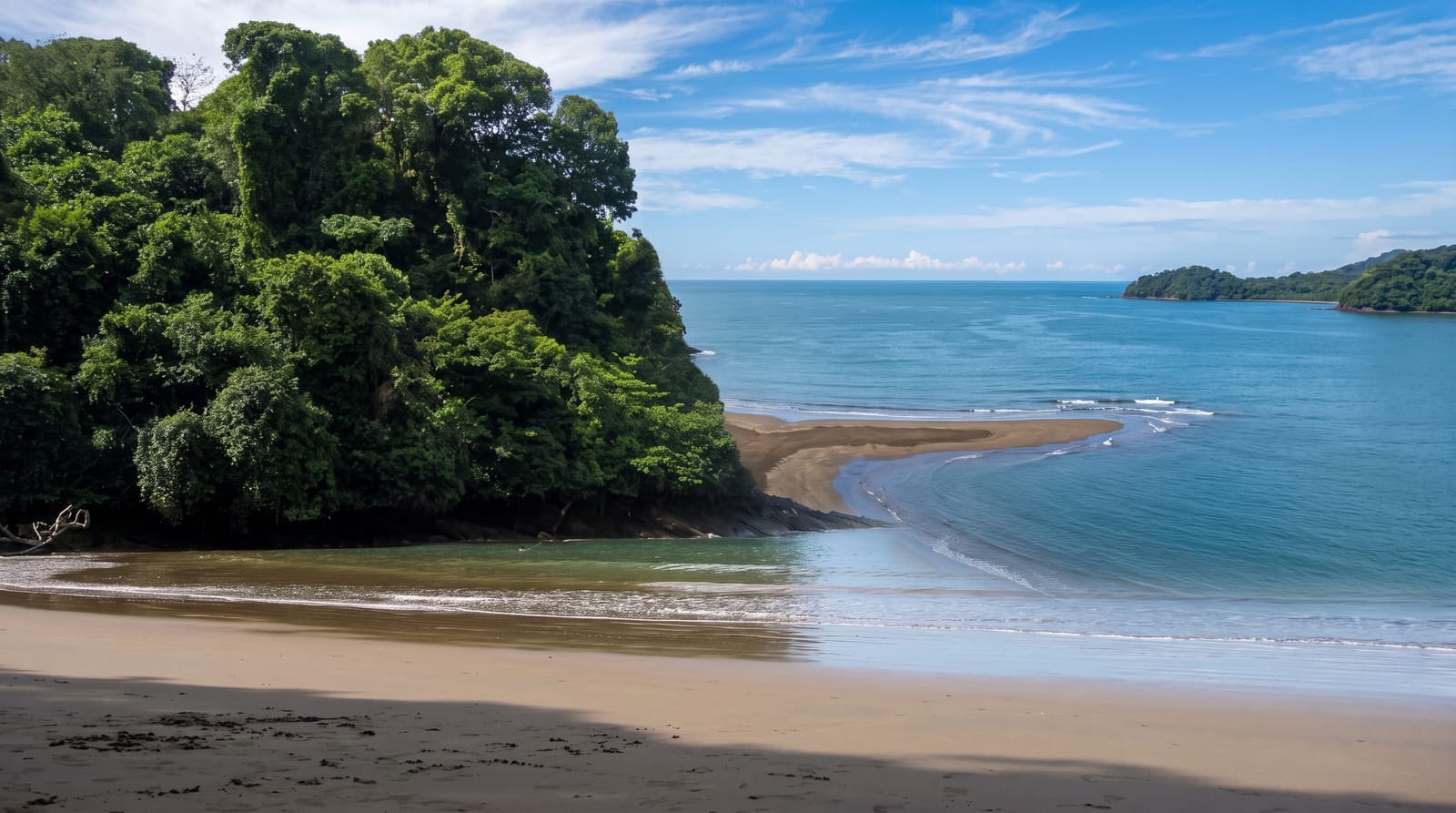
AI illustration
Marino Ballena protects a stretch of the south Pacific coast and a large area of water offshore, and its emblem is a coincidence: a sandbar running out from the beach at Uvita joins a rock formation at its end, and at low tide the whole thing is exposed in a shape that reads unmistakably as a whale's tail. The park is named for the whales rather than the sandbar, and it earns it, with humpbacks from both hemispheres passing and calving in the bay across two separate seasons, making this one of the longest whale-watching windows anywhere. Reef, rock islands and nesting seabirds fill the rest of the protected area.
The landscape
- The whale's tail sandbar - exposed at low tide, walkable to the end.
- Humpback whales - two seasons, from northern and southern populations.
- The rock islands - nesting seabirds offshore.
- Playa Ventanas - sea caves you can walk through at low tide, nearby.
When to go
The sandbar is walkable only around low tide, so check the tables. Southern hemisphere humpbacks are here roughly July to October, northern ones December to March. December to April is the driest for everything else.
What to expect
The whale's tail is only visible at low tide and is submerged the rest of the time, which disappoints people who arrive at the wrong hour. The tide comes in fast and people get cut off at the far end. Whale watching operators vary and some crowd animals; choose licensed ones. The Costanera coast has developed quickly and Uvita is busier than it was.
Nearby
Dominical is fifteen minutes north; Corcovado and the Osa are two hours south.
What to pack for Marino Ballena
Chosen from what this place is for. Tap a kit for the full checklist.
- Reef-safe sunscreen - High SPF that will not bleach the coral you are swimming over. Find on Amazon
- Head torch + spare batteries - Hands-free light is essential; caves are truly dark. Find on Amazon
- Binoculars - The single best wildlife tool - even a compact pair transforms a sighting. Find on Amazon
- Quick-dry towel - A microfibre towel packs small and dries in minutes. Find on Amazon
Some links on this page are Amazon affiliate links - if you buy through them we may earn a small commission at no extra cost to you.
All packing kitsPlan your trip
Where to start if Marino Ballena is going on the list.
Booking links on this page are affiliate links - if you book through them we may earn a small commission at no extra cost to you. It never changes what we write about a place.
Opening times, ticket prices and seasonal closures change - check the official source before you go: official site.