Malpelo Island
A bare rock island far out in the Pacific, protected as a shark sanctuary and reached only by liveaboard dive boats.
Updated 18 October 2026
UNESCO World Heritage
Malpelo is a spike of bare volcanic rock several hundred kilometres off the Colombian Pacific coast, with a few outlying pinnacles around it and no vegetation, no beach and no facilities. What makes it one of the most requested dive sites anywhere is what gathers in the water around it: schooling hammerhead sharks in large numbers, silky sharks, whale sharks in season and the deep-water smalltooth sand tiger that is rarely seen elsewhere. The surrounding sanctuary is a no-fishing zone and was inscribed on the World Heritage list in 2006. Landing on the rock is restricted, so visitors stay aboard and dive from tenders.
History
The island was presumably never reached by people before Europeans, and it may have been the first of the remote eastern Pacific islands they found, since it appears on Peruvian maps as early as 1530; the Peruvian governor Cristóbal Vaca de Castro visited it in 1542, and it later passed from Spanish Peru to Colombia, apparently without opposition. Landing has always been all but impossible, so visitors use ladders or helicopters, and the Colombian Navy keeps a small post on the rock. In 2011 Colombian authorities reported the slaughter of up to 2,000 hammerhead, Galápagos and silky sharks inside the Malpelo Fauna and Flora Sanctuary, first found by research divers (Wikipedia, Malpelo Island).
What you'll find
- Hammerhead schools - large aggregations in the current around the pinnacles.
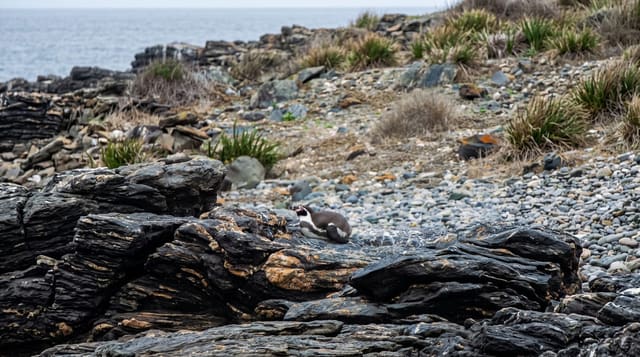
- The rock itself - a bare volcanic island with seabird colonies and no vegetation.
- Whale sharks and silkies - big pelagic species out in the open blue.
- The outlying pinnacles - rock towers rising from deep water around the island.
When to go
The main season runs roughly January to May, when visibility is better and hammerhead aggregations are most reliable; whale sharks are more likely between about June and September in cooler, greener water. Trips are scheduled by the boat operators months ahead and sell out, so plan around a year in advance for peak weeks.
Before you go
Getting there is more than thirty hours at sea in each direction, often in rough water, and seasickness ruins trips. This is advanced diving only: strong and unpredictable currents, deep sites, cold thermoclines and no decompression facilities within reach. Trips cost as much as any diving in the world, and you can surface having seen nothing but blue water.
Nearby
Nothing at all. The nearest land is the Colombian Pacific coast, more than a day away by boat.
Key facts
Source: Wikidata, item Q750683, read on 18 October 2026.
What to pack for Malpelo Island
Chosen from what this place is for. Tap a kit for the full checklist.
- Travel rod + reel - A packable multi-piece rod fits in a case and covers most holiday fishing. Find on Amazon
- Reef-safe sunscreen - High SPF that will not bleach the coral you are swimming over. Find on Amazon
- Your own mask + snorkel - A well-fitting mask is the single biggest comfort upgrade underwater. Find on Amazon
- Binoculars - The single best wildlife tool - even a compact pair transforms a sighting. Find on Amazon
Some links on this page are Amazon affiliate links - if you buy through them we may earn a small commission at no extra cost to you.
All packing kitsPlan your trip
Where to start if Malpelo Island is going on the list.
Booking links on this page are affiliate links - if you book through them we may earn a small commission at no extra cost to you. It never changes what we write about a place.
Opening times, ticket prices and seasonal closures change - check the official source before you go: official site.