Western Qing Tombs
A quiet valley in Hebei holding four Qing emperors, with pine forests and almost none of Beijing's crowds.
Updated 18 October 2026
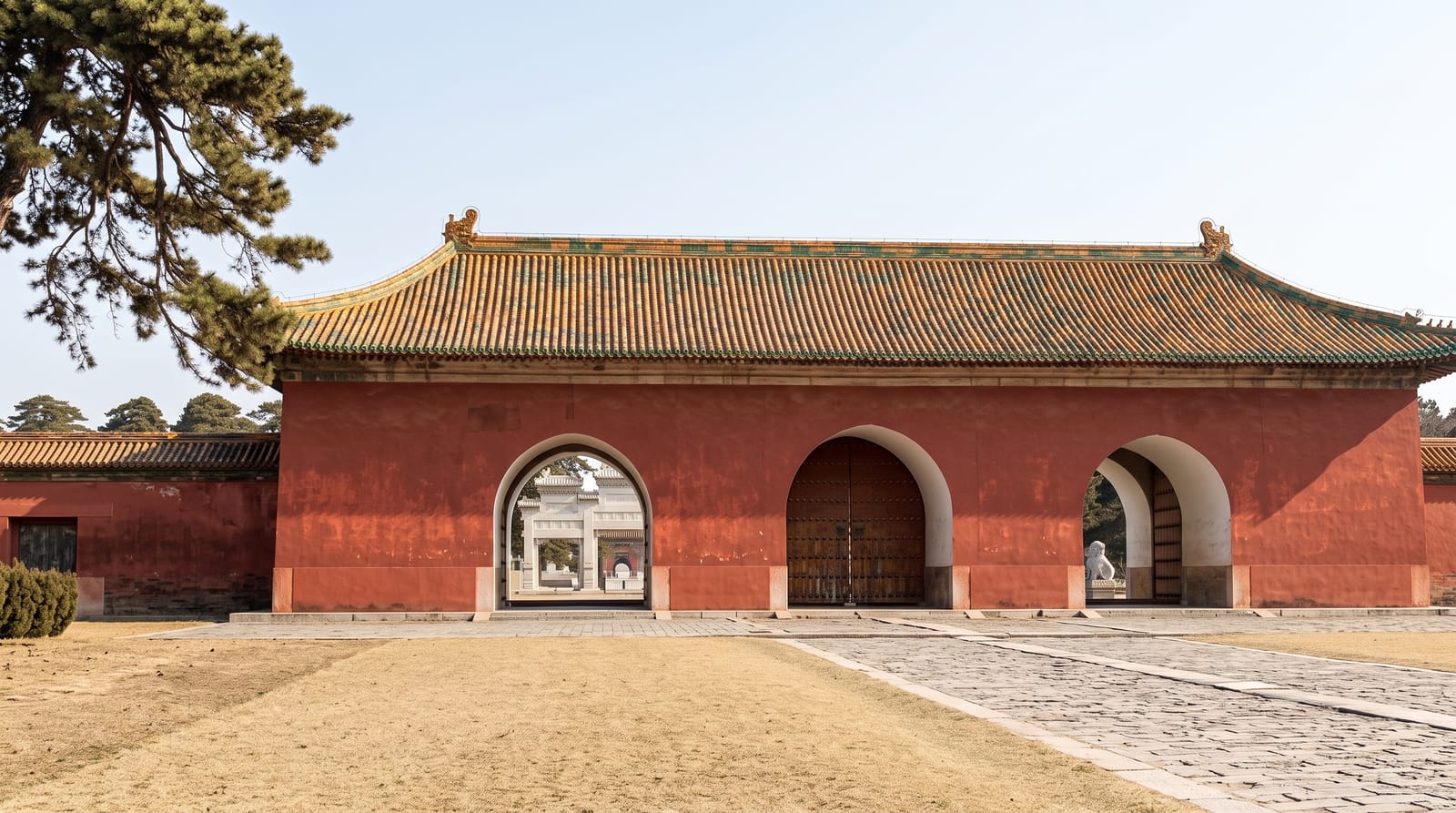
AI illustration
UNESCO World Heritage
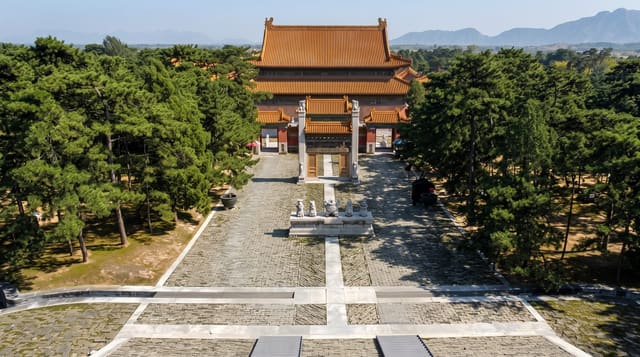
The Qing dynasty split its imperial burials between two sites, and the western group at Yixian holds four emperors, Yongzheng, Jiaqing, Daoguang and Guangxu, along with empresses and consorts, in a valley of pine and cypress covering more than eight hundred square kilometres of designated area. Yongzheng chose the site rather than join his father at the eastern tombs, and later emperors alternated between the two. The tombs are UNESCO-listed, and Tailing, Yongzheng's, is the grandest, with its own sacred way. Chongling, Guangxu's, completed after the dynasty fell, is open underground. Compared with the Ming Tombs the site is quiet, with visitors thin even at weekends.
History
The Yongzheng Emperor began the Western Qing tombs, breaking with tradition by refusing burial at the Eastern Qing tombs beside his father, for reasons that remain speculation; his son, the Qianlong Emperor, chose the eastern site and decreed that later burials should alternate between the two, though this was not followed consistently. The first tomb, Yongzheng's Tailing, was completed in 1737, and the last imperial burial was that of the Guangxu Emperor in the Chongling in 1913; grave robbers looted the Chongling in 1938, and its burial chamber is now open to the public. Seventy-eight members of the imperial family lie in the necropolis, some 140 kilometres south-west of Beijing (Wikipedia, Western Qing tombs).
Highlights
- Tailing - Yongzheng's tomb, the largest, with its own spirit way.
- Chongling - the last imperial tomb built in China, open underground.
- The pine valley - old forest surrounding the burial complexes.
- The quiet - a UNESCO site with a fraction of the Ming Tombs' visitors.
When to go
April to May and September to October for the mildest weather; winter is cold and the valley bleak, summer hot. Weekends bring some domestic visitors but the site rarely feels crowded.
Before you go
Getting there without a car is awkward, with limited public transport from Beijing. Sites are spread over several kilometres. Signage in English is patchy, and some halls are closed or under restoration.
Nearby
Baoding lies southeast; the Eastern Qing Tombs are on the far side of Beijing.
Key facts
Source: Wikidata, item Q1683260, read on 18 October 2026.
What to pack for Western Qing Tombs
Chosen from what this place is for. Tap a kit for the full checklist.
- Head torch + spare batteries - Hands-free light is essential; caves are truly dark. Find on Amazon
- Comfortable walking shoes - Sightseeing means kilometres of pavement and cobbles daily. Find on Amazon
- Modest clothing - Shoulders and knees covered - the single most common requirement. Find on Amazon
- Grippy closed shoes - Cave floors are wet, muddy and slick with formations. Find on Amazon
Some links on this page are Amazon affiliate links - if you buy through them we may earn a small commission at no extra cost to you.
All packing kitsPlan your trip
Where to start if Western Qing Tombs is going on the list.
Booking links on this page are affiliate links - if you book through them we may earn a small commission at no extra cost to you. It never changes what we write about a place.
Opening times, ticket prices and seasonal closures change - check the official source before you go: official site.