Tiantai Mountain
The mountain that gave its name to a school of Buddhism, with a temple founded in 598 and a stone bridge over a fall.
Updated 4 September 2026
AI illustration
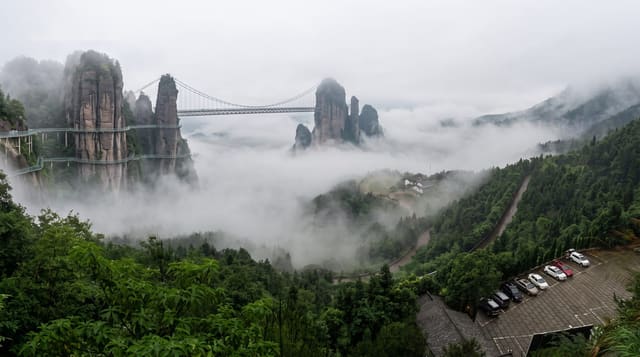
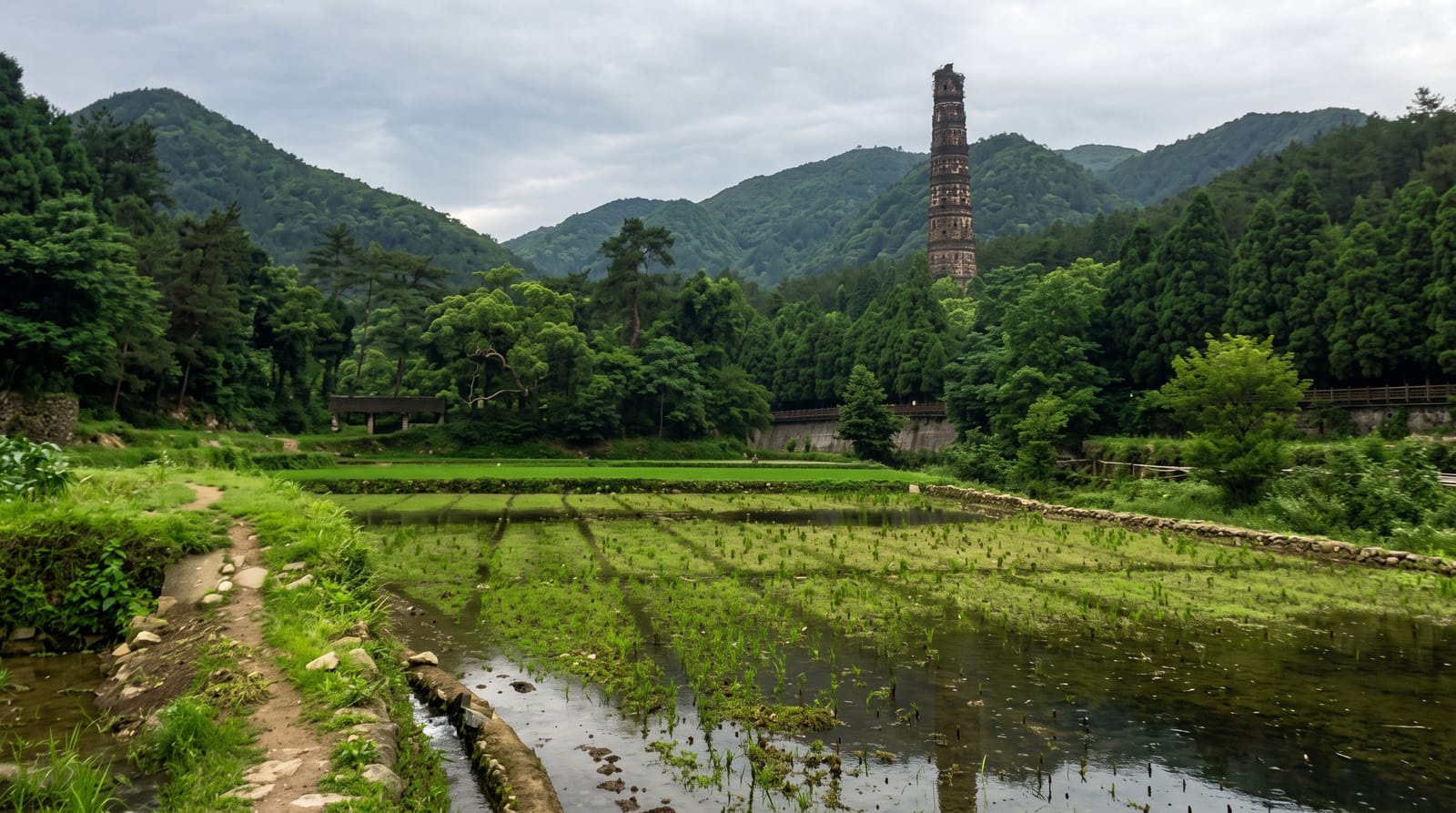
Tiantai Buddhism, one of the major schools of Chinese Buddhism, takes its name from this mountain, where the monk Zhiyi taught in the sixth century and where Guoqing Temple was founded in 598 in accordance with his instructions. The temple, rebuilt in the Qing, remains an important monastery and was the source from which Tiantai teaching passed to Japan as Tendai, so Japanese pilgrims come in numbers. Elsewhere on the mountain, the Stone Bridge is a natural rock arch spanning a gorge with a waterfall pouring beneath it, described in Chinese travel writing for centuries, and Huading peak at over eleven hundred metres is the high point.
What you'll find
- Guoqing Temple - the monastery founded in 598, source of Tiantai teaching.
- The Stone Bridge - a natural rock arch over a gorge and waterfall.
- Huading peak - the summit area with azaleas in late spring.
- The pilgrim traffic - Japanese and Korean Buddhists visiting the school's source.
When to go
April to June and September to November; azaleas on Huading flower in May. Summer is hot and humid, winter cold with occasional snow. The sites are spread across the mountain and each charges separately.
Things to know
Sites are far apart and public transport between them is limited. Walking on the Stone Bridge itself is prohibited. Entry fees at multiple points add up. English interpretation is minimal.
Nearby
Shenxianju lies west; Taizhou and the coast are southeast.
What to pack for Tiantai Mountain
Chosen from what this place is for. Tap a kit for the full checklist.
- Warm base layers - Merino or synthetic against the skin - never cotton, which chills when damp. Find on Amazon
- Strong insect repellent - DEET or picaridin; the jungle is where bites and disease risk are highest. Find on Amazon
- Comfortable walking shoes - Sightseeing means kilometres of pavement and cobbles daily. Find on Amazon
- Modest clothing - Shoulders and knees covered - the single most common requirement. Find on Amazon
Some links on this page are Amazon affiliate links - if you buy through them we may earn a small commission at no extra cost to you.
All packing kitsPlan your trip
Where to start if Tiantai Mountain is going on the list.
Booking links on this page are affiliate links - if you book through them we may earn a small commission at no extra cost to you. It never changes what we write about a place.
Opening times, ticket prices and seasonal closures change - check the official source before you go: official site.