Qianshan National Park
A granite range of nine hundred-odd peaks scattered with Buddhist and Daoist temples, near Anshan in Liaoning.
Updated 4 September 2026
AI illustration
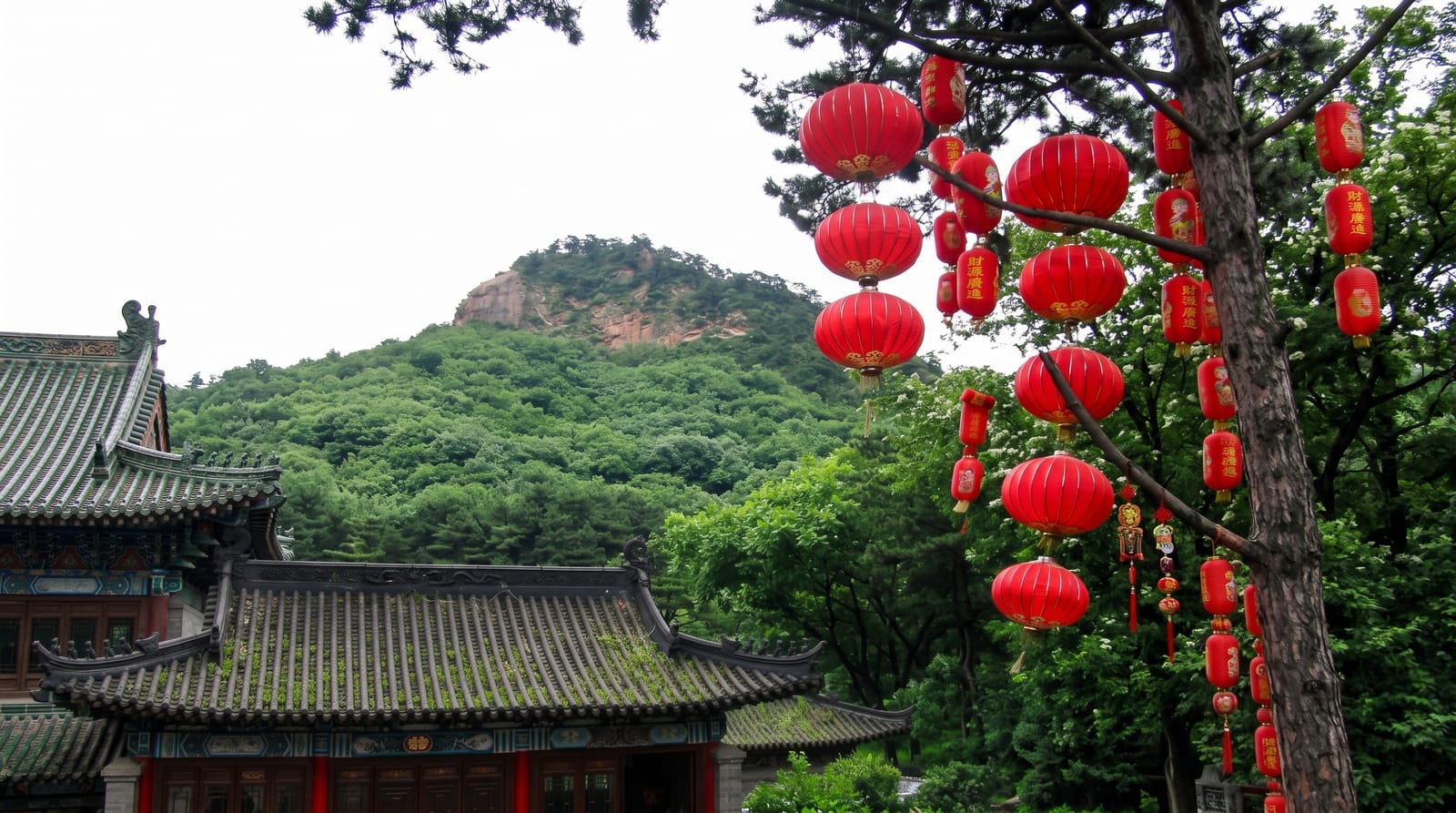
Qianshan means thousand lotuses mountain, from the resemblance of its granite summits to lotus buds, and the range holds something close to nine hundred peaks across a compact area, wooded with pine and scattered with more than twenty temples and monasteries of both Buddhist and Daoist tradition, several dating to the Ming and Qing. Longquan Temple is the largest. A natural rock formation on one ridge resembles a seated Buddha of over seventy metres, identified in 1993 and now a focus of pilgrimage. Paths and stairways link the temples and summits, with a cable car to the upper ridge. Autumn colour in October is the busiest season.
Highlights
- The granite peaks - hundreds of summits in a compact wooded range.
- The temples - more than twenty Buddhist and Daoist complexes among the rocks.
- The natural Buddha - the rock formation resembling a seated figure.
- The autumn colour - maples and larch turning through October.
When to go
May to October, with October colour drawing the largest crowds; winter is cold and icy on the stairways. Spring brings pear blossom in the surrounding valleys. Weekends are busy year-round.
Good to know
The park involves a lot of stair climbing between temples. Entry plus cable car and internal transport adds up. Anshan is a steel city with heavy industry and often poor air.
Nearby
Anshan lies northwest; Shenyang is about an hour north.
Key facts
Source: Wikidata, item Q6151757, read on 18 October 2026.
What to pack for Qianshan National Park
Chosen from what this place is for. Tap a kit for the full checklist.
- Broken-in walking shoes or boots - Grip and ankle support matter more than looks; never hike in brand-new boots. Find on Amazon
- Modest clothing - Shoulders and knees covered - the single most common requirement. Find on Amazon
- Layers + a waterproof shell - Mountain weather turns fast; a packable rain jacket saves the day. Find on Amazon
- A scarf or shawl - To cover the head or shoulders on entry; women especially at mosques. Find on Amazon
Some links on this page are Amazon affiliate links - if you buy through them we may earn a small commission at no extra cost to you.
All packing kitsPlan your trip
Where to start if Qianshan National Park is going on the list.
Booking links on this page are affiliate links - if you book through them we may earn a small commission at no extra cost to you. It never changes what we write about a place.
Opening times, ticket prices and seasonal closures change - check the official source before you go: official site.


