Panjin Red Beach
Tidal flats covered in seepweed that turns deep crimson each autumn, in a reserve holding cranes and rare gulls.
Updated 4 September 2026
AI illustration
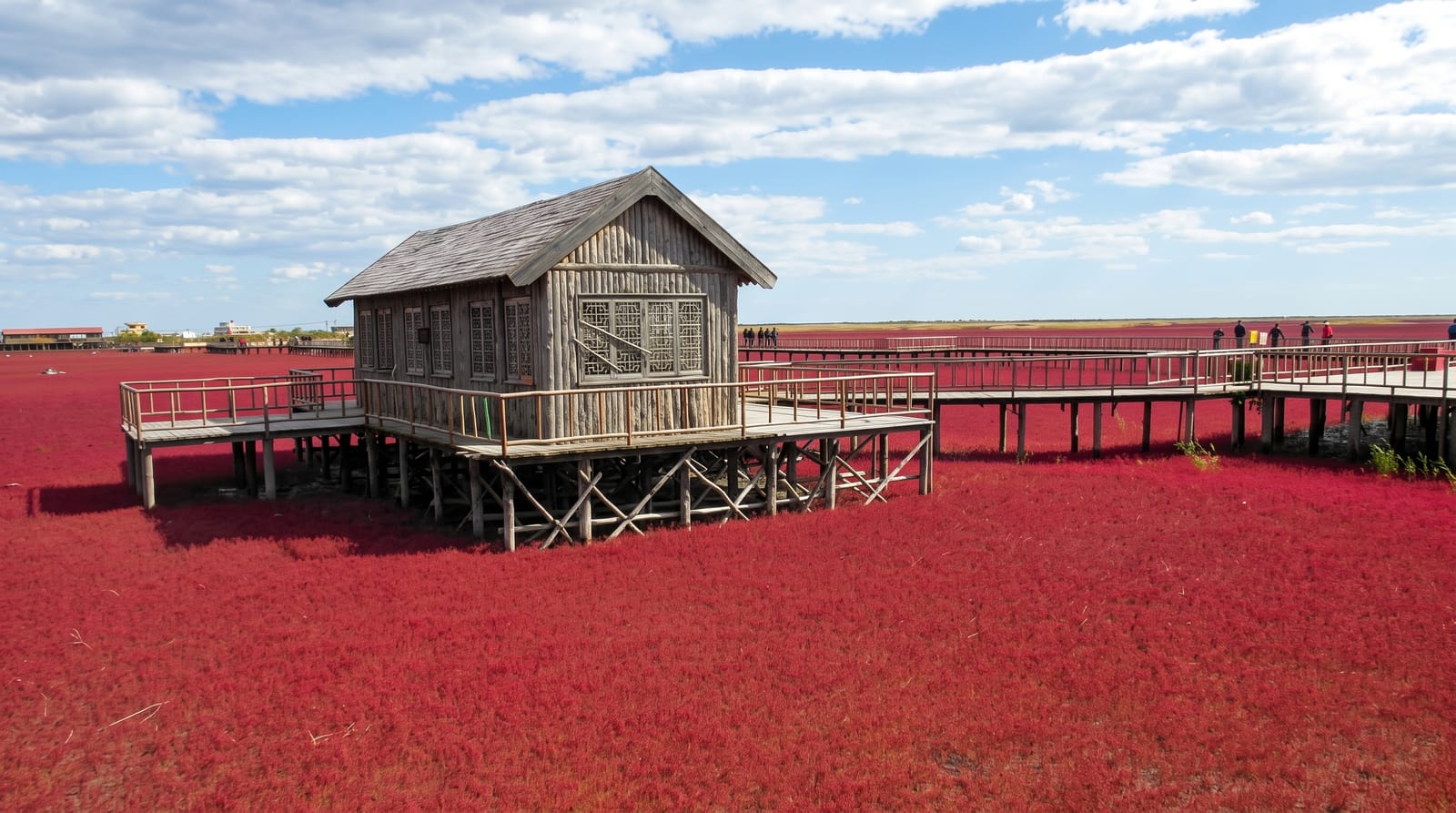
The Liaohe delta holds vast tidal marshes where Suaeda salsa, a salt-tolerant seepweed, grows across the flats, and each autumn the plant turns from green through pink to a deep crimson that covers the ground to the horizon, producing what is marketed as the red beach although no sand is involved. Boardwalks run out over the marsh for viewing. The wetland is a Ramsar site and part of the reserve system protecting the endangered red-crowned crane, which breeds here at the southern edge of its range, along with Saunders's gull, a rare species with a significant population in these flats. Oilfields operate nearby, and the reserve is bounded by industry.
The landscape
- The crimson marsh - seepweed colouring the tidal flats deep red.
- The boardwalks - raised walkways over the marsh for viewing.
- The cranes - red-crowned cranes breeding at the southern edge of their range.
- Saunders's gull - the rare gull with an important population here.
When to go
September to October for the strongest red, with the peak usually in late September; the colour fades quickly after. Spring and summer show green marsh and breeding birds. The season is short and weekends crowded.
Before you go
The colour window is a few weeks and varies with salinity and weather; some years are much weaker. Access is confined to boardwalks. The setting includes oil infrastructure, which appears in many photographs. Crowds during the peak are heavy.
Nearby
Panjin city lies northeast; the Bohai coast runs south.
Key facts
Source: Wikidata, item Q7305009, read on 18 October 2026.
What to pack for Panjin Red Beach
Chosen from what this place is for. Tap a kit for the full checklist.
- Broken-in walking shoes or boots - Grip and ankle support matter more than looks; never hike in brand-new boots. Find on Amazon
- Layers + a waterproof shell - Mountain weather turns fast; a packable rain jacket saves the day. Find on Amazon
- Daypack with rain cover - 20-30 litres holds water, snacks, layers and a first-aid kit. Find on Amazon
- Offline maps + a power bank - Download the trail before you lose signal; carry backup charge. Find on Amazon
Some links on this page are Amazon affiliate links - if you buy through them we may earn a small commission at no extra cost to you.
All packing kitsPlan your trip
Where to start if Panjin Red Beach is going on the list.
Booking links on this page are affiliate links - if you book through them we may earn a small commission at no extra cost to you. It never changes what we write about a place.
Opening times, ticket prices and seasonal closures change - check the official source before you go: official site.


