Purple Mountain
A wooded mountain on Nanjing's edge holding imperial tombs, an observatory and a monumental stairway of 392 steps.
Updated 4 September 2026
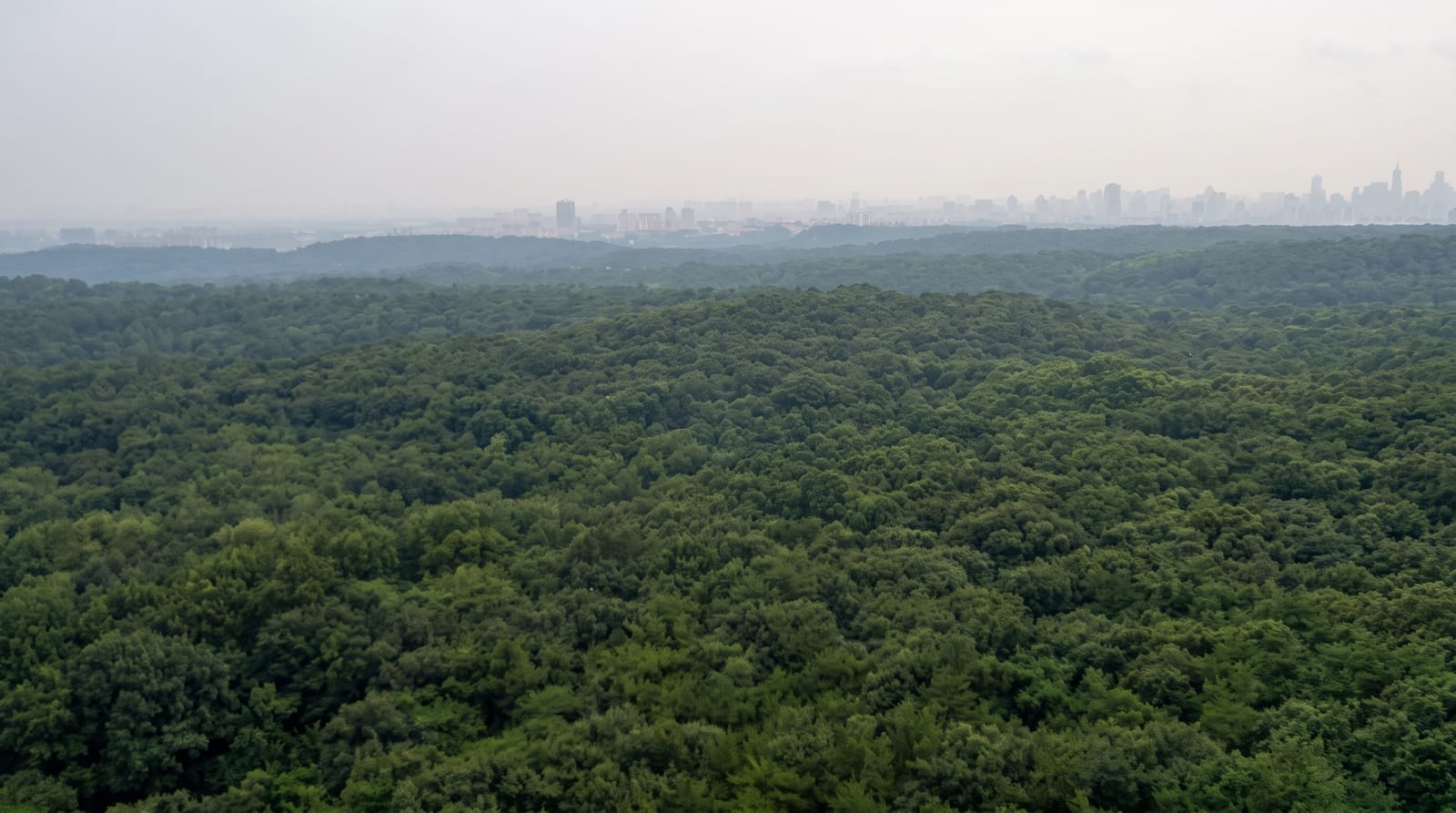
AI illustration
Zijinshan rises to about four hundred and fifty metres on the eastern edge of Nanjing, named for the purple cast its shale takes in certain light, and it holds an unusual concentration of sites across its slopes: the Ming Xiaoling tomb, the Linggu Temple with its beamless brick hall of 1381, the Sun Yat-sen Mausoleum with its stairway of three hundred and ninety-two steps climbing to a domed tomb hall, and the Purple Mountain Observatory, founded in 1934 and once China's principal astronomical institution, now largely a museum with historic instruments including Ming bronze armillary spheres. Cable cars and shuttle buses link the sites, and the forest itself is heavily used for walking.
What you'll find
- The Sun Yat-sen Mausoleum - the 392-step stairway to a domed tomb hall.
- The Purple Mountain Observatory - historic instruments including Ming bronzes.
- Linggu Temple - the beamless brick hall of 1381 and the pagoda.
- The forest - wooded slopes with paths and viewpoints over Nanjing.
When to go
March to May and September to November; the mountain is at its best in late autumn. Nanjing summers are severe. The Sun Yat-sen Mausoleum requires advance booking and free tickets, which can run out.
Before you go
Sites are far apart and shuttle buses or long walks are needed. Several require separate tickets or advance reservation. The mausoleum stairway is steep and busy. Weekends and holidays bring very large crowds.
Nearby
Xuanwu Lake lies west at the mountain's foot; central Nanjing is beyond it.
Key facts
Source: Wikidata, item Q833990, read on 18 October 2026.
What to pack for Purple Mountain
Chosen from what this place is for. Tap a kit for the full checklist.
- Broken-in walking shoes or boots - Grip and ankle support matter more than looks; never hike in brand-new boots. Find on Amazon
- Spare batteries + cards - Cold and long shoots drain power; never run out at the good light. Find on Amazon
- Modest clothing - Shoulders and knees covered - the single most common requirement. Find on Amazon
- Layers + a waterproof shell - Mountain weather turns fast; a packable rain jacket saves the day. Find on Amazon
Some links on this page are Amazon affiliate links - if you buy through them we may earn a small commission at no extra cost to you.
All packing kitsPlan your trip
Where to start if Purple Mountain is going on the list.
Booking links on this page are affiliate links - if you book through them we may earn a small commission at no extra cost to you. It never changes what we write about a place.
Opening times, ticket prices and seasonal closures change - check the official source before you go: official site.