Ming Xiaoling Mausoleum
The tomb of the first Ming emperor, whose sacred way of stone animals curves rather than running straight.
Updated 20 October 2026

AI illustration
UNESCO World Heritage
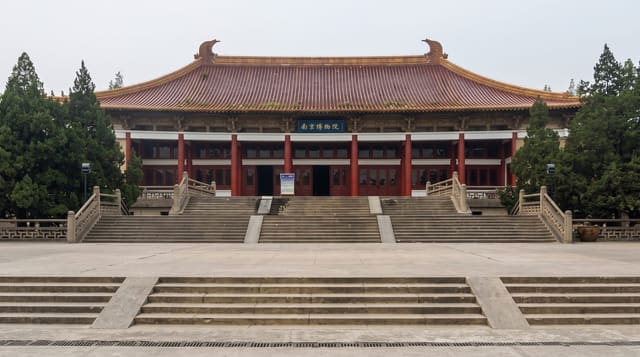
The Xiaoling is the tomb of Zhu Yuanzhang, the peasant rebel who founded the Ming dynasty in 1368, and his empress, built between 1381 and 1405 on the southern slope of Purple Mountain. It set the pattern for all later Ming and Qing imperial tombs, and UNESCO inscribed it in 2003 with them. Its sacred way is the distinctive element: rather than running straight, it curves around a hill, lined with twelve pairs of stone animals of six kinds, elephants, camels, horses, qilin, lions and xiezhi, followed by officials, each carved from a single block. The tomb mound itself has never been excavated. Autumn colour along the sacred way in November is a Nanjing tradition.
Highlights
- The curving sacred way - stone animals and officials along a bending avenue.
- The Ming tomb pattern - the layout copied by every later imperial tomb.
- The unexcavated mound - the burial hill behind the ceremonial buildings.
- The autumn colour - the sacred way's trees turning in November.
When to go
March to May and September to November; the November colour along the sacred way is the peak and correspondingly crowded. Nanjing summers are extremely hot. The site is large with substantial walking.
Before you go
The tomb itself has never been opened, so there is no underground chamber to visit. The site is part of a large scenic area with several separate tickets. Distances between the sacred way and the tomb buildings are considerable.
Nearby
Sun Yat-sen's mausoleum and Linggu Temple are on the same mountain; Nanjing's centre lies west.
Key facts
Source: Wikidata, item Q28769, read on 18 October 2026.
What to pack for Ming Xiaoling Mausoleum
Chosen from what this place is for. Tap a kit for the full checklist.
- Head torch + spare batteries - Hands-free light is essential; caves are truly dark. Find on Amazon
- Comfortable walking shoes - Sightseeing means kilometres of pavement and cobbles daily. Find on Amazon
- Modest clothing - Shoulders and knees covered - the single most common requirement. Find on Amazon
- Grippy closed shoes - Cave floors are wet, muddy and slick with formations. Find on Amazon
Some links on this page are Amazon affiliate links - if you buy through them we may earn a small commission at no extra cost to you.
All packing kitsPlan your trip
Where to start if Ming Xiaoling Mausoleum is going on the list.
Booking links on this page are affiliate links - if you book through them we may earn a small commission at no extra cost to you. It never changes what we write about a place.
Opening times, ticket prices and seasonal closures change - check the official source before you go: official site.