Panjiayuan Antique Market
A sprawling weekend market of antiques, curios, calligraphy and reproductions, with thousands of stalls at its busiest.
Updated 19 October 2026
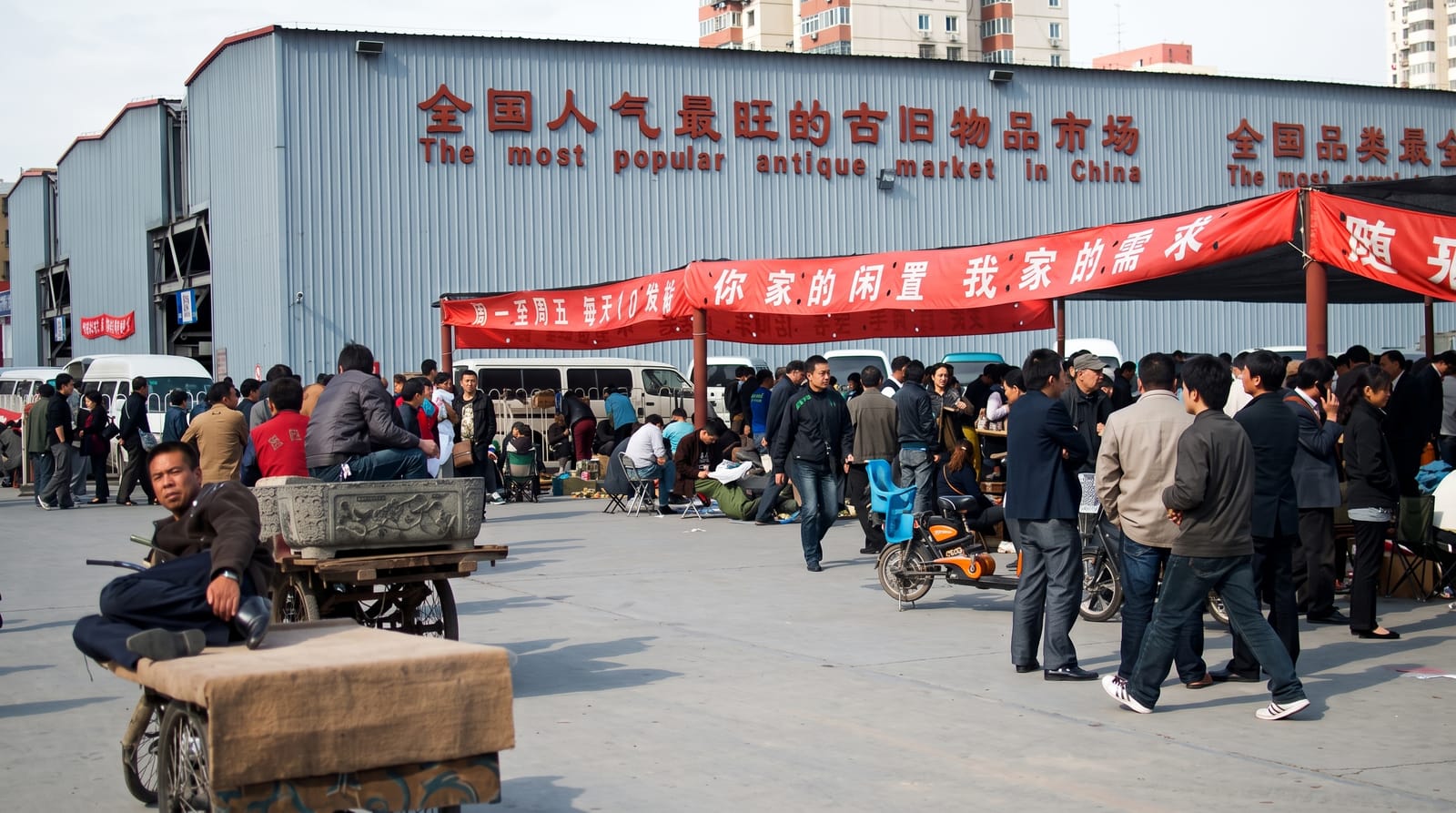
AI illustration
Panjiayuan started in the 1980s as an informal ground where traders spread goods on the earth and grew into the largest market of its kind in China, with several thousand stalls at weekends selling porcelain, jade, furniture, Cultural Revolution memorabilia, calligraphy, brushes, beads, Buddhist statuary, Tibetan and Central Asian goods, and a great deal that is not what it claims to be. Serious dealers arrive at dawn on Saturday. For most visitors it works as a place to browse and buy inexpensive reproductions, seals, scrolls and gifts, with bargaining expected and opening prices set far above what anything sells for.
History
The market began informally in the early 1980s as an early-morning "ghost market" and was officially set up in 1992, overtaking the old shops of Liulichang in popularity. It grew into Beijing's largest flea market and one of the largest in China, was rebuilt in the mid-2000s ahead of the 2008 Olympics, and many Chinese collectors say they began here (Wikipedia, Panjiayuan antique market).
The main sights
- The weekend stalls - thousands of traders across the open market ground.
- The range - porcelain, jade, furniture, calligraphy, memorabilia and curios.
- The dawn trade - dealers working the market at first light on Saturdays.
- The bargaining - haggling as the normal way of doing business.
When to go
Weekends, especially Saturday morning, when the market is at full size; weekdays have a smaller permanent section only. Year-round, though the open ground is exposed to Beijing's summer heat and winter cold.
Before you go
Most goods sold as antiques are reproductions, and genuine old pieces are hard to identify and legally restricted for export. Opening prices to foreign buyers can be many times the realistic figure. Bargaining is expected and not optional.
Nearby
The Temple of Heaven lies west; central Beijing is northwest.
Key facts
Source: Wikidata, item Q4881099, read on 18 October 2026.
What to pack for Panjiayuan Antique Market
Chosen from what this place is for. Tap a kit for the full checklist.
- A reusable bag or container - For market produce and cutting down on packaging. Find on Amazon
- Modest clothing - Shoulders and knees covered - the single most common requirement. Find on Amazon
- Wet wipes + hand sanitiser - Street food and washbasins do not always go together. Find on Amazon
- A scarf or shawl - To cover the head or shoulders on entry; women especially at mosques. Find on Amazon
Some links on this page are Amazon affiliate links - if you buy through them we may earn a small commission at no extra cost to you.
All packing kitsPlan your trip
Where to start if Panjiayuan Antique Market is going on the list.
Booking links on this page are affiliate links - if you book through them we may earn a small commission at no extra cost to you. It never changes what we write about a place.
Opening times, ticket prices and seasonal closures change - check the official source before you go: official site.