Laosicheng Ruins
The ruined capital of a Tujia chieftain line that governed from here for six centuries under imperial appointment.
Updated 20 October 2026
UNESCO World Heritage
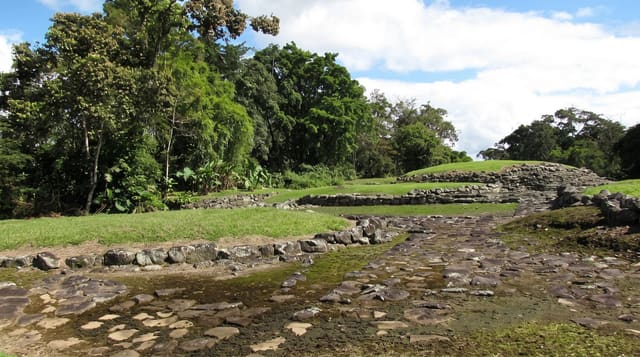
The tusi system was an arrangement by which Chinese dynasties appointed hereditary local chieftains to govern frontier peoples in their own way while acknowledging imperial authority, and Laosicheng was the seat of the Peng family, who governed this Tujia territory from the city, founded in 1135, for six centuries until it was abandoned in 1724. UNESCO inscribed it in 2015 with two other tusi sites. What survives is a city plan in stone: paved streets, drainage, the palace platform, a temple, a cemetery of chieftain tombs with carved stelae, and city walls, spread over a hillside above a river with almost nothing rebuilt.
Highlights
- The stone streets - the paved and drained city layout on the hillside.
- The chieftain tombs - the Peng family cemetery with carved stelae.
- The palace platform - the foundations of the ruling family's compound.
- The river setting - the site above the Lingxi in a quiet valley.
When to go
April to June and September to November; summers in western Hunan are hot and humid. The site is quiet and rarely crowded, being remote and less known than the nearby scenic mountains.
What to expect
The site is ruins and foundations rather than standing buildings, and needs interpretation to make sense. Access without a car is awkward. English signage is minimal. Facilities are limited.
Nearby
Furong town lies south; Zhangjiajie is north.
Key facts
Source: Wikidata, item Q20687839, read on 18 October 2026.
What to pack for Laosicheng Ruins
Chosen from what this place is for. Tap a kit for the full checklist.
- Strong insect repellent - DEET or picaridin; the jungle is where bites and disease risk are highest. Find on Amazon
- Comfortable walking shoes - Sightseeing means kilometres of pavement and cobbles daily. Find on Amazon
- Modest clothing - Shoulders and knees covered - the single most common requirement. Find on Amazon
- Long, light, quick-dry clothing - Covers skin from insects and sun without cooking you in the humidity. Find on Amazon
Some links on this page are Amazon affiliate links - if you buy through them we may earn a small commission at no extra cost to you.
All packing kitsPlan your trip
Where to start if Laosicheng Ruins is going on the list.
Booking links on this page are affiliate links - if you book through them we may earn a small commission at no extra cost to you. It never changes what we write about a place.
Opening times, ticket prices and seasonal closures change - check the official source before you go: official site.