Lama Temple
Beijing's great Tibetan Buddhist monastery, holding an eighteen-metre Maitreya carved from a single sandalwood trunk.
Updated 19 October 2026

AI illustration
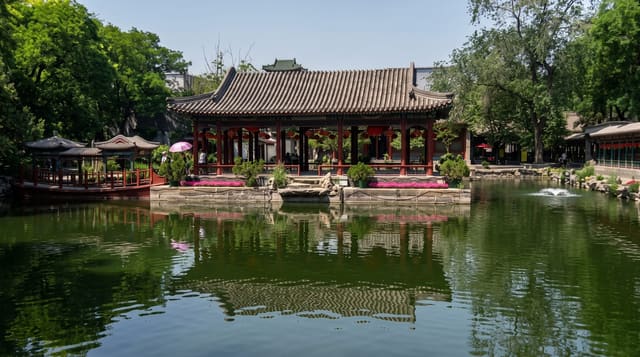
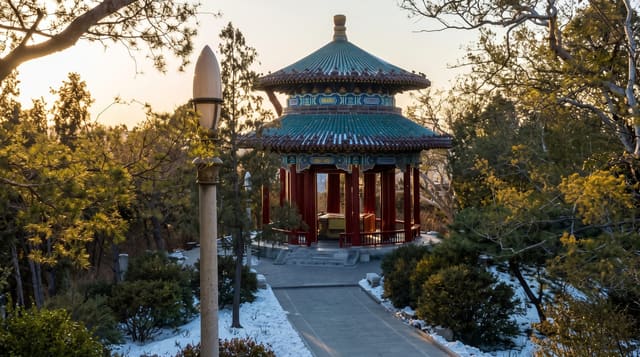
The Yonghegong began in 1694 as the residence of a Qing prince who became the Yongzheng Emperor, and when an emperor's former home could not revert to ordinary use it was converted into a lamasery in 1744, becoming the principal centre of Tibetan Buddhism in the capital. Five main halls run north along the axis, rising in scale, with the last holding a standing Maitreya Buddha of about eighteen metres carved from a single white sandalwood trunk brought from Nepal, an achievement recorded in the Guinness Book. The buildings mix Han, Manchu, Mongol and Tibetan architecture. It remains an active temple, thick with incense smoke and worshippers rather than a museum.
History
Building began in 1694 on the site of a Ming residence for court eunuchs, which became the home of Yinzhen, Prince Yong, a son of the Kangxi Emperor, who took up residence in May 1703; his son, the future Qianlong Emperor, was born here in 1711. When the prince became the Yongzheng Emperor in 1722 the residence was raised to the Palace of Harmony and Peace, and after his death his coffin lay here from 1735 to 1737; in 1744 the Qianlong Emperor ordered it turned into a lamasery, consecrated in 1745, and it became the centre of Tibetan Buddhist affairs in the capital (Wikipedia, Yonghe Temple).
What's there
- The sandalwood Maitreya - an eighteen-metre Buddha carved from one trunk.
- The five halls - the axis of increasingly grand buildings.
- The mixed architecture - Han, Mongol, Manchu and Tibetan elements combined.
- The worshippers - incense and prayer in a working monastery.
When to go
April to May and September to October for Beijing's best weather; the temple is busiest on Buddhist festival days and during national holidays. Early morning is calmest. Incense is provided free at the entrance.
Good to know
This is an active place of worship, and photography inside the halls is prohibited. Incense smoke is thick and can be overwhelming. Chinese national holidays bring very large crowds, and the site closes in the late afternoon.
Nearby
The Confucius Temple and Guozijian are a short walk west; the hutongs lie south.
Key facts
Source: Wikidata, item Q692723, read on 18 October 2026.
What to pack for Lama Temple
Chosen from what this place is for. Tap a kit for the full checklist.
- Reef-safe sunscreen - High SPF that will not bleach the coral you are swimming over. Find on Amazon
- Comfortable walking shoes - Sightseeing means kilometres of pavement and cobbles daily. Find on Amazon
- Modest clothing - Shoulders and knees covered - the single most common requirement. Find on Amazon
- Quick-dry towel - A microfibre towel packs small and dries in minutes. Find on Amazon
Some links on this page are Amazon affiliate links - if you buy through them we may earn a small commission at no extra cost to you.
All packing kitsPlan your trip
Where to start if Lama Temple is going on the list.
Booking links on this page are affiliate links - if you book through them we may earn a small commission at no extra cost to you. It never changes what we write about a place.
Opening times, ticket prices and seasonal closures change - check the official source before you go: official site.