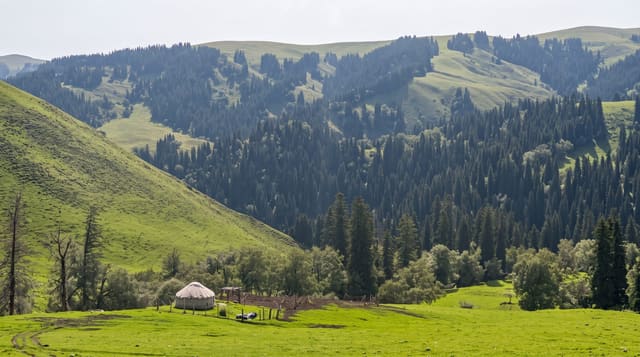
Keketuohai
A granite gorge of bare domes and a mine pit that supplied rare minerals, in one of China's coldest places.
Updated 4 September 2026
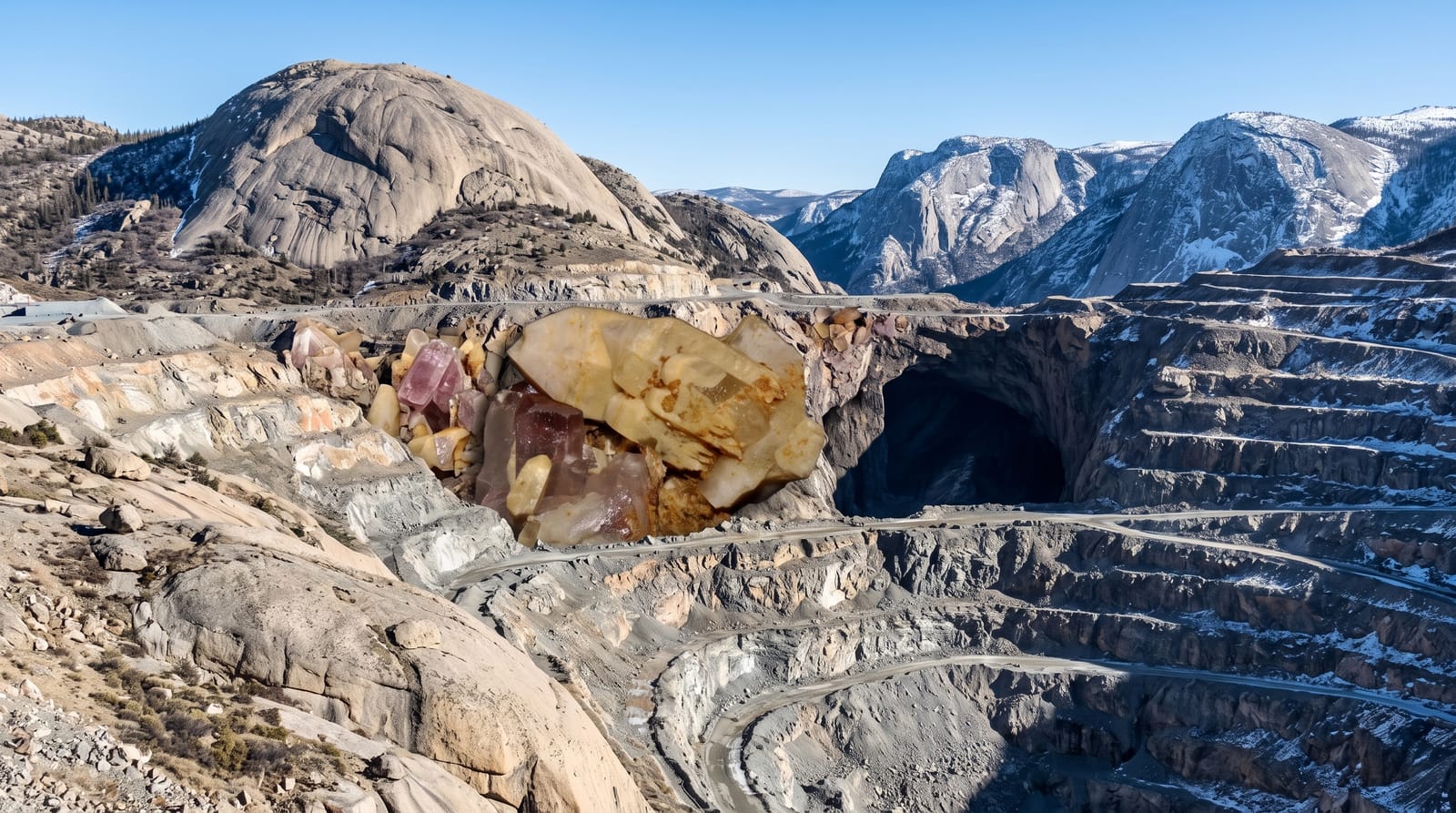
AI illustration
Keketuohai is a UNESCO Global Geopark in the Altai built around two things. The first is the Irtysh gorge, where the river runs between bare granite walls and domes, the largest called Shenzhong Shan for its bell shape, rising several hundred metres in smooth unbroken rock. The second is Mine Number Three, an open pit worked from the 1930s for beryllium, lithium, tantalum and other rare metals from an exceptionally rich pegmatite, with dozens of minerals identified in one pit and a spiral of terraces cut into the ground. The valley records some of the lowest temperatures in China, below minus fifty.
What you'll find
- The granite gorge - the Irtysh between smooth bare rock walls.
- Shenzhong Shan - the great bell-shaped dome above the river.
- Mine Number Three - the terraced open pit and its mineral displays.
- The cold record - a valley among the coldest inhabited places in China.
When to go
June to September for accessible roads and green valley; autumn brings birch colour in late September. Winter is extraordinarily cold, though ski and ice tourism runs. Nights are cold even in summer.
Good to know
Entry plus shuttle is expensive and internal transport compulsory. The mine is largely worked out and presented as a museum. Distances between sites in the park are considerable.
Nearby
Burqin lies west; Kanas is northwest.
What to pack for Keketuohai
Chosen from what this place is for. Tap a kit for the full checklist.
- Broken-in walking shoes or boots - Grip and ankle support matter more than looks; never hike in brand-new boots. Find on Amazon
- Layers + a waterproof shell - Mountain weather turns fast; a packable rain jacket saves the day. Find on Amazon
- Daypack with rain cover - 20-30 litres holds water, snacks, layers and a first-aid kit. Find on Amazon
- Offline maps + a power bank - Download the trail before you lose signal; carry backup charge. Find on Amazon
Some links on this page are Amazon affiliate links - if you buy through them we may earn a small commission at no extra cost to you.
All packing kitsPlan your trip
Where to start if Keketuohai is going on the list.
Booking links on this page are affiliate links - if you book through them we may earn a small commission at no extra cost to you. It never changes what we write about a place.
Opening times, ticket prices and seasonal closures change - check the official source before you go: official site.