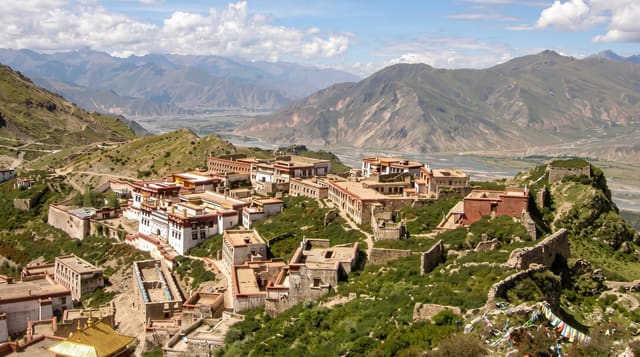
Jokhang Temple and Barkhor Street
The most revered temple in Tibetan Buddhism, ringed by a circuit walked clockwise by pilgrims all day.
Updated 4 September 2026
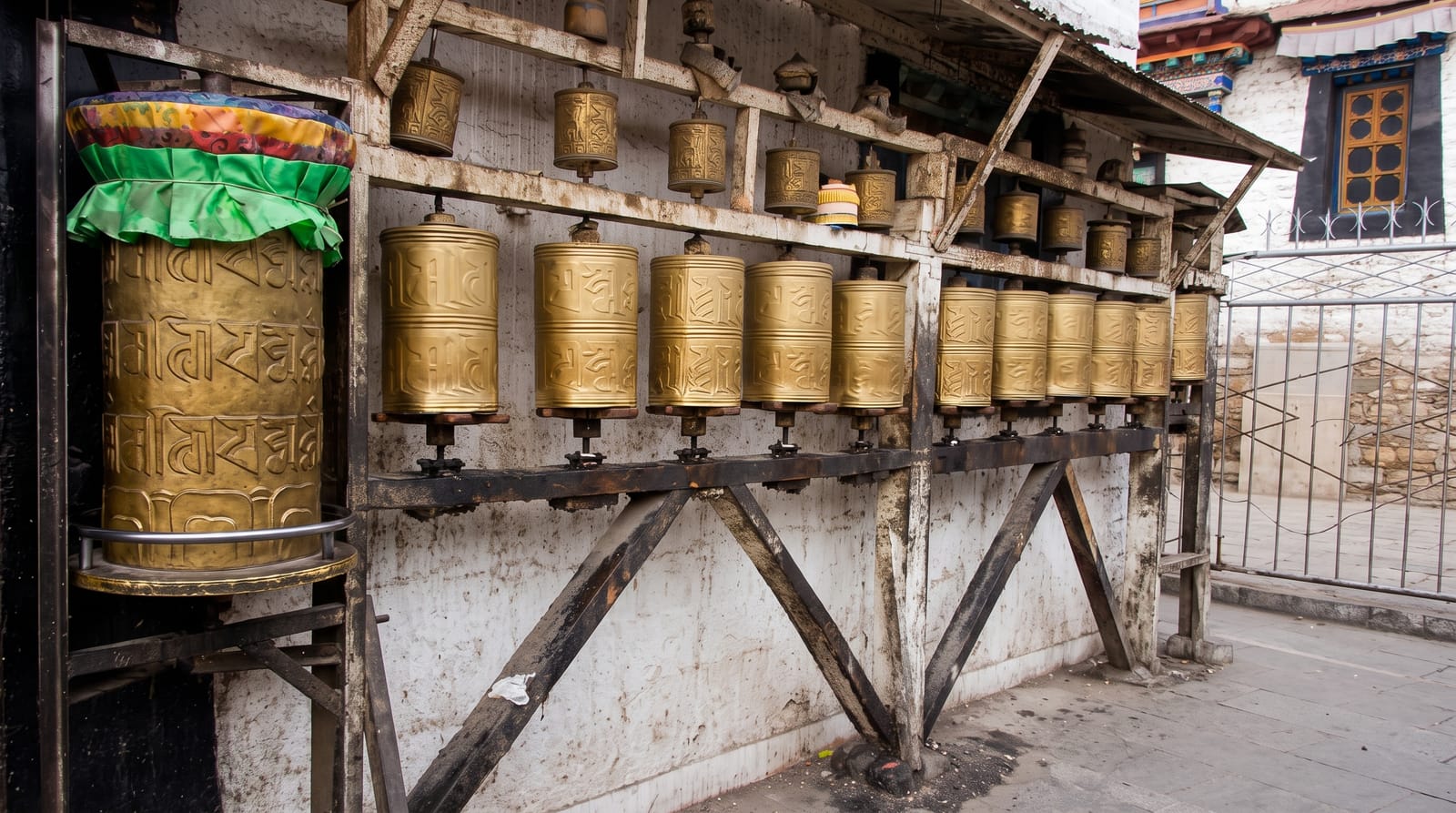
AI illustration
The Jokhang was founded in the seventh century to house a statue of Sakyamuni as a young man, brought to Tibet by a Tang princess, and that image, the Jowo Rinpoche, is the most venerated object in Tibetan Buddhism, which makes this the destination of pilgrimage rather than one temple among many. The building mixes Tibetan, Nepali and Tang elements around a central hall, with a golden roof and prostrating pilgrims at the door from before dawn. Barkhor, the street circling it, is the intermediate pilgrim circuit, walked clockwise in a constant stream past stalls, prayer wheels and incense burners.
The main sights
- The Jowo Rinpoche - the seventh-century image at the heart of the temple.
- The prostrating pilgrims - full-length prostrations at the temple door.
- The Barkhor circuit - the clockwise street walked continuously all day.
- The golden roof - views over the old town from the temple terrace.
When to go
April to October for the mildest weather; pilgrim numbers peak around Tibetan festivals and in winter when farm work stops. Early morning has the strongest atmosphere and the fewest tour groups.
Good to know
Foreign visitors need a Tibet travel permit arranged in advance through a tour agency, plus a guide. Lhasa sits at 3,650 metres and altitude affects most arrivals. Photography inside chapels is restricted.
Nearby
The Potala lies northwest; Sera Monastery is north of the city.
What to pack for Jokhang Temple and Barkhor Street
Chosen from what this place is for. Tap a kit for the full checklist.
- Layers for big temperature swings - Warm sun by day, near-freezing at night, even near the equator. Find on Amazon
- Comfortable walking shoes - Sightseeing means kilometres of pavement and cobbles daily. Find on Amazon
- Modest clothing - Shoulders and knees covered - the single most common requirement. Find on Amazon
- Extra-strong sun protection - Thin air means fierce UV; hat, sunglasses and high-SPF sunscreen. Find on Amazon
Some links on this page are Amazon affiliate links - if you buy through them we may earn a small commission at no extra cost to you.
All packing kitsPlan your trip
Where to start if Jokhang Temple and Barkhor Street is going on the list.
Booking links on this page are affiliate links - if you book through them we may earn a small commission at no extra cost to you. It never changes what we write about a place.
Opening times, ticket prices and seasonal closures change - check the official source before you go: official site.