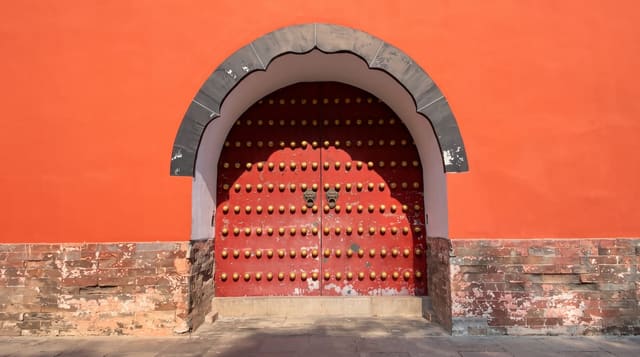
Jinshan Temple
A hilltop temple at Zhenjiang built so that buildings cover the hill entirely, and the setting of the White Snake legend.
Updated 4 September 2026
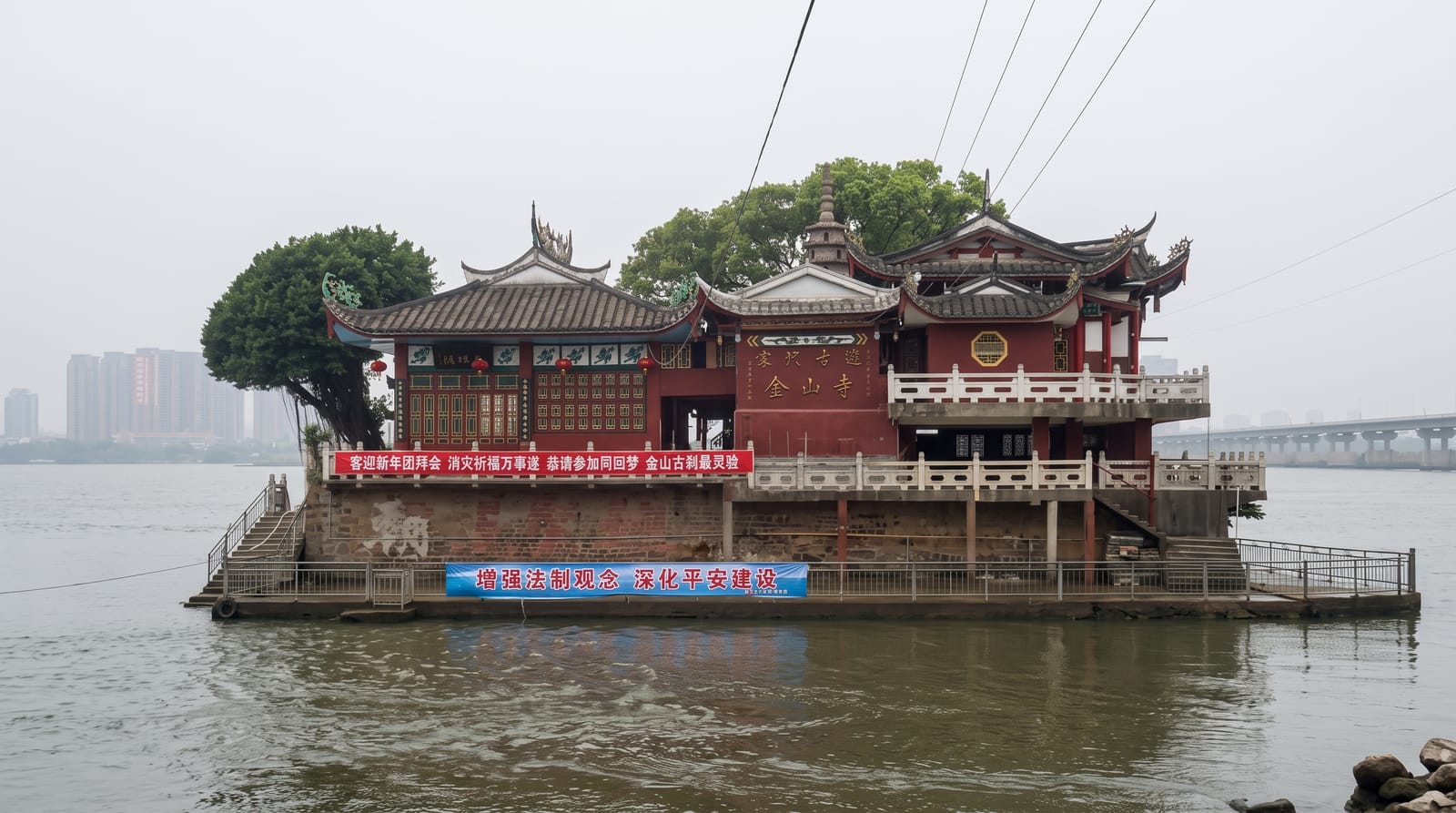
AI illustration
Jinshan Temple was founded in the fourth century on what was then an island in the Yangtze, later joined to the bank as the river shifted. Its buildings wrap the hill so completely that the saying holds the temple hides the mountain, with halls, corridors and the Cishou Pagoda stacked up the slope. It is the setting of one of China's four great folk legends: the White Snake, in which the spirit Bai Suzhen floods the temple to free her husband from the monk Fahai, an episode retold in opera and film for centuries. The Fahai cave, the Zhongling spring rated first under heaven for tea, and views over the Yangtze complete the site.
The main sights
- The wrapped hill - buildings covering the slope so the rock barely shows.
- The Cishou Pagoda - the tower at the summit with river views.
- The White Snake associations - the Fahai cave and legend sites.
- The Zhongling spring - the water long rated among the best for tea.
When to go
March to May and September to November; Zhenjiang summers are hot and humid. The temple is quieter than Suzhou or Hangzhou sites. Chinese holidays bring domestic visitors.
Good to know
Much of the complex is rebuilt after fires and wars. The climb involves many steps. English interpretation is minimal, and the legend that gives the temple its resonance is unfamiliar to most foreign visitors.
Nearby
Jiaoshan and Beigushan are Zhenjiang's other river hills; Nanjing lies west.
What to pack for Jinshan Temple
Chosen from what this place is for. Tap a kit for the full checklist.
- Head torch + spare batteries - Hands-free light is essential; caves are truly dark. Find on Amazon
- Strong insect repellent - DEET or picaridin; the jungle is where bites and disease risk are highest. Find on Amazon
- Comfortable walking shoes - Sightseeing means kilometres of pavement and cobbles daily. Find on Amazon
- Modest clothing - Shoulders and knees covered - the single most common requirement. Find on Amazon
Some links on this page are Amazon affiliate links - if you buy through them we may earn a small commission at no extra cost to you.
All packing kitsPlan your trip
Where to start if Jinshan Temple is going on the list.
Booking links on this page are affiliate links - if you book through them we may earn a small commission at no extra cost to you. It never changes what we write about a place.
Opening times, ticket prices and seasonal closures change - check the official source before you go: official site.