Hailongtun
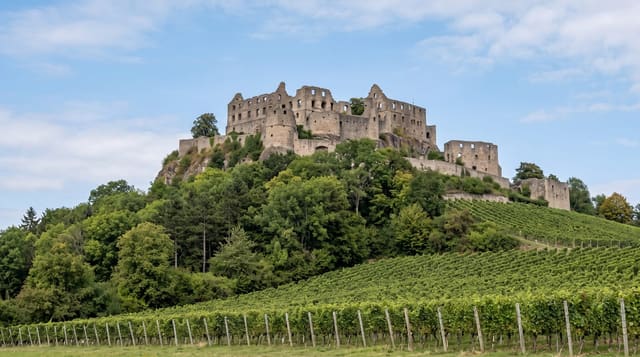
A mountaintop fortress of the Yang chieftains, taken after a siege in 1600 and left in ruins since.
Updated 14 October 2026

AI illustration
UNESCO World Heritage
The Yang family governed the Bozhou territory as tusi, hereditary chieftains appointed by the imperial court, for around seven hundred years, and Hailongtun was their mountain stronghold: a walled site on a ridge with sheer drops on most sides, entered through a series of stone gates set in switchback approaches, the most famous being the Flying Dragon and Iron Pillar gates. In 1600 a Ming army besieged it for months and took it, ending the line. Nothing was rebuilt, so what stands are walls, gates and foundations on the ridge, excavated since 2012 and inscribed by UNESCO in 2015 with the other tusi sites.
What you'll find
- The stone gates - Flying Dragon, Iron Pillar and the switchback approach.
- The ridge walls - the fortress circuit along the cliff edges.
- The palace foundations - excavated platforms on the summit.
- The siege setting - the approach that took a Ming army months.
When to go
March to June and September to November; summers are hot for the climb and winters damp and cold. Mist frequently covers the ridge. Weekdays are very quiet.
Things to know
The site is ruins, not standing buildings, and needs interpretation. The climb from the gate is steep and long. Signage is limited and mostly Chinese. Facilities are minimal.
Nearby
Zunyi lies southeast; Chishui is northwest.
Key facts
Source: Wikidata, item Q11151508, read on 18 October 2026.
What to pack for Hailongtun
Chosen from what this place is for. Tap a kit for the full checklist.
- Comfortable walking shoes - Sightseeing means kilometres of pavement and cobbles daily. Find on Amazon
- A slim anti-theft daypack - Zips that close properly; keep it in front in crowds and on transit. Find on Amazon
- A refillable water bottle - Many cities have public fountains; save money and plastic. Find on Amazon
- A light layer + compact umbrella - For museum air-con and a sudden shower. Find on Amazon
Some links on this page are Amazon affiliate links - if you buy through them we may earn a small commission at no extra cost to you.
All packing kitsPlan your trip
Where to start if Hailongtun is going on the list.
Booking links on this page are affiliate links - if you book through them we may earn a small commission at no extra cost to you. It never changes what we write about a place.
Opening times, ticket prices and seasonal closures change - check the official source before you go: official site.