Guge Kingdom Ruins
A citadel of hundreds of chambers cut into a clay ridge, abandoned in the seventeenth century.
Updated 4 September 2026
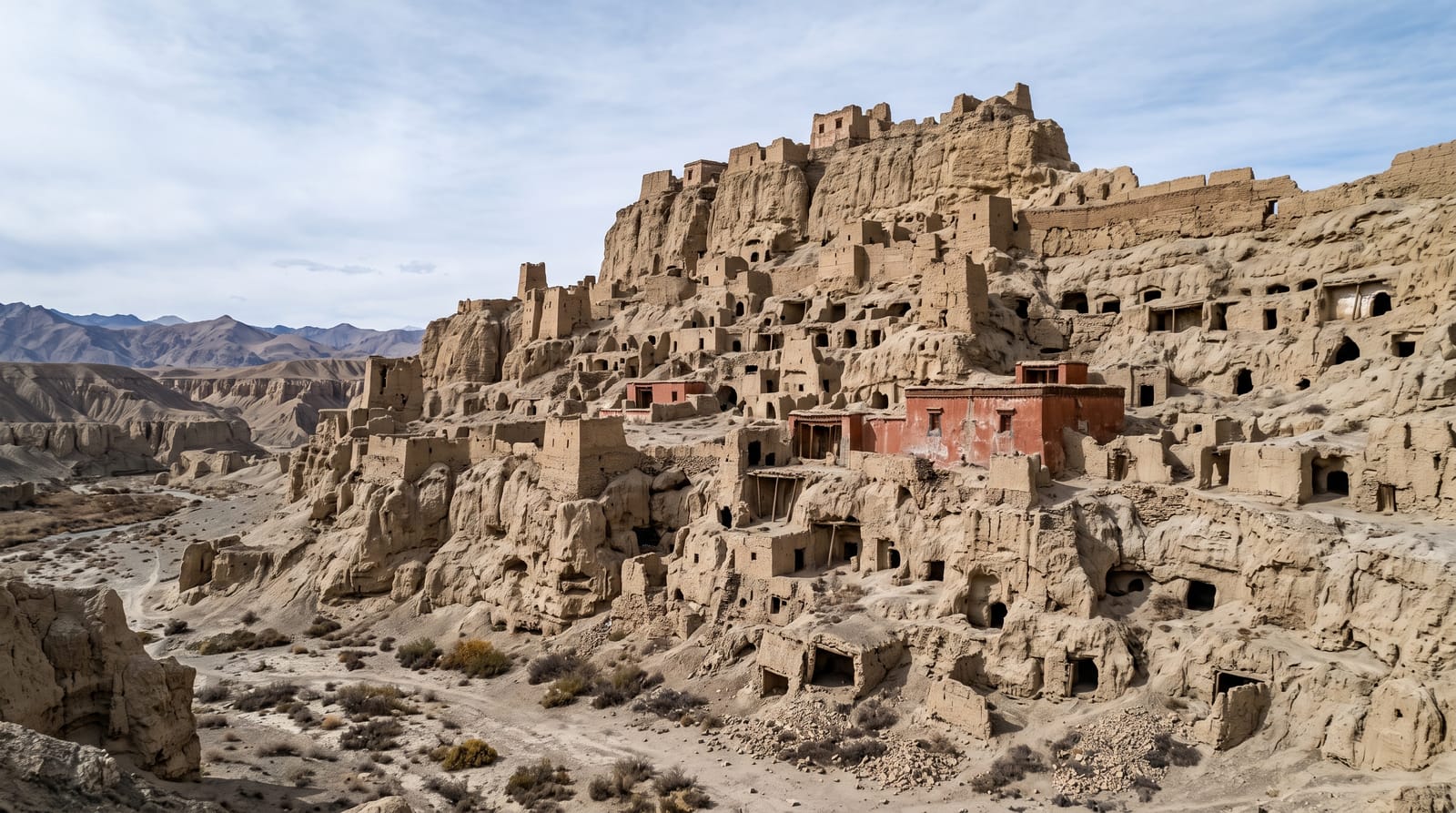
AI illustration
The Guge kingdom ruled western Tibet from the tenth century and was a centre of Buddhist revival, bringing scholars from India and building temples with murals unlike anything elsewhere on the plateau. Its capital at Tsaparang is a ridge of soft clay honeycombed with several hundred rooms, caves, tunnels and defensive works rising some three hundred metres, with chapels at the top reached through a passage cut inside the rock. The kingdom collapsed in the 1630s and the site was left. The White and Red temples retain wall paintings in remarkable condition. Around it, the Zanda basin is eroded into a vast clay badland.
What to look for
- The honeycombed ridge - hundreds of chambers and tunnels in clay.
- The White and Red temples - chapels retaining Guge-period murals.
- The interior passage - the cut tunnel climbing to the summit chapels.
- The Zanda earth forest - eroded clay badlands around the site.
When to go
May to October, when the roads through western Tibet are open; winter is severe and access unreliable. Low sun on the badlands at either end of the day is the best light.
What to expect
This is one of the most remote destinations in China, requiring permits and days of driving. Murals are dim and photography inside is prohibited. The climb through the ridge is steep at 3,800 metres.
Nearby
Tholing monastery lies in Zanda; Kailash is east.
What to pack for Guge Kingdom Ruins
Chosen from what this place is for. Tap a kit for the full checklist.
- Broken-in walking shoes or boots - Grip and ankle support matter more than looks; never hike in brand-new boots. Find on Amazon
- Head torch + spare batteries - Hands-free light is essential; caves are truly dark. Find on Amazon
- Layers for big temperature swings - Warm sun by day, near-freezing at night, even near the equator. Find on Amazon
- Comfortable walking shoes - Sightseeing means kilometres of pavement and cobbles daily. Find on Amazon
Some links on this page are Amazon affiliate links - if you buy through them we may earn a small commission at no extra cost to you.
All packing kitsPlan your trip
Where to start if Guge Kingdom Ruins is going on the list.
Booking links on this page are affiliate links - if you book through them we may earn a small commission at no extra cost to you. It never changes what we write about a place.
Opening times, ticket prices and seasonal closures change - check the official source before you go: official site.