Chengyang Wind and Rain Bridge
A Dong covered bridge begun in 1912 and finished in 1924, built entirely in wood without a single nail, among working villages.
Updated 18 October 2026
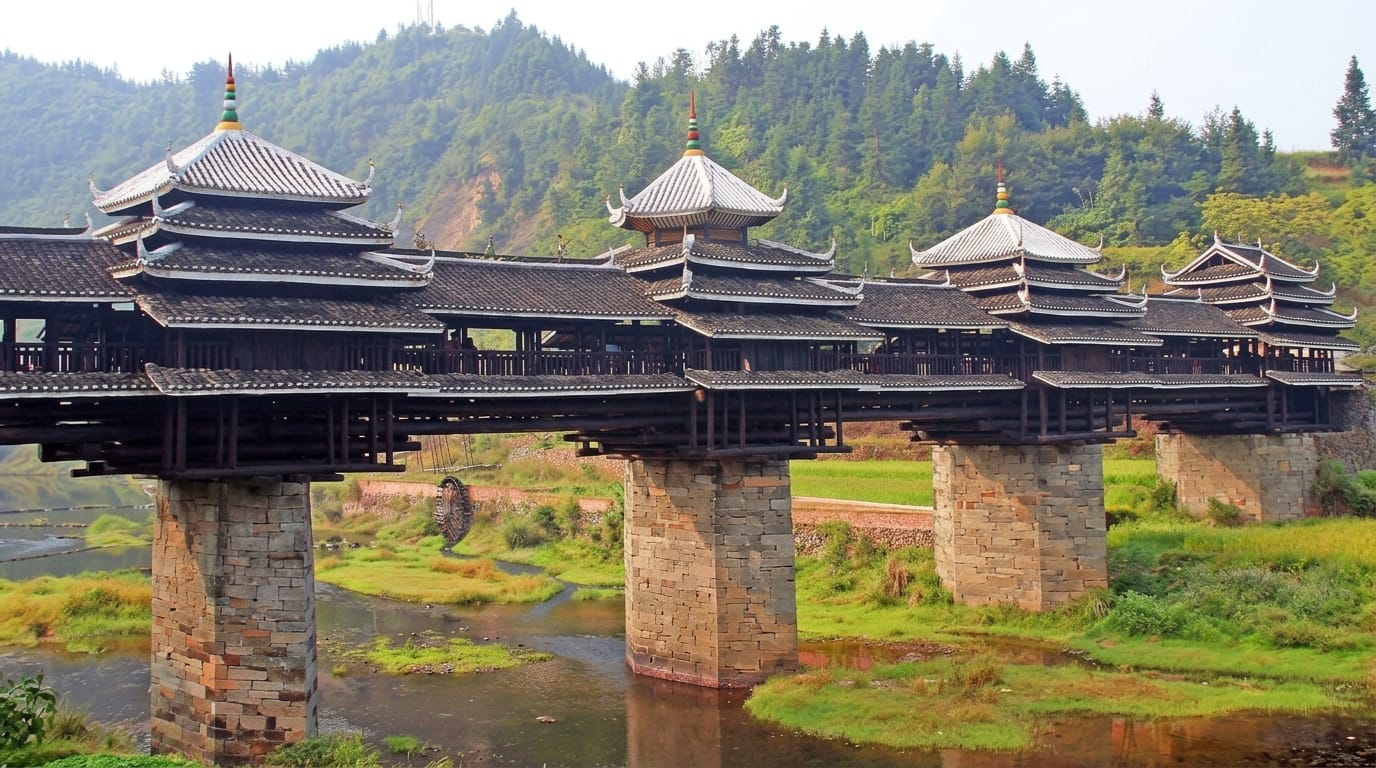
AI illustration
Dong carpenters build wind and rain bridges as covered crossings with pavilions and towers on top, meant as shelter and as village meeting places, and the Chengyang bridge, begun in 1912 and completed in 1924 over the Linxi river, is the best known: about sixty-five metres long on stone piers, with five pavilions and tiled roofs, assembled in wood using mortise and tenon joints without nails. Around it stand eight Dong villages with drum towers, timber houses on stilts, waterwheels and terraced fields, still farmed, so the bridge sits in a working landscape rather than a preserved one. Dong choral singing, inscribed by UNESCO, is performed here.
History
In 1912 the Dong people of the eight Chengyang villages organised the labour and raised the money themselves to build a covered bridge over the Linxi river for the villages around it; after overcoming shortages of both, they finished it in 1924 as the Chengyang Yongji Bridge. A flash flood carried away the three pavilions on its southern side in 1936 (1937 by another account), and the villagers spent two months recovering the timber; they began repairs in 1939 and finished in 1941. The bridge was listed as a major national heritage site in 1982, lost two piers to a flood in 1984, was repaired by 1995, and underwent three months of maintenance in 2016 (Chinese Wikipedia, Chengyang Yongji Bridge).
What's there
- The bridge - a nail-free timber crossing with five roofed pavilions.
- The drum towers - Dong village towers among the timber houses.
- The waterwheels - working wheels lifting water to the fields.
- The terraces - farmed slopes around the eight villages.
When to go
April to October, with terraces greenest in summer and harvest gold in September; winter is cold and damp but quiet. Performances of Dong singing run to a daily schedule.
Good to know
The village cluster charges entry and performances are staged for visitors. Souvenir stalls line the bridge approach. Accommodation is simple and English rare.
Nearby
Sanjiang town lies south; Longsheng terraces are east.
Key facts
Source: Wikidata, item Q2035546, read on 18 October 2026.
What to pack for Chengyang Wind and Rain Bridge
Chosen from what this place is for. Tap a kit for the full checklist.
- Comfortable walking shoes - Sightseeing means kilometres of pavement and cobbles daily. Find on Amazon
- A slim anti-theft daypack - Zips that close properly; keep it in front in crowds and on transit. Find on Amazon
- A refillable water bottle - Many cities have public fountains; save money and plastic. Find on Amazon
- A light layer + compact umbrella - For museum air-con and a sudden shower. Find on Amazon
Some links on this page are Amazon affiliate links - if you buy through them we may earn a small commission at no extra cost to you.
All packing kitsPlan your trip
Where to start if Chengyang Wind and Rain Bridge is going on the list.
Booking links on this page are affiliate links - if you book through them we may earn a small commission at no extra cost to you. It never changes what we write about a place.
Opening times, ticket prices and seasonal closures change - check the official source before you go: official site.