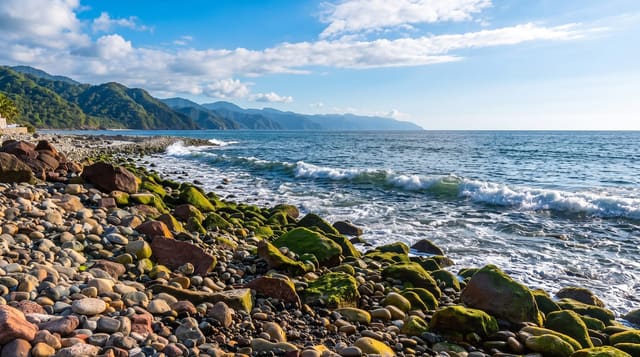
Anakena Beach
One of the island's only two sand beaches, where the first settlers are said to have landed, backed by seven moai.
Updated 20 October 2026
UNESCO World Heritage
Anakena is a bay of white coral sand on the northern coast, one of only two sandy beaches on an island whose shore is otherwise volcanic rock, and oral tradition names it as the landing place of Hotu Matu'a, the first settler king. Behind the sand stand two platforms: Ahu Nau Nau, with seven moai, several of them still wearing their red scoria pukao topknots and carved with designs on their backs, and Ahu Ature Huki with a single figure that was the first moai ever re-erected, raised by islanders with Thor Heyerdahl's expedition in 1956. The coconut palms behind the beach were planted in the 1960s and are not native.
What to look for
- One of two sand beaches - white coral sand on a rock coast.
- The traditional landing place - of Hotu Matu'a, by oral history.
- Ahu Nau Nau with seven moai - several still wearing pukao.
- The first moai re-erected - raised in 1956 with Heyerdahl's expedition.
When to go
Year round; the island's climate is mild all year. Half a day.
Practical notes
The palms are an introduction, not an original landscape. Approaching the platforms is prohibited and the sand in front of them is roped. The beach is busy at weekends with islanders. Facilities are a few food stands.
Nearby
Ahu Tongariki is on the eastern coast; Hanga Roa is south.
Key facts
Source: Wikidata, item Q484376, read on 18 October 2026.
What to pack for Anakena Beach
Chosen from what this place is for. Tap a kit for the full checklist.
- Reef-safe sunscreen - High SPF that will not bleach the coral you are swimming over. Find on Amazon
- Shelter suited to the place - Tent, tarp or hut booking - match it to the terrain and rules. Find on Amazon
- Quick-dry towel - A microfibre towel packs small and dries in minutes. Find on Amazon
- A warm sleeping bag + mat - Rated a little colder than you expect the nights to be. Find on Amazon
Some links on this page are Amazon affiliate links - if you buy through them we may earn a small commission at no extra cost to you.
All packing kitsPlan your trip
Where to start if Anakena Beach is going on the list.
Booking links on this page are affiliate links - if you book through them we may earn a small commission at no extra cost to you. It never changes what we write about a place.
Opening times, ticket prices and seasonal closures change - check the official source before you go: official site.