Oranjestad, Sint Eustatius
The Golden Rock's memory - Fort Oranje's ramparts, warehouse ruins along the bay and the little capital of a once-mighty free port.
Updated 19 October 2026
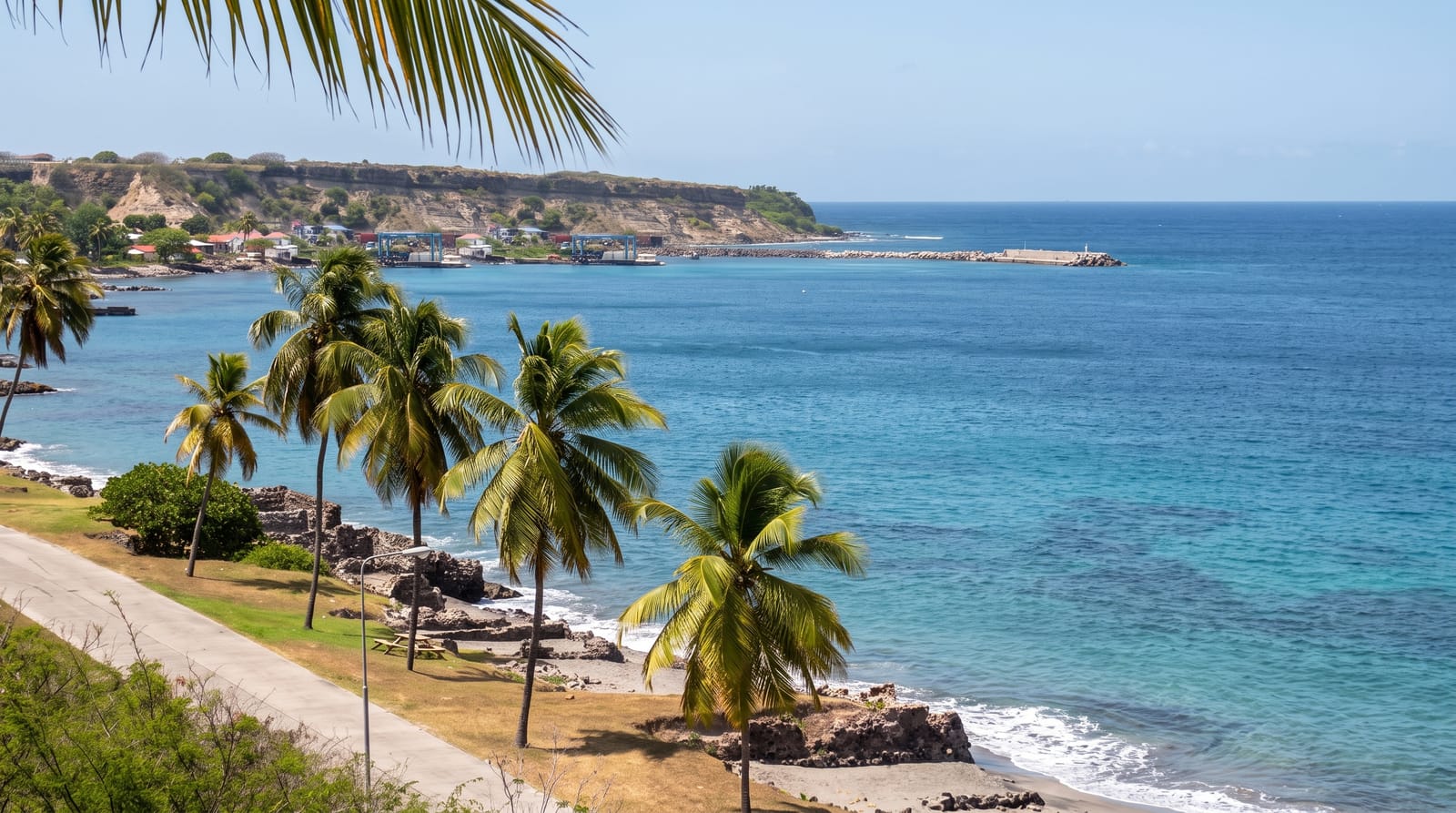
AI illustration
Eighteenth-century Statia was the 'Golden Rock' - a free port so busy its roadstead held hundreds of ships and its 1776 salute to an American vessel wrote the island into US founding lore - and Oranjestad keeps the memory in two registers: Upper Town's Fort Oranje ramparts, cannons and plaque-commemorated salute overlook the bay, cobbles linking the museum and church tower, while Lower Town's shoreline runs the warehouse ruins of the boom decades, blue-bead legends included, half in the sea that divers now browse. The whole is walkable in an unhurried half day, the Quill's volcano cone supervising from behind.
History
The first colonists arrived between 1625 and 1629, and Sint Eustatius grew sugar and cotton but became above all a trading centre, including for the slave trade, with an estimated 20,000 people in 1780; in 1781 the island was captured and plundered by George Rodney, and by 1829 its population had fallen to 2,273. The town keeps the 17th-century Fort Oranje, a Dutch Reformed church of 1755 whose tower can be climbed, the ruins of one of the oldest synagogues in the Western Hemisphere and restored 18th-century merchants' houses (Wikipedia, Oranjestad, Sint Eustatius).
What to look for
- Fort Oranje - ramparts, cannon and the 1776 salute's plaque.
- The warehouse ruins - Lower Town's boom-era shoreline.
- The museum and church tower - Upper Town's cobbled core.
- The blue beads - the island's storied slave-trade tokens.
When to go
December to May with the season; late afternoon gilds the fort's bay view. Statia's quiet is structural - every day is off-peak.
Practical notes
The history is the attraction - visitors expecting resort-island polish are on the wrong ferry; ruins are fragile and the beads, if found, belong to the island by law and lore.
Nearby
The Quill's crater trail and the dive moorings off Lower Town.
Key facts
Source: Wikidata, item Q217610, read on 18 October 2026.
What to pack for Oranjestad, Sint Eustatius
Chosen from what this place is for. Tap a kit for the full checklist.
- Broken-in walking shoes or boots - Grip and ankle support matter more than looks; never hike in brand-new boots. Find on Amazon
- Your own mask + snorkel - A well-fitting mask is the single biggest comfort upgrade underwater. Find on Amazon
- Comfortable walking shoes - Sightseeing means kilometres of pavement and cobbles daily. Find on Amazon
- Layers + a waterproof shell - Mountain weather turns fast; a packable rain jacket saves the day. Find on Amazon
Some links on this page are Amazon affiliate links - if you buy through them we may earn a small commission at no extra cost to you.
All packing kitsPlan your trip
Where to start if Oranjestad, Sint Eustatius is going on the list.
Booking links on this page are affiliate links - if you book through them we may earn a small commission at no extra cost to you. It never changes what we write about a place.
Opening times, ticket prices and seasonal closures change - check the official source before you go: official site.