Village Historique Acadien
An Acadian village covering the two centuries after the deportation, when survivors rebuilt in the woods.
Updated 19 October 2026
AI illustration
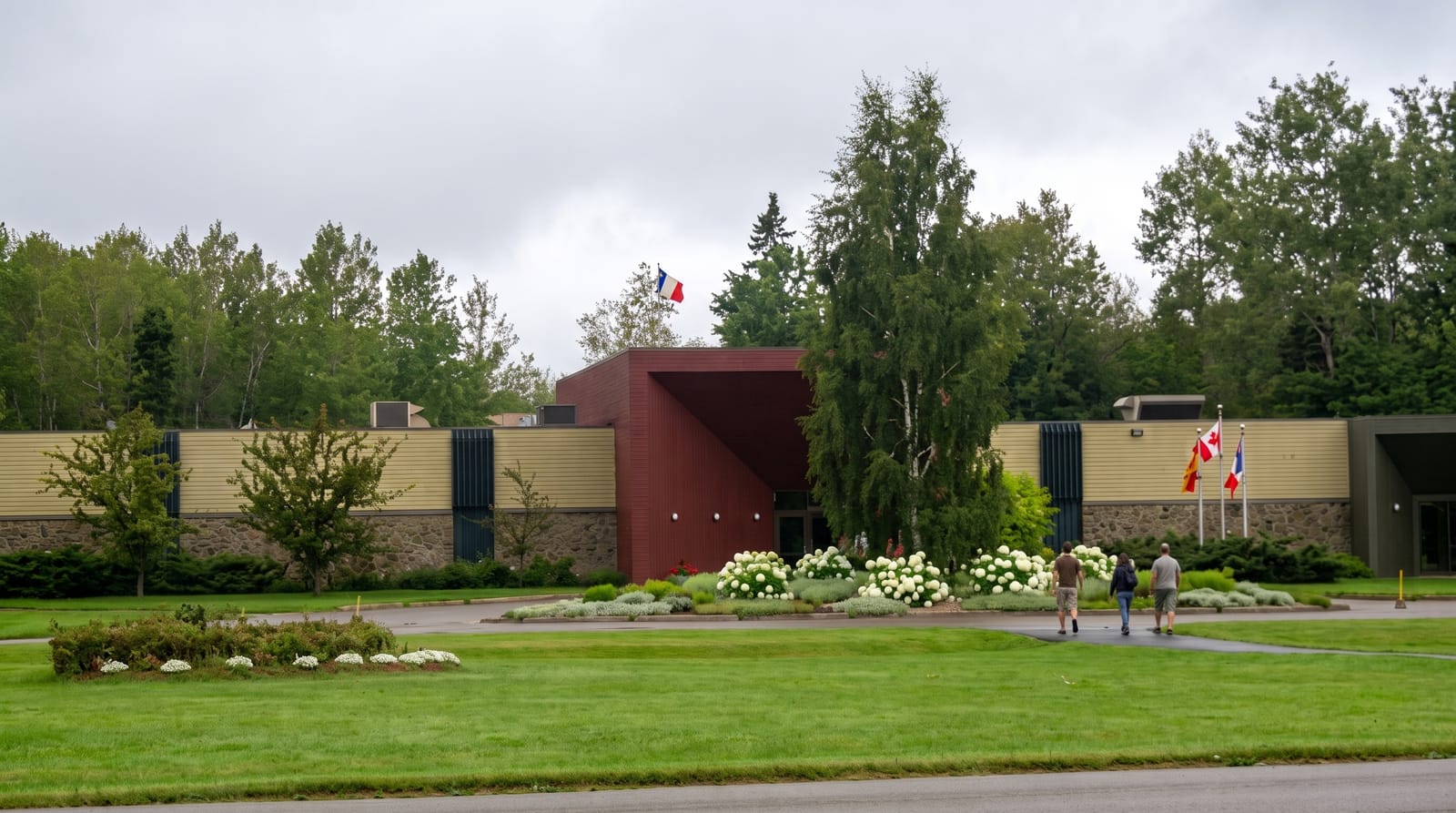
Between 1755 and 1764 the British deported around ten thousand Acadians from the Maritimes, burning farms and scattering families; those who returned or evaded capture rebuilt on poorer land along the coasts. This village covers the period from 1770 to 1949 with over forty buildings, most of them original and moved here, showing how that rebuilding actually looked: subsistence farms, a forge, a print shop, a school, a tavern and later a hotel. Staff work in period roles in French. It is deliberately not a nostalgic settlement story but the aftermath of a deportation, and the interpretation says so.
History
The idea for the village came in 1965, a feasibility study followed in 1969, and it opened to visitors in 1977; its Hôtel Château Albert is a replica of a Caraquet hotel lost to fire in 1955 (Wikipedia, Village Historique Acadien Provincial Park).
The main sights
- The rebuilt Acadian farms - subsistence holdings from the decades after 1764.
- The forty buildings - mostly original structures moved to the site.
- The working trades - forge, print shop, mill and tavern staffed in French.
- The timeline - 1770 to 1949 laid out as a walk through periods.
When to go
June to September for the staffed village; it closes for winter. The Acadian national day on 15 August brings the tintamarre, a noisy street procession, across the peninsula.
Good to know
Closed for most of the year. Interpretation is primarily in French with English available. The site is large and involves considerable walking.
Nearby
Caraquet lies east; Miscou Island is north.
What to pack for Village Historique Acadien
Chosen from what this place is for. Tap a kit for the full checklist.
- Comfortable walking shoes - Sightseeing means kilometres of pavement and cobbles daily. Find on Amazon
- A slim anti-theft daypack - Zips that close properly; keep it in front in crowds and on transit. Find on Amazon
- A refillable water bottle - Many cities have public fountains; save money and plastic. Find on Amazon
- A light layer + compact umbrella - For museum air-con and a sudden shower. Find on Amazon
Some links on this page are Amazon affiliate links - if you buy through them we may earn a small commission at no extra cost to you.
All packing kitsPlan your trip
Where to start if Village Historique Acadien is going on the list.
Booking links on this page are affiliate links - if you book through them we may earn a small commission at no extra cost to you. It never changes what we write about a place.
Opening times, ticket prices and seasonal closures change - check the official source before you go: official site.