Prince Edward Island National Park
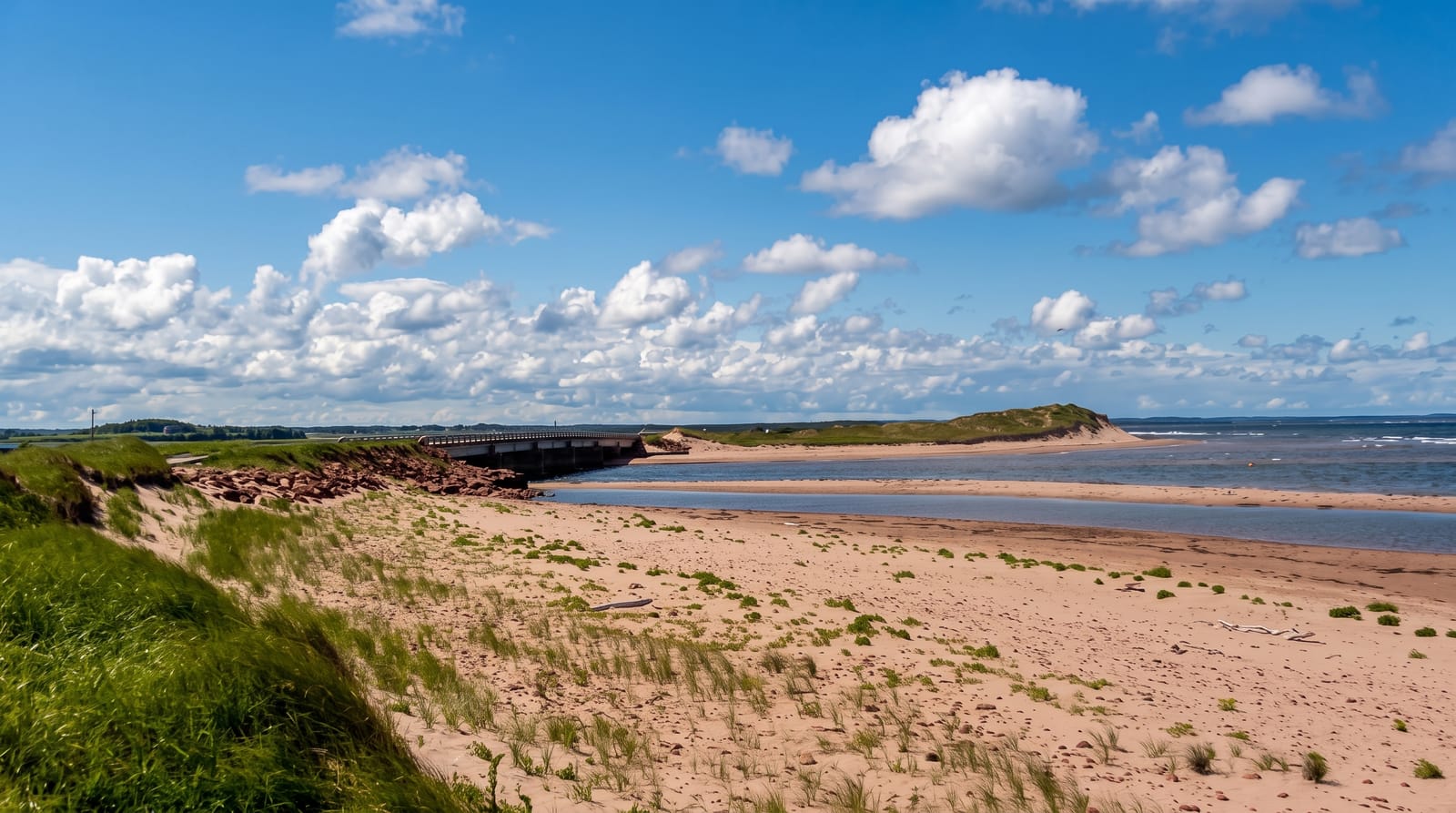
Red sandstone cliffs and moving dunes on the north shore, where endangered piping plovers nest.
Updated 21 October 2026
AI illustration
The park runs along about sixty kilometres of the island's north shore in three sections, protecting red sandstone cliffs, barrier dunes and the salt marsh behind them. The sandstone is soft and iron-rich, which is why the cliffs are red and why they retreat by up to a metre a year in places; storms visibly rearrange the shore. Greenwich has a rare parabolic dune system with a floating boardwalk across a pond to reach it. The beaches are among the warmest north of the Carolinas because the Gulf of St. Lawrence shallows warm through summer. Piping plovers nest here and sections close for them.
Highlights
- The red cliffs - iron-rich sandstone eroding visibly year on year.
- The Greenwich dunes - a parabolic dune system with a floating boardwalk.
- The warm water - gulf beaches that heat well through summer.
- The piping plovers - endangered birds nesting on closed beach sections.
When to go
June to September for warm water and full services; the park is open year-round but facilities close. Plover nesting restricts beach sections from spring into summer.
Things to know
Cliff erosion is fast and edges are unstable, with fencing in places. Beach sections close for nesting birds without much notice. Jellyfish appear in some late summers.
Nearby
Green Gables lies inland; Charlottetown is south.
Key facts
Source: Wikidata, item Q1314367, read on 18 October 2026.
What to pack for Prince Edward Island National Park
Chosen from what this place is for. Tap a kit for the full checklist.
- Broken-in walking shoes or boots - Grip and ankle support matter more than looks; never hike in brand-new boots. Find on Amazon
- Reef-safe sunscreen - High SPF that will not bleach the coral you are swimming over. Find on Amazon
- Binoculars - The single best wildlife tool - even a compact pair transforms a sighting. Find on Amazon
- Loose, light, long clothing - Covering up beats bare skin in the desert - and locals dress this way for a reason. Find on Amazon
Some links on this page are Amazon affiliate links - if you buy through them we may earn a small commission at no extra cost to you.
All packing kitsPlan your trip
Where to start if Prince Edward Island National Park is going on the list.
Booking links on this page are affiliate links - if you book through them we may earn a small commission at no extra cost to you. It never changes what we write about a place.
Opening times, ticket prices and seasonal closures change - check the official source before you go: official site.