Point Pelee National Park
The southernmost point of mainland Canada, a sand spit on the same latitude as northern California and one of the great birding sites.
Updated 19 October 2026
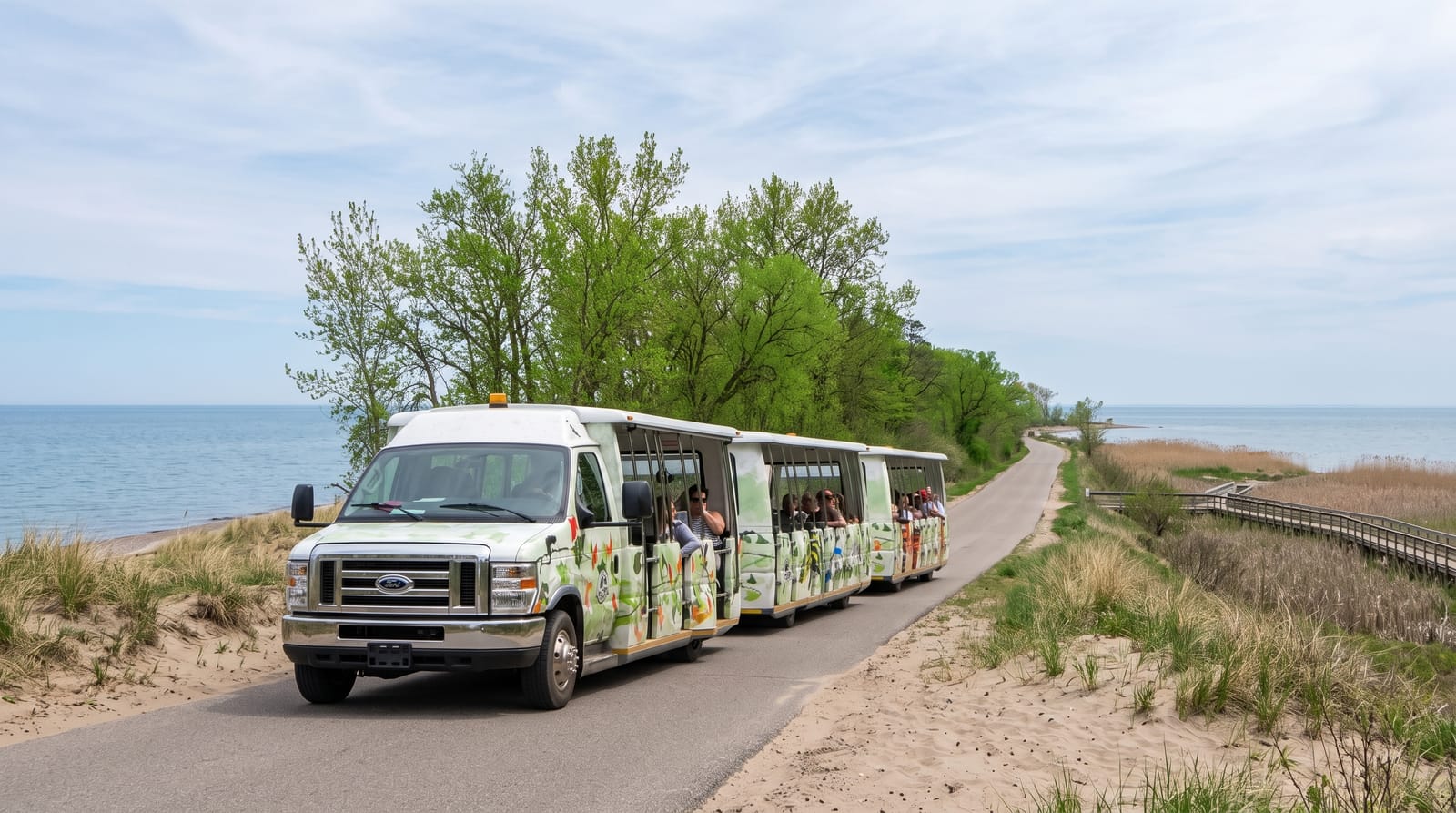
AI illustration
Point Pelee is a narrow triangle of sand reaching into Lake Erie and ending at the southernmost point of mainland Canada, further south than the northern edge of California. That position, at the end of a peninsula on a major flyway, makes it a funnel: in the first three weeks of May, songbirds crossing the lake make landfall here in numbers that draw birdwatchers from across the continent, with warblers in dozens of species dropping into a small area of Carolinian forest. In September the process reverses for monarch butterflies, which cluster on the trees at the tip waiting for the right wind before crossing to Ohio and onward to Mexico. A marsh boardwalk crosses the wetland behind.
History
People lived on Point Pelee for at least 6,000 years, the largest archaeological site dating from AD 700 to 900, and the name, bald point, was given by the priests Dollier and Galinée in 1670 because the eastern side was rocky and treeless. British naval reserves logged its white pine for ships in the late 1700s; the Dominion ornithologist Percy A. Taverner recommended a park in 1915, and in 1918 it became the first national park in Canada created for conservation, at the urging of birdwatchers and hunters; commercial fishing went on until 1969 and duck hunting until 1989, and in 2006 it became the first Canadian national park designated a dark-sky preserve (Wikipedia, Point Pelee National Park).
What you'll find
- Spring warbler migration - the first three weeks of May, at its peak mid-month.
- The Tip - the southernmost point of mainland Canada, on shifting sand.
- Monarch staging - butterflies clustering on the trees in September.
- The marsh boardwalk - a raised walk over the wetland behind the spit.
When to go
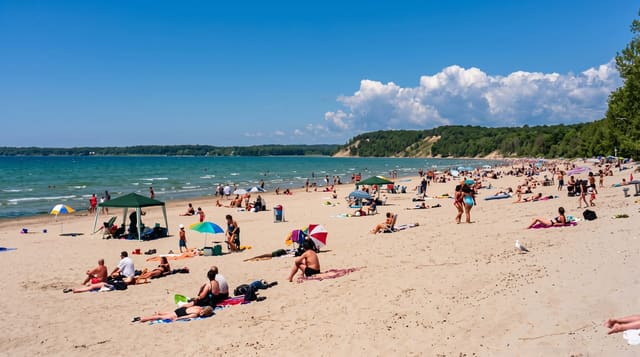
Early to mid-May is the birding peak and the park runs a festival with extra shuttles and guides; it is crowded, and that is part of the experience. September brings the monarchs, dependent on wind. Summer is quiet and mainly a beach park.
Good to know
The park is small and in migration season it is genuinely busy, with the tip shuttle queuing and the paths lined with tripods. The Tip itself is unstable sand that shifts and floods, and is sometimes closed. Outside May and September there is much less reason to make the trip. Swimming at the tip is prohibited because of dangerous converging currents.
Nearby
Pelee Island is a ferry ride further south; Windsor is an hour northwest.
Key facts
Source: Wikidata, item Q1153938, read on 18 October 2026.
What to pack for Point Pelee National Park
Chosen from what this place is for. Tap a kit for the full checklist.
- Broken-in walking shoes or boots - Grip and ankle support matter more than looks; never hike in brand-new boots. Find on Amazon
- Travel rod + reel - A packable multi-piece rod fits in a case and covers most holiday fishing. Find on Amazon
- Reef-safe sunscreen - High SPF that will not bleach the coral you are swimming over. Find on Amazon
- Binoculars - The single best wildlife tool - even a compact pair transforms a sighting. Find on Amazon
Some links on this page are Amazon affiliate links - if you buy through them we may earn a small commission at no extra cost to you.
All packing kitsPlan your trip
Where to start if Point Pelee National Park is going on the list.
Booking links on this page are affiliate links - if you book through them we may earn a small commission at no extra cost to you. It never changes what we write about a place.
Opening times, ticket prices and seasonal closures change - check the official source before you go: official site.